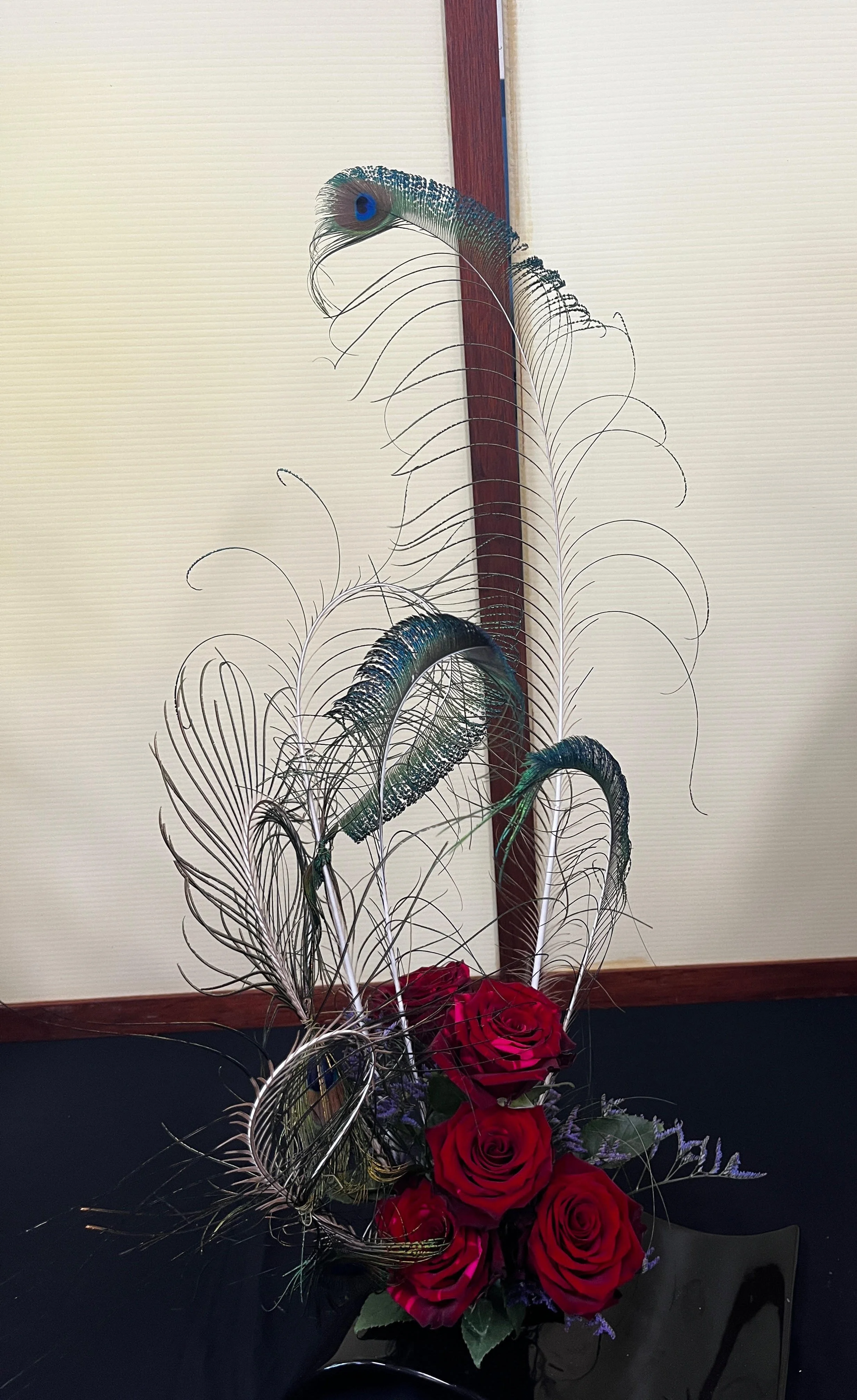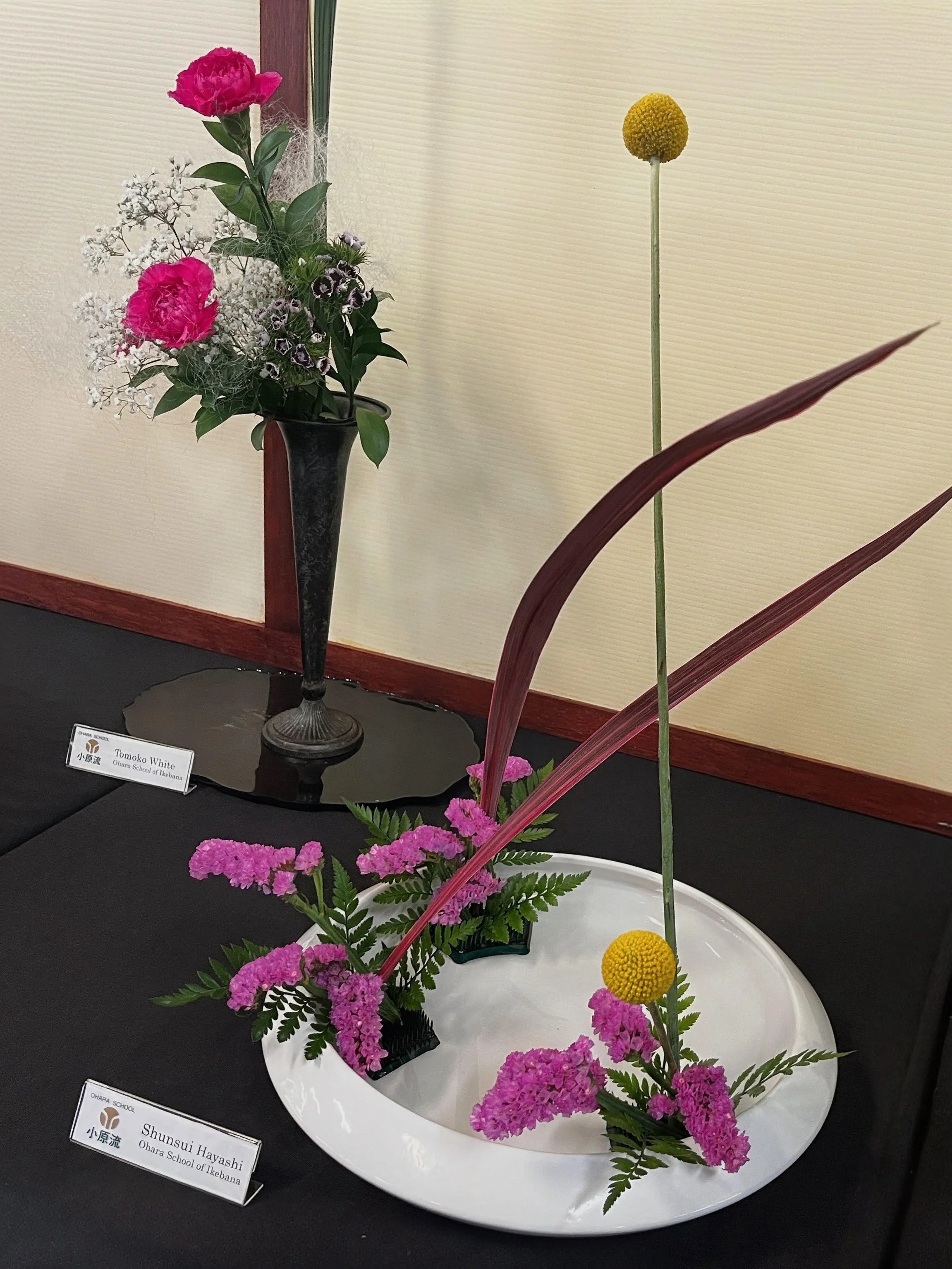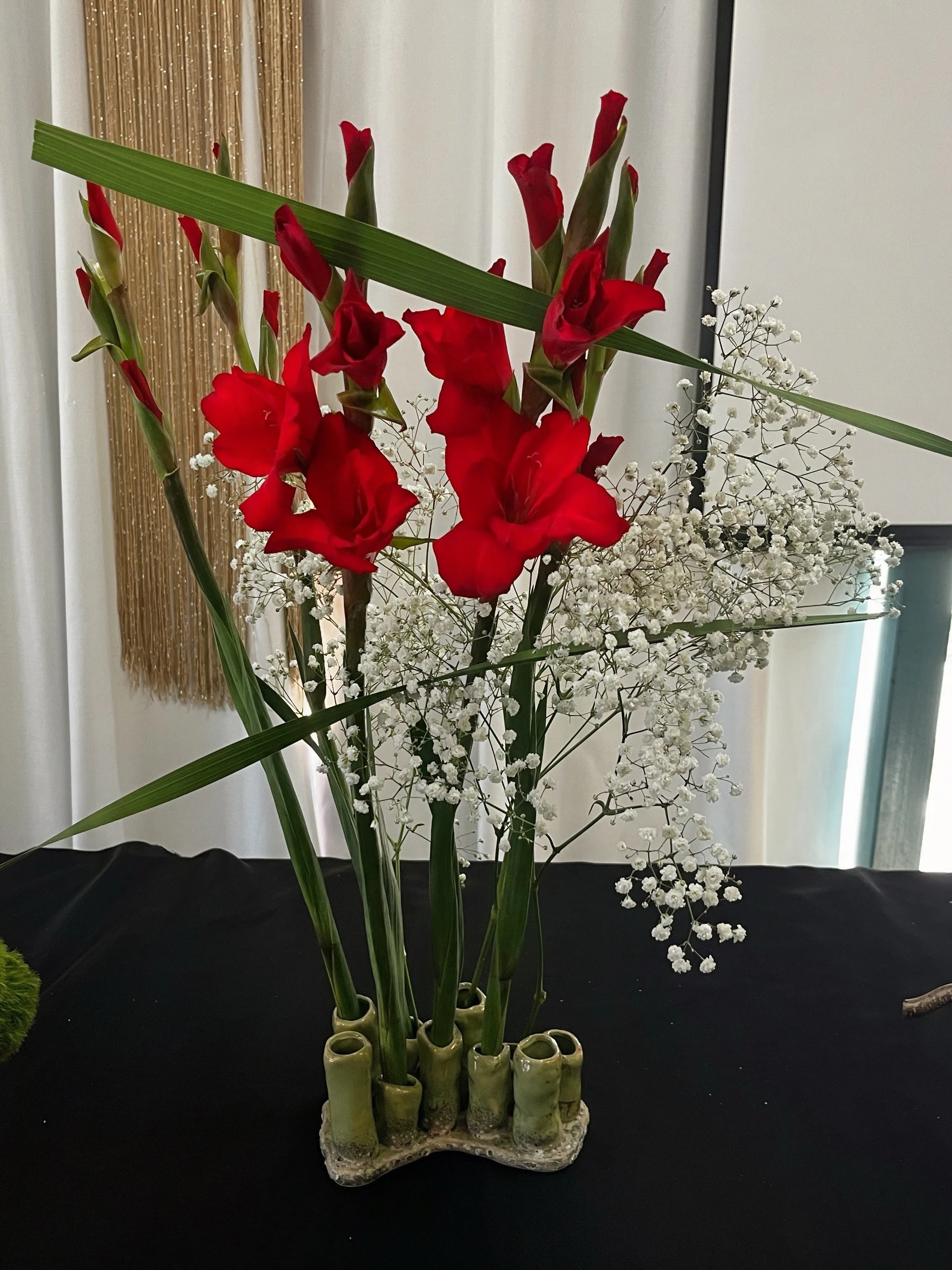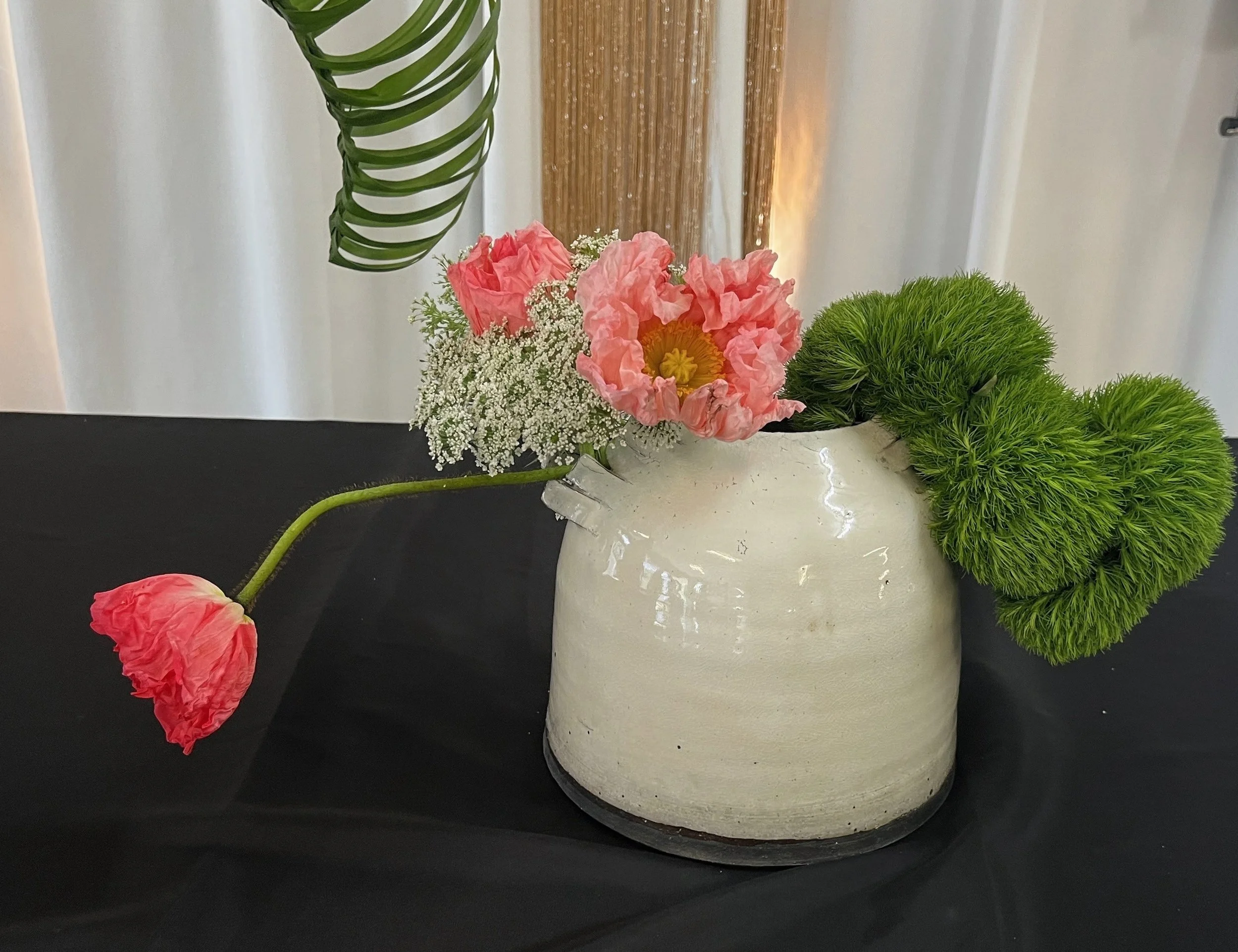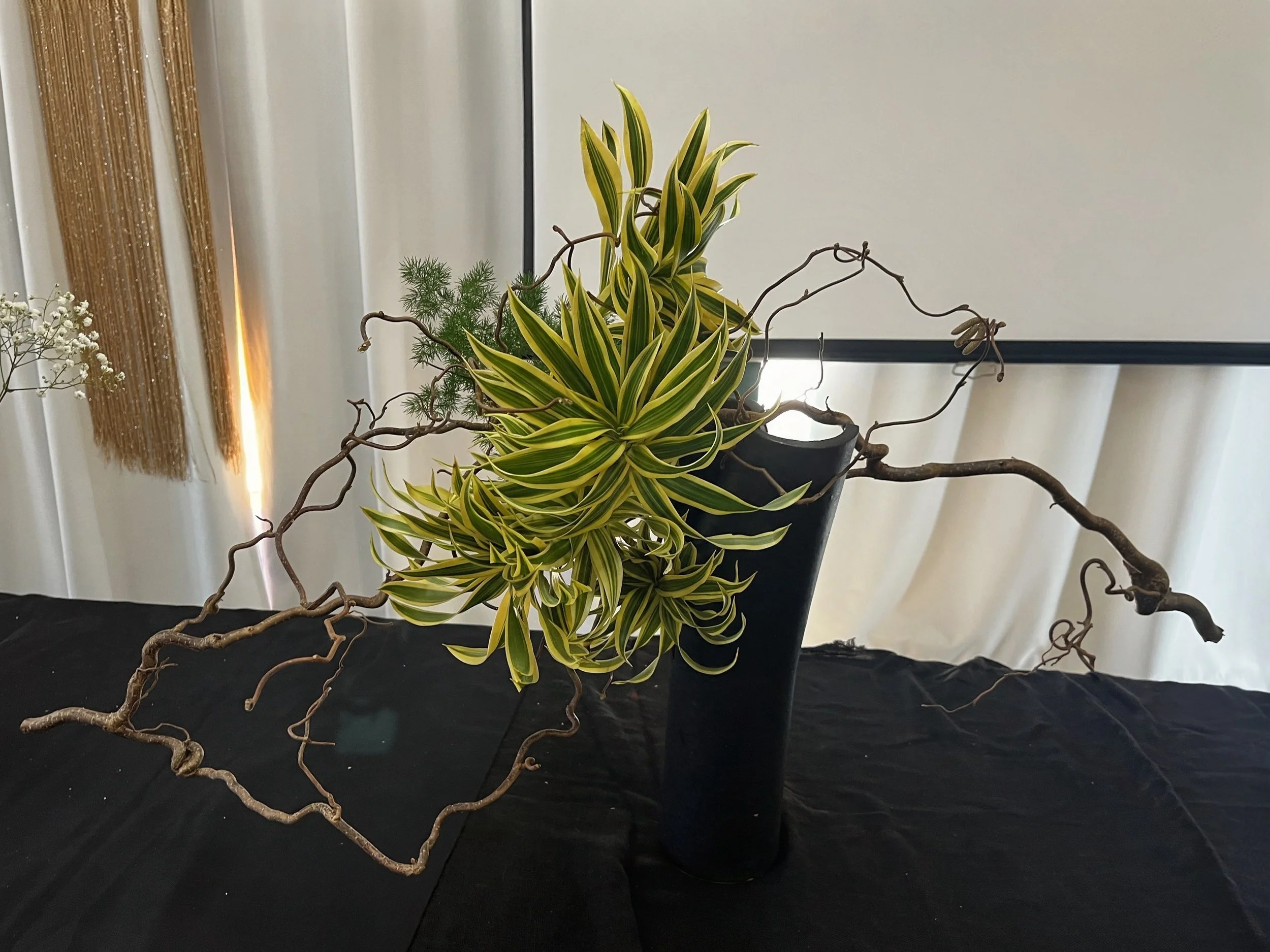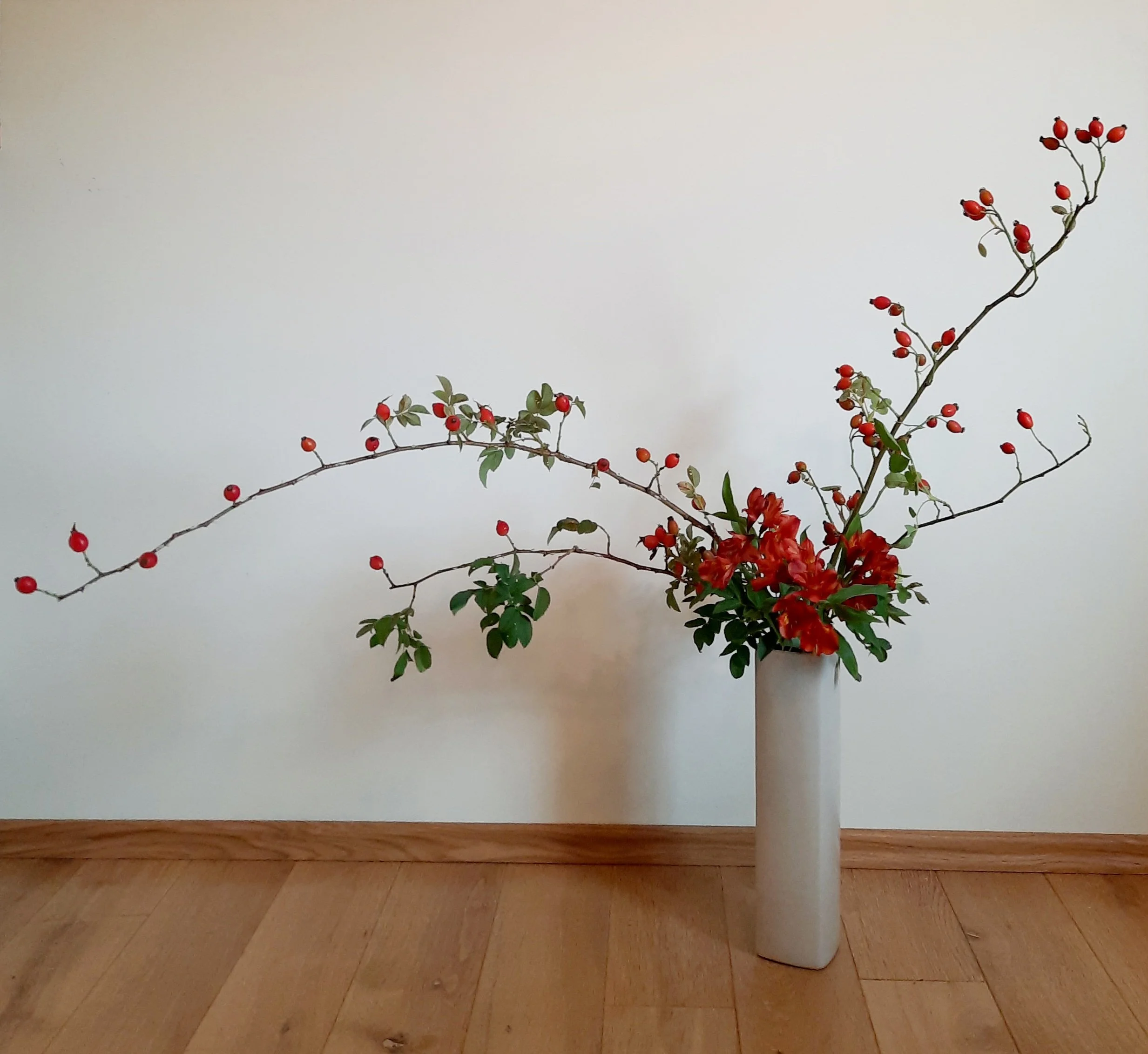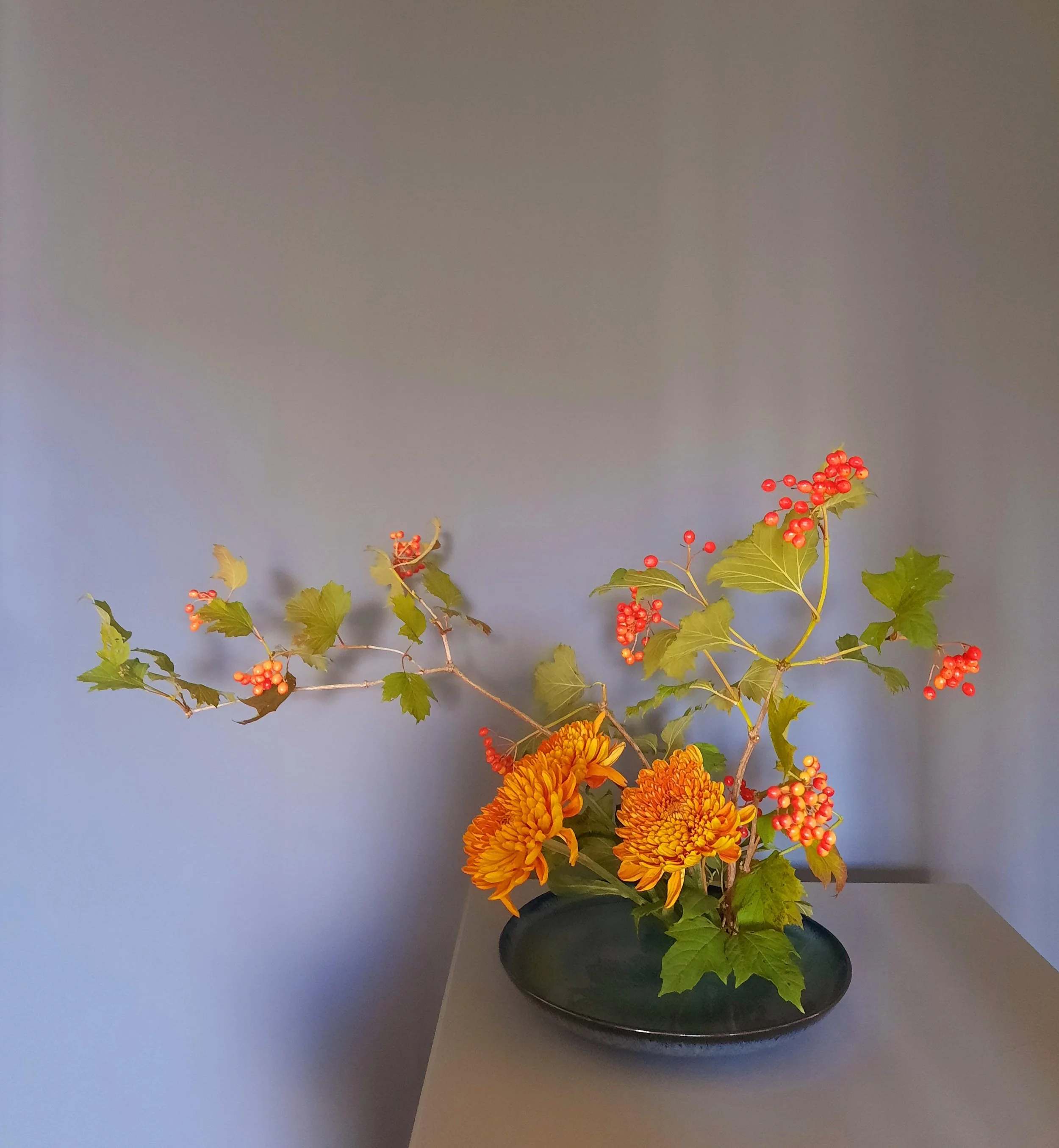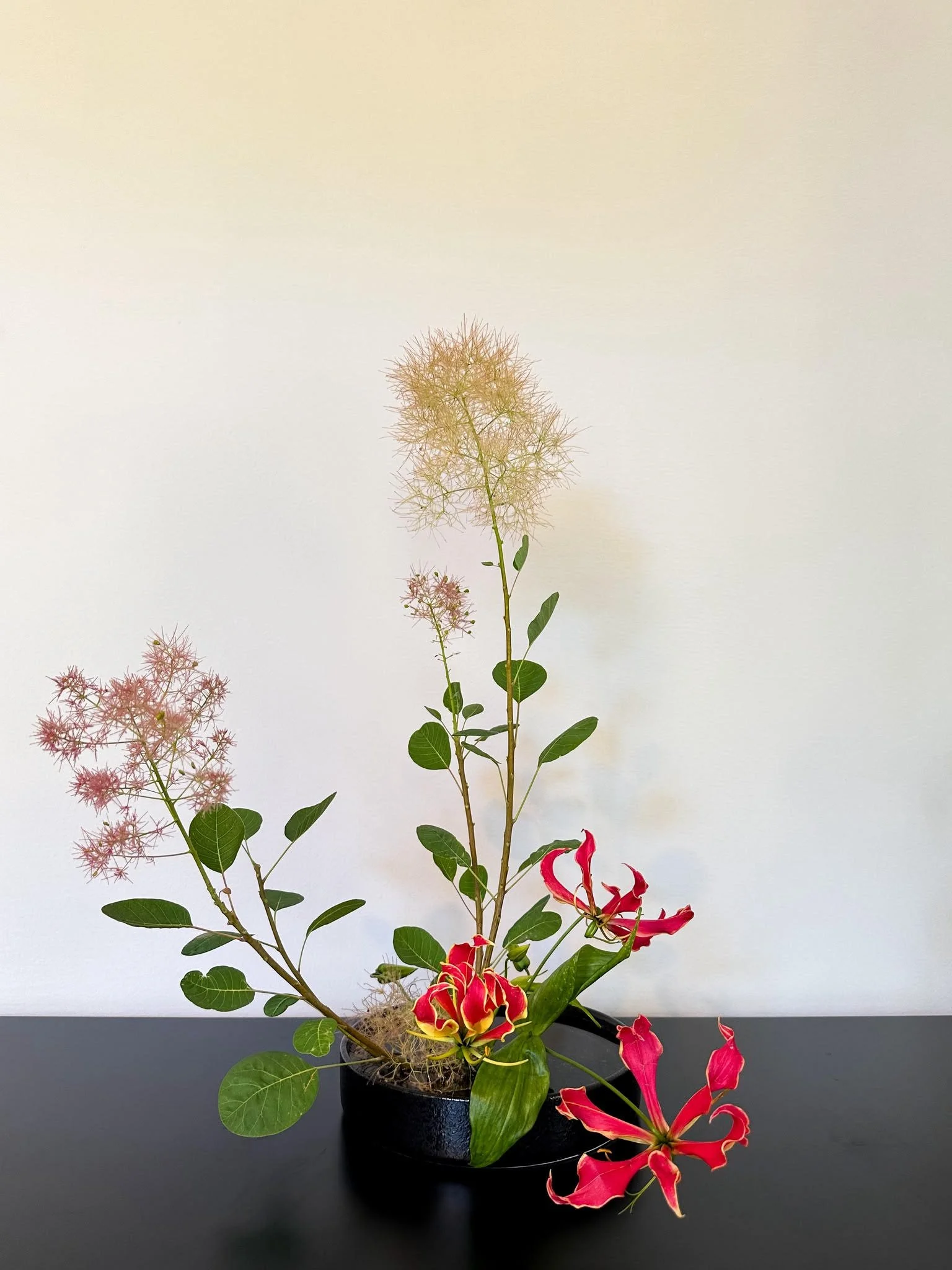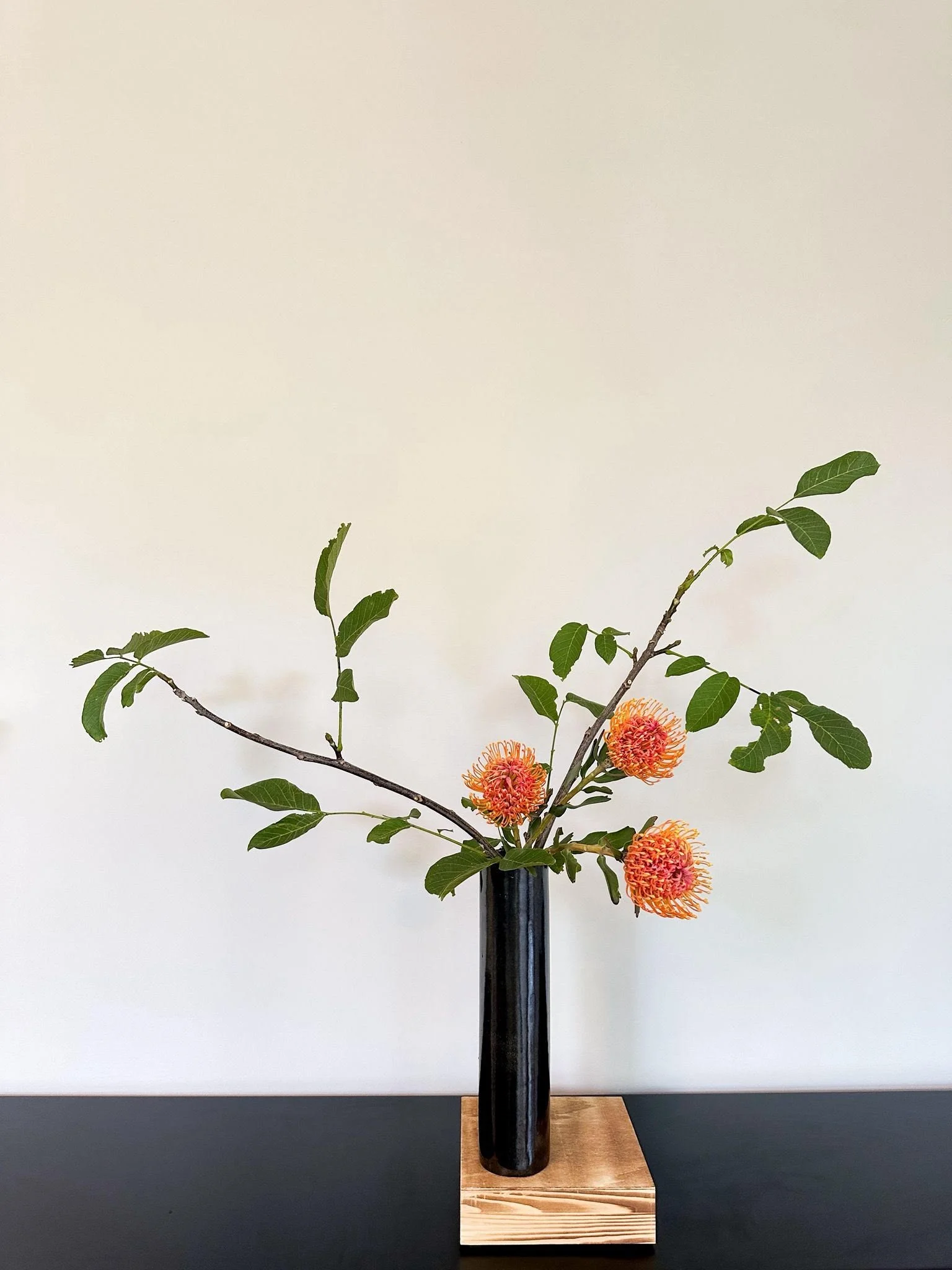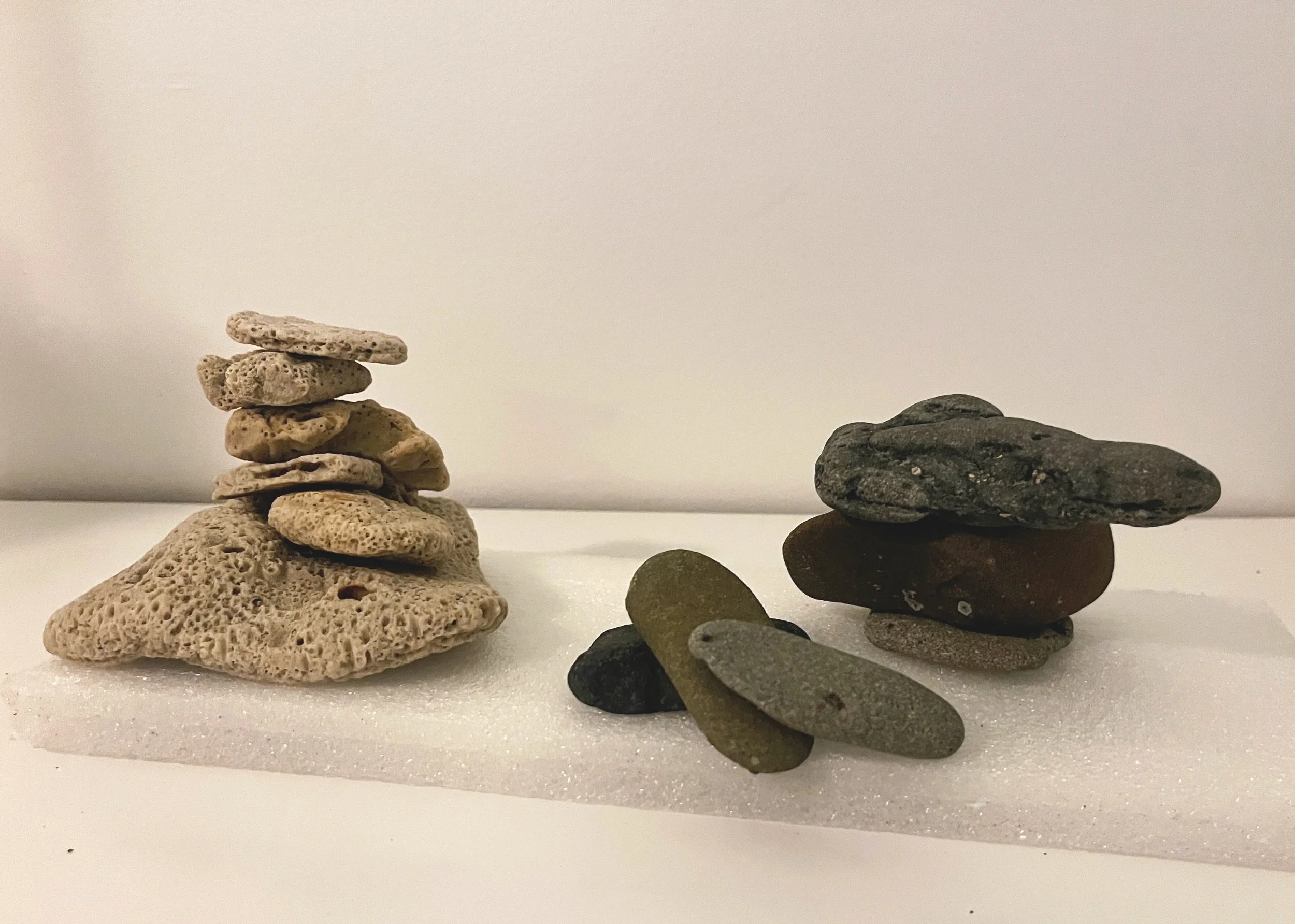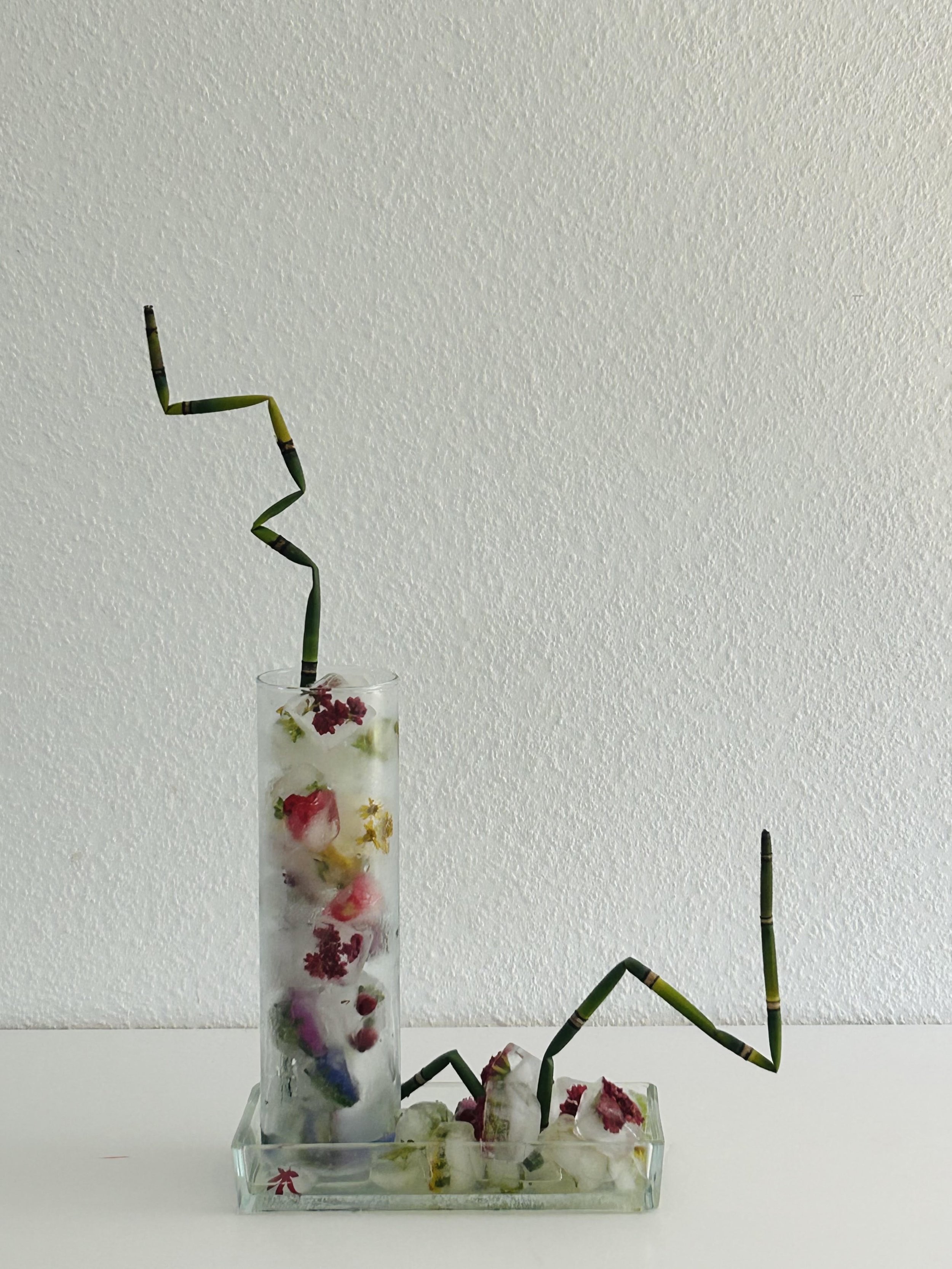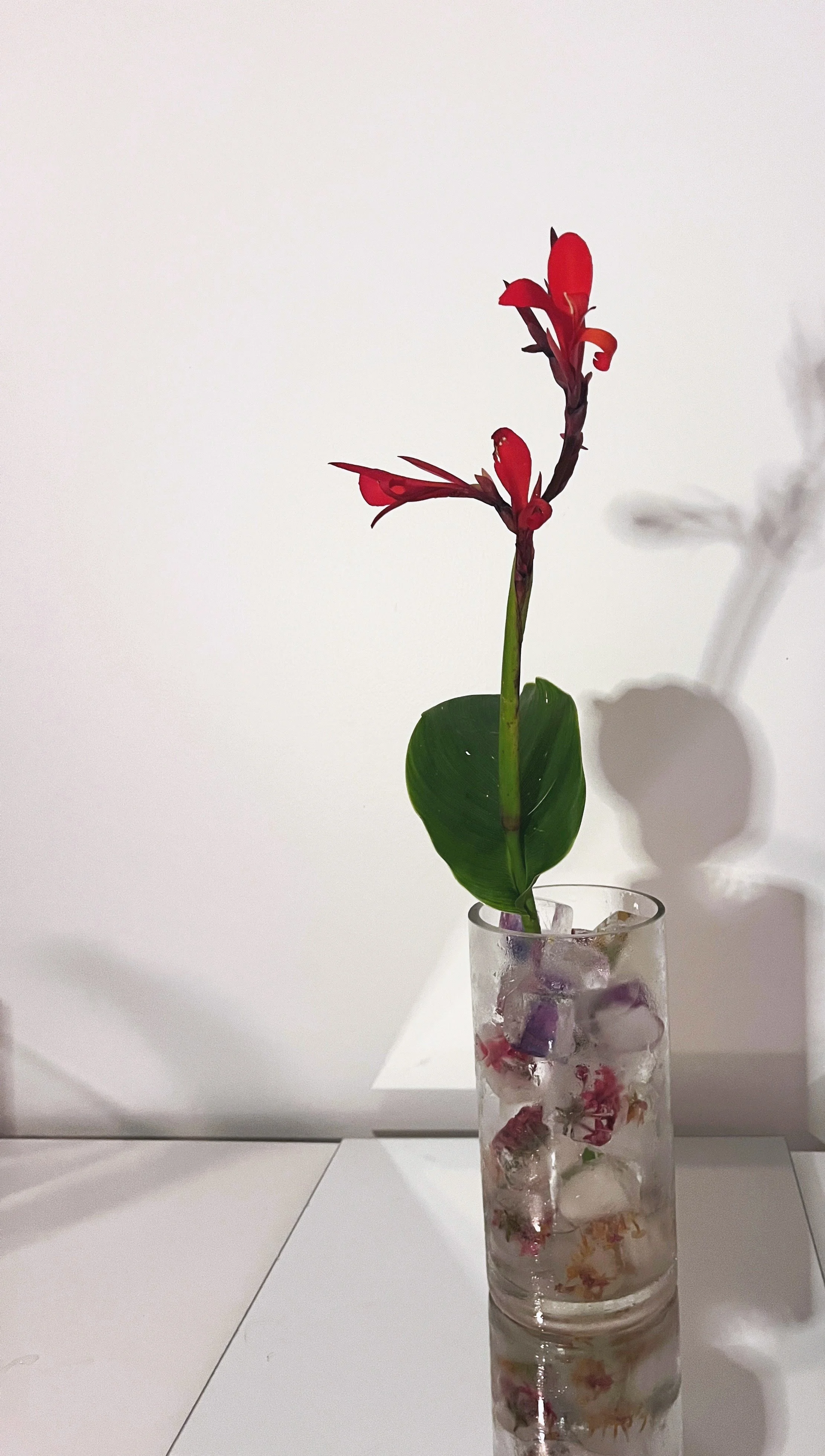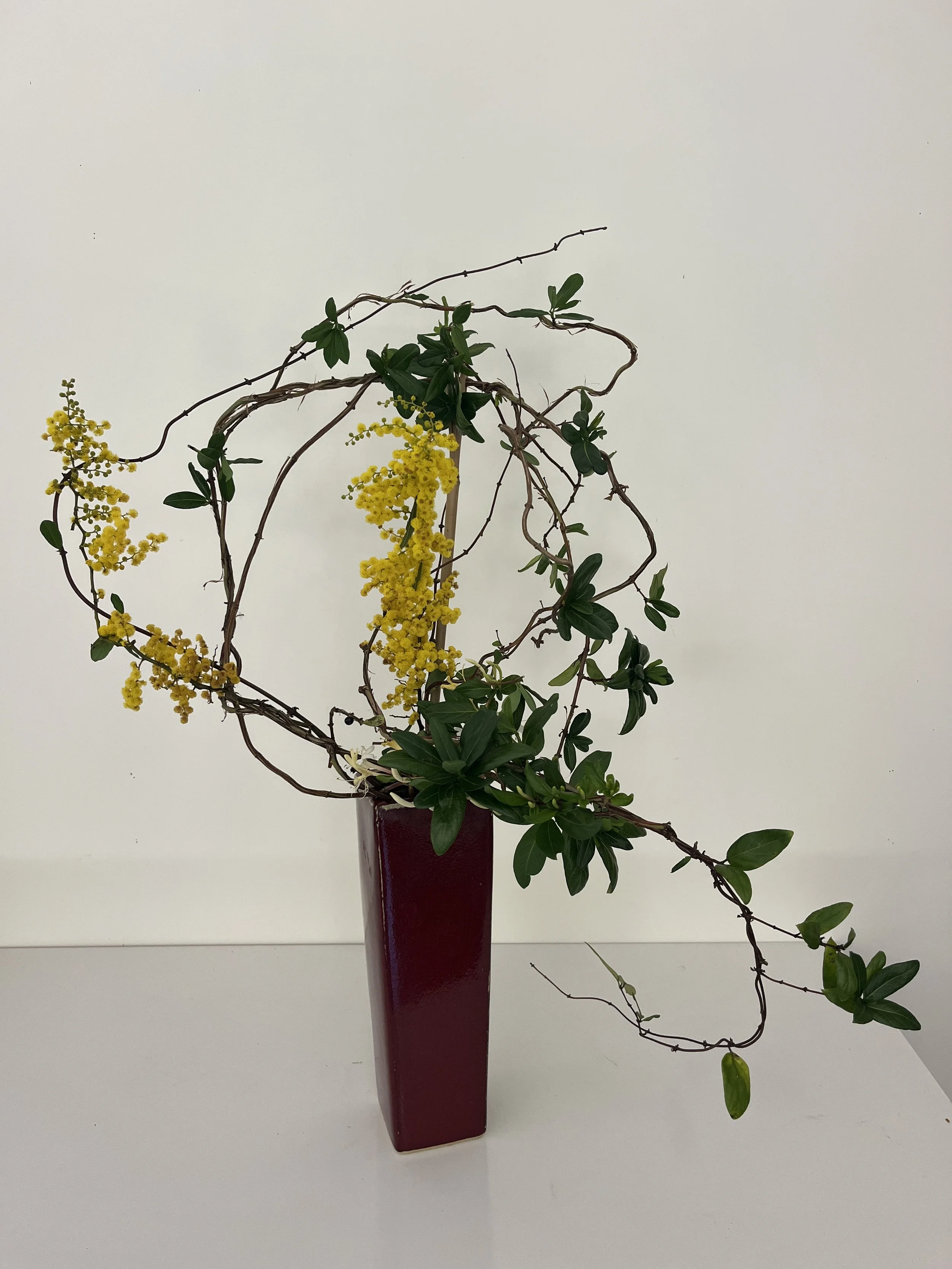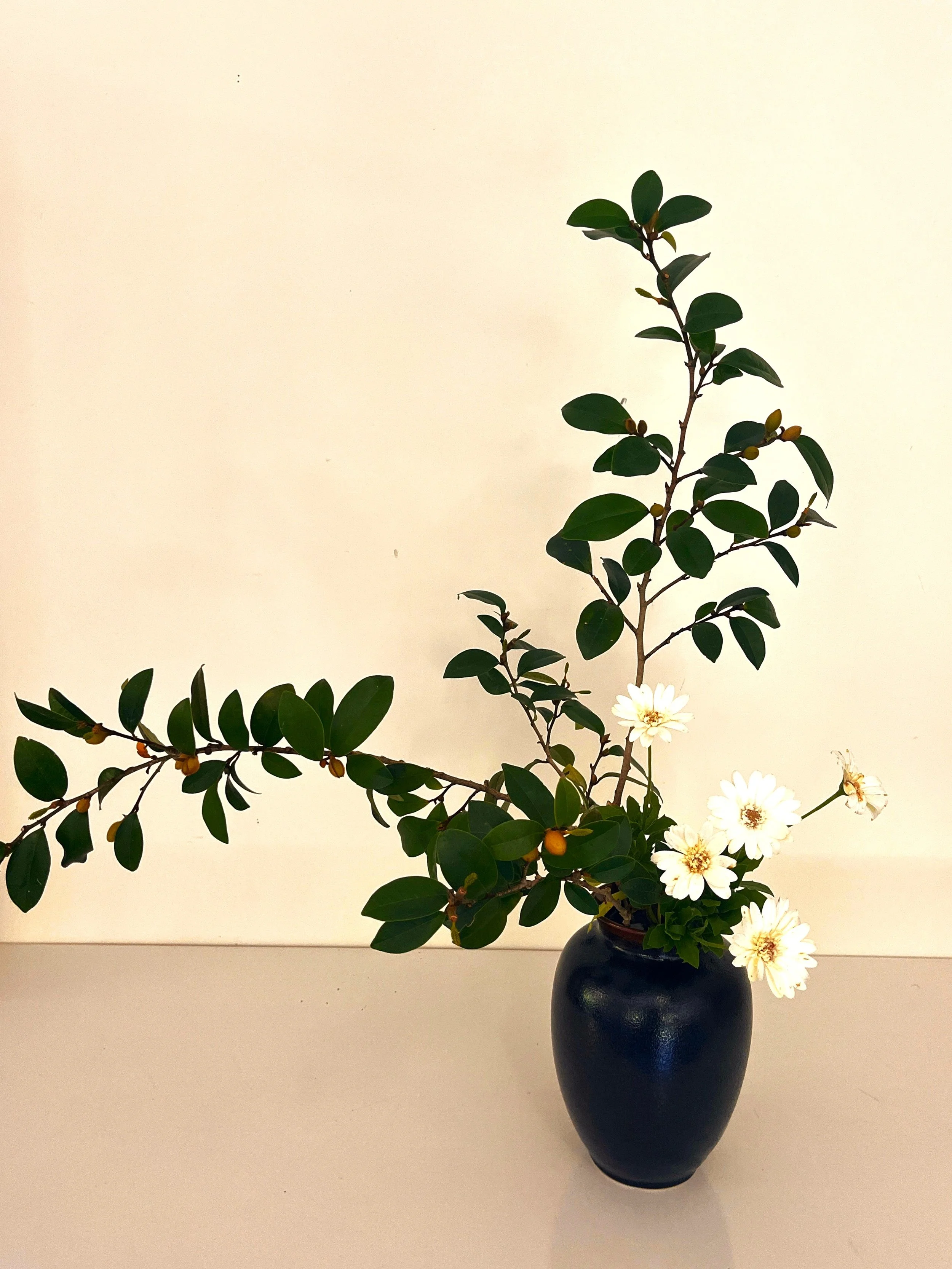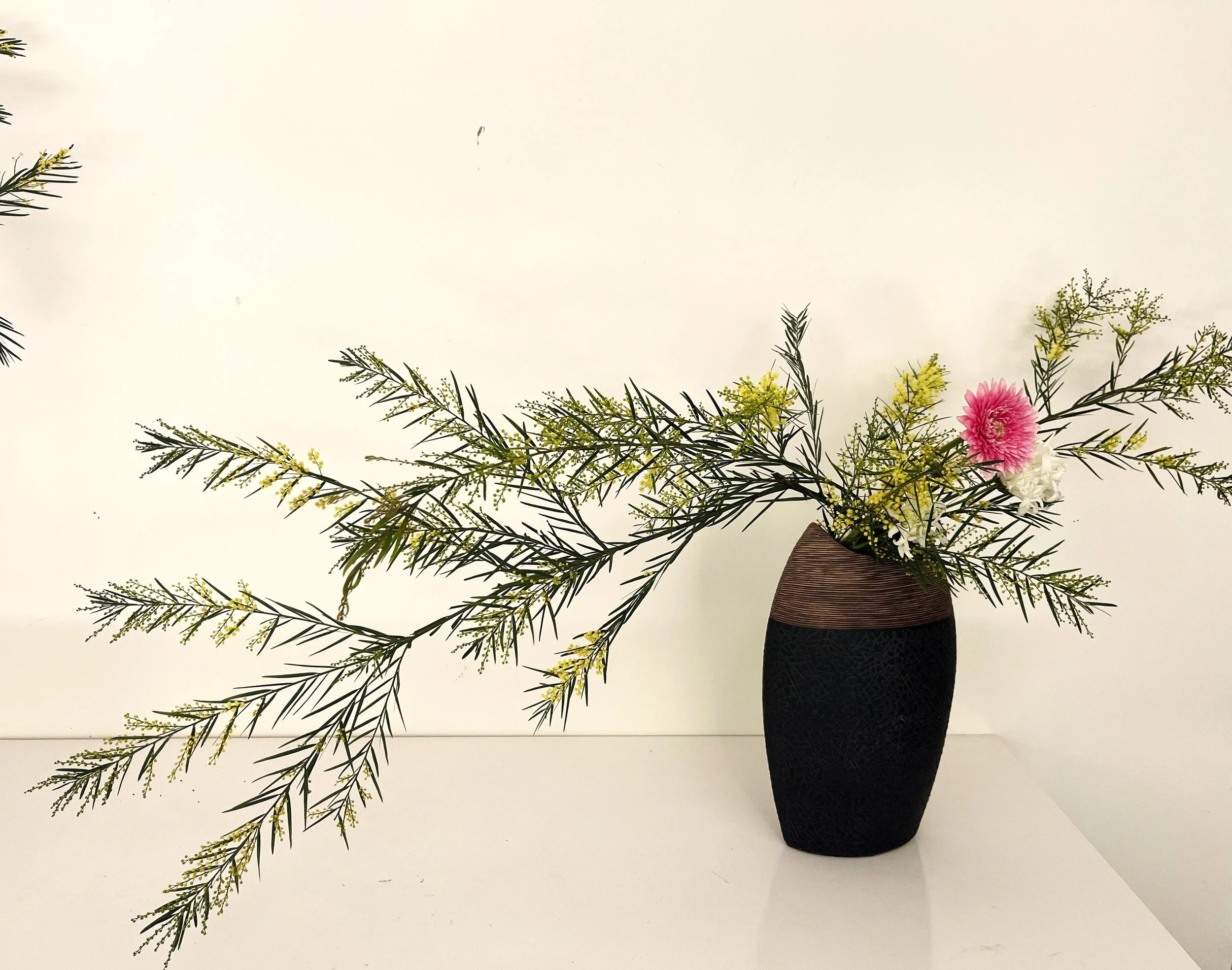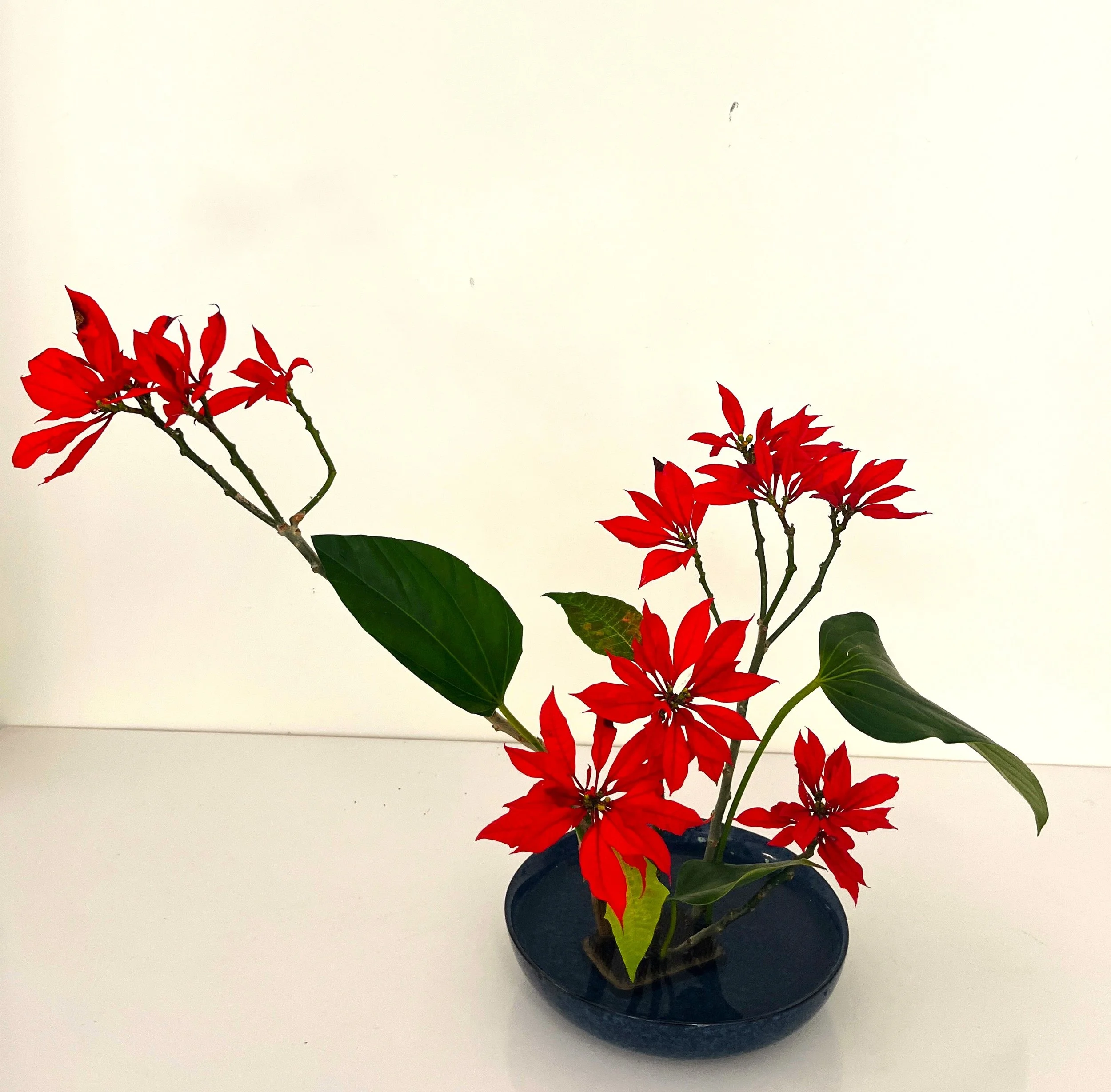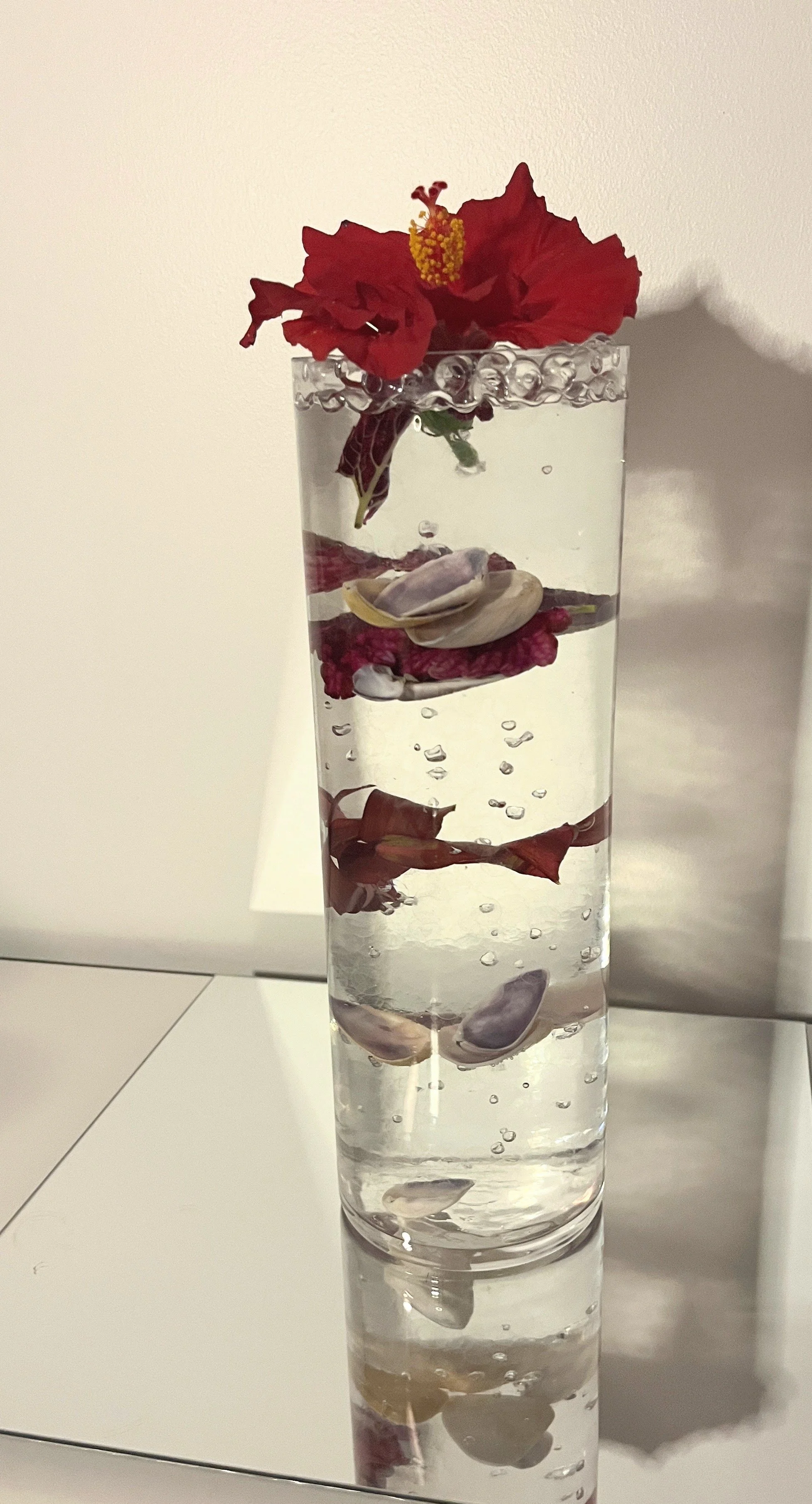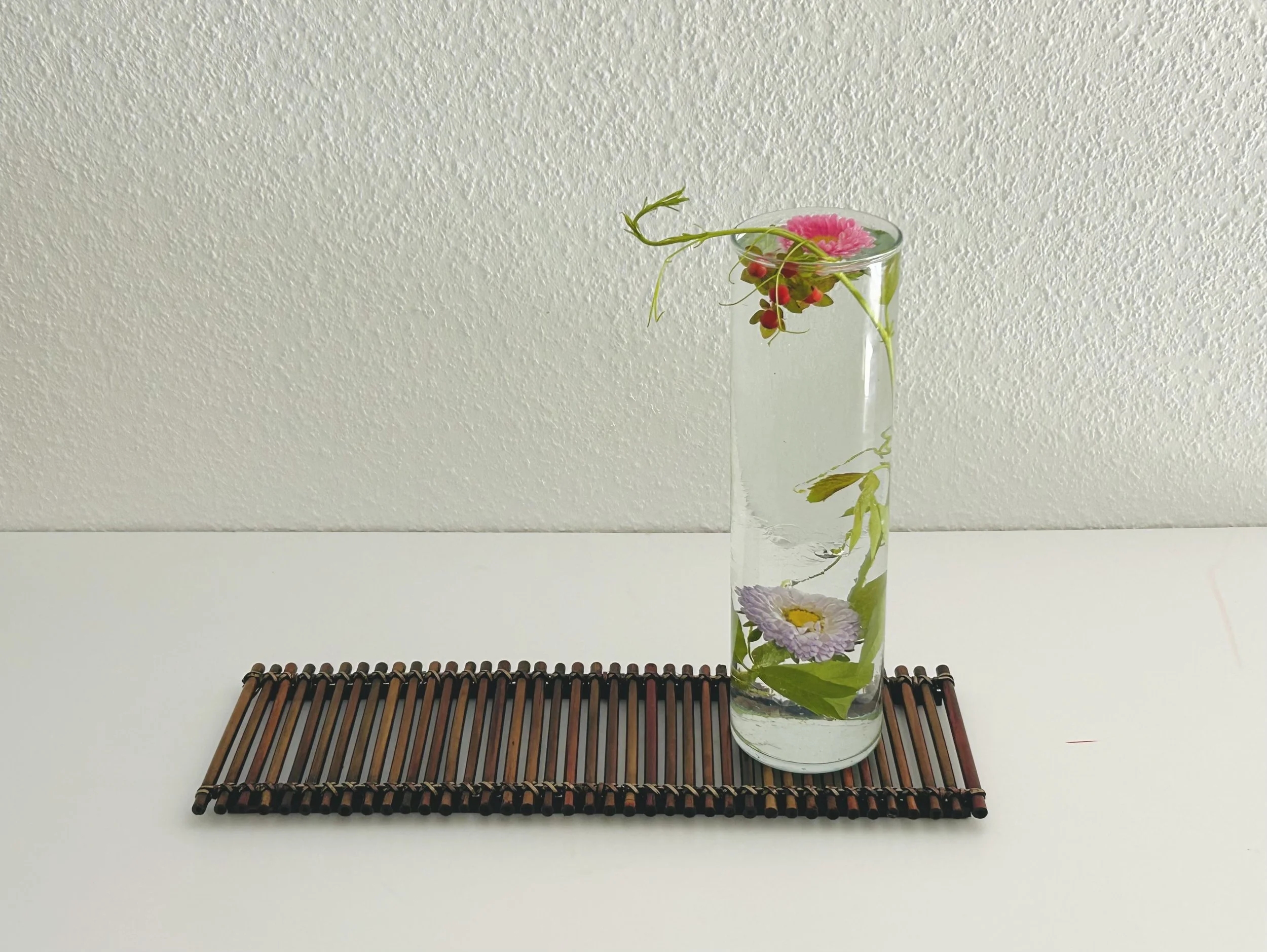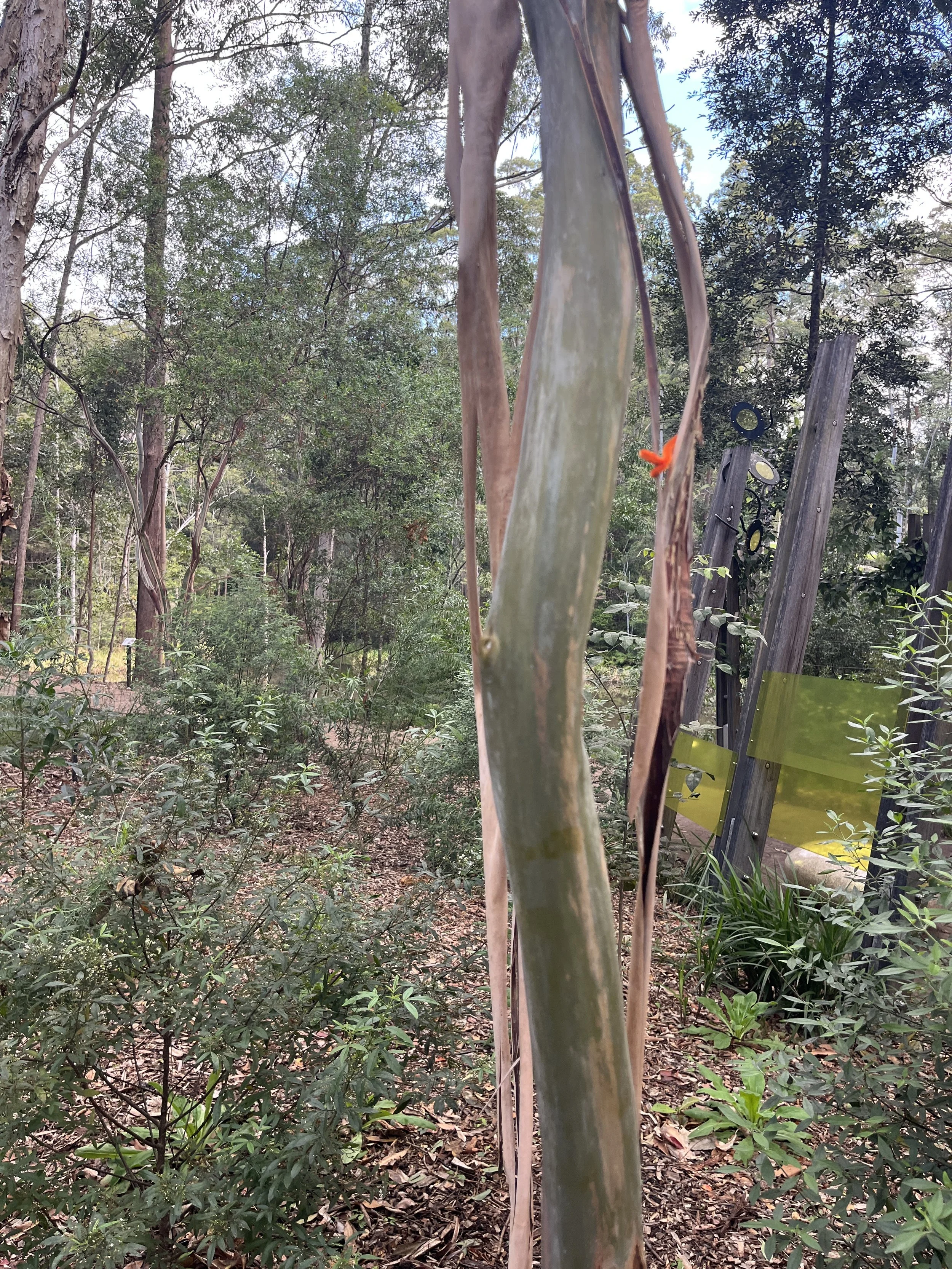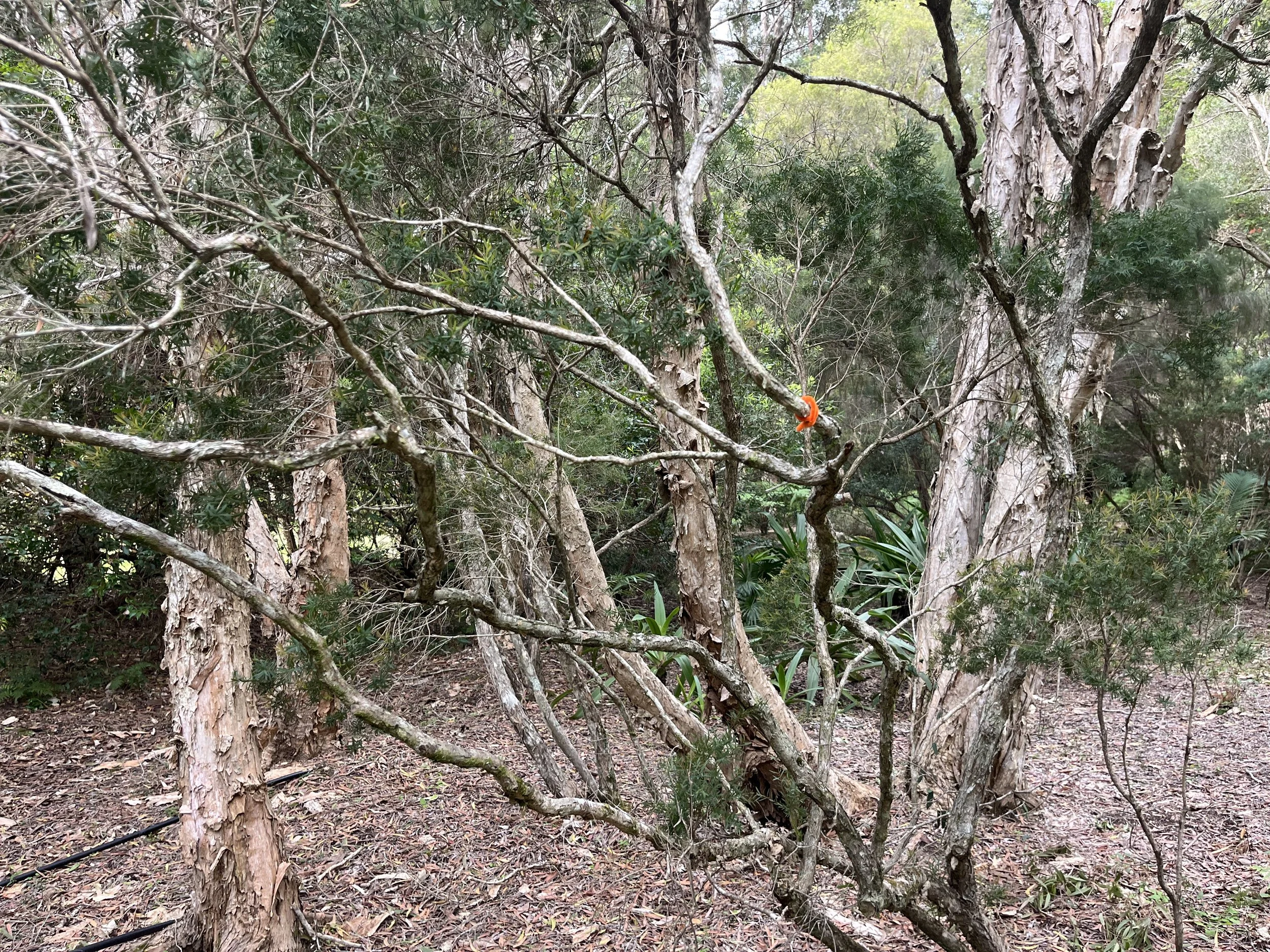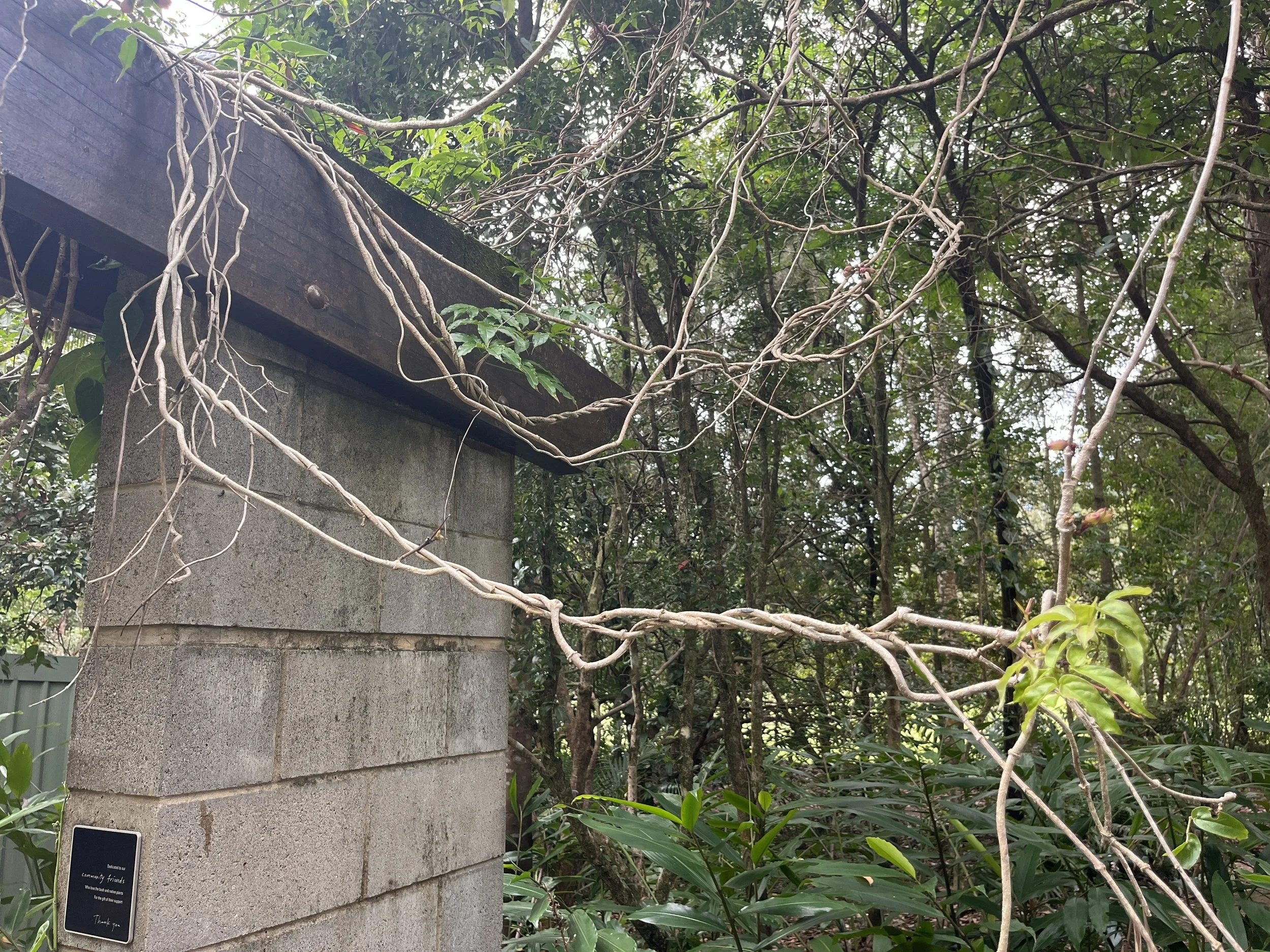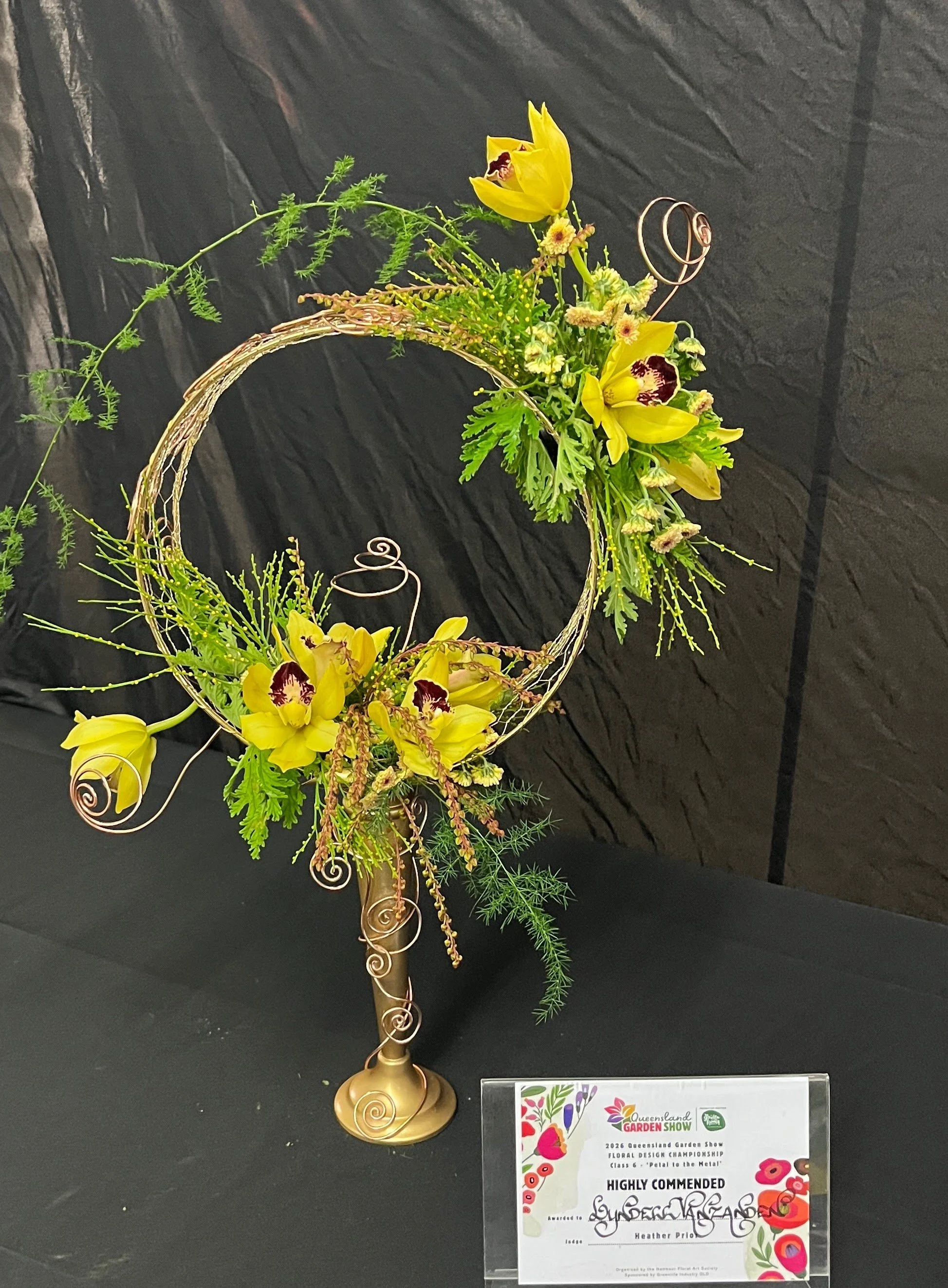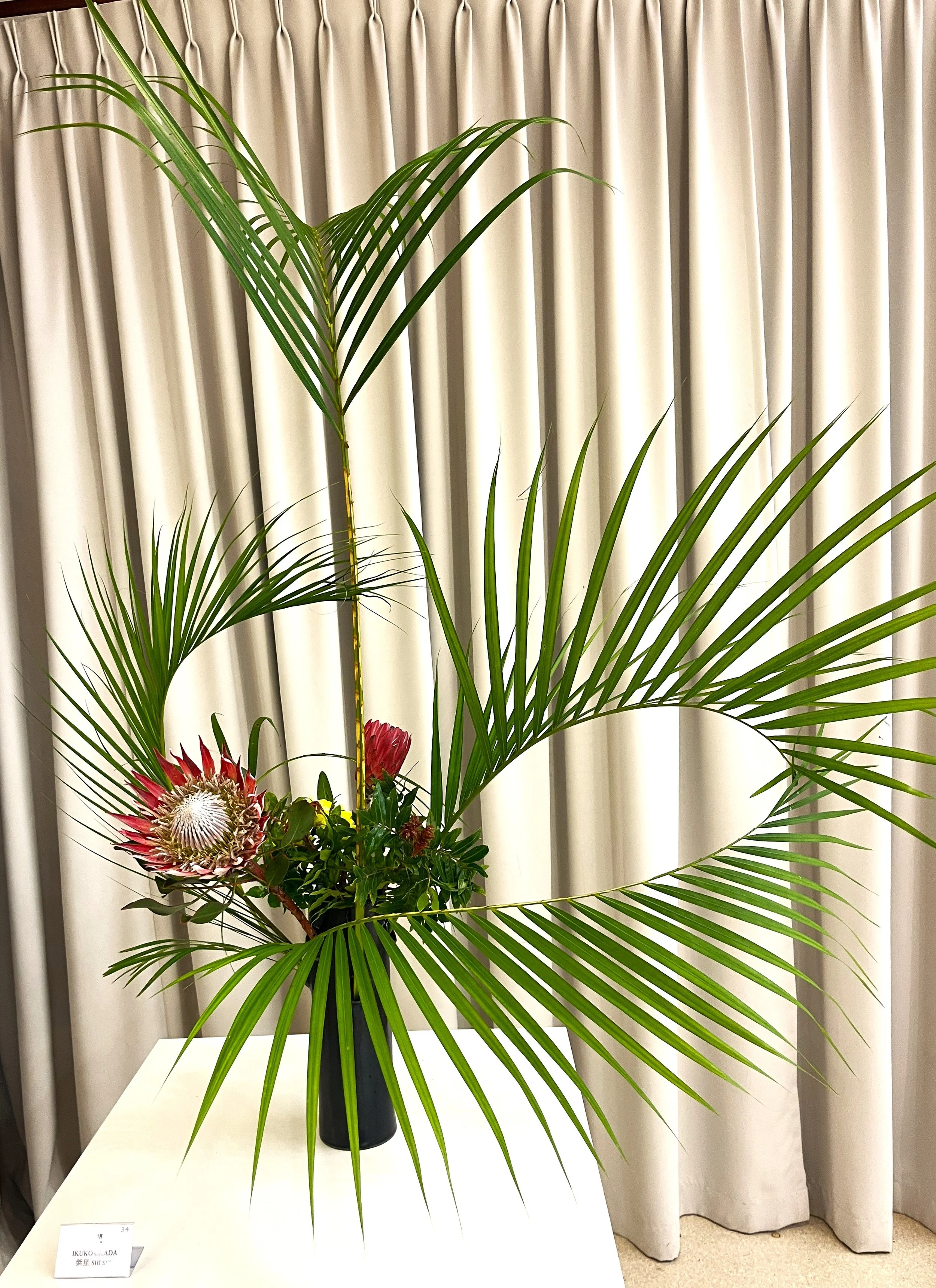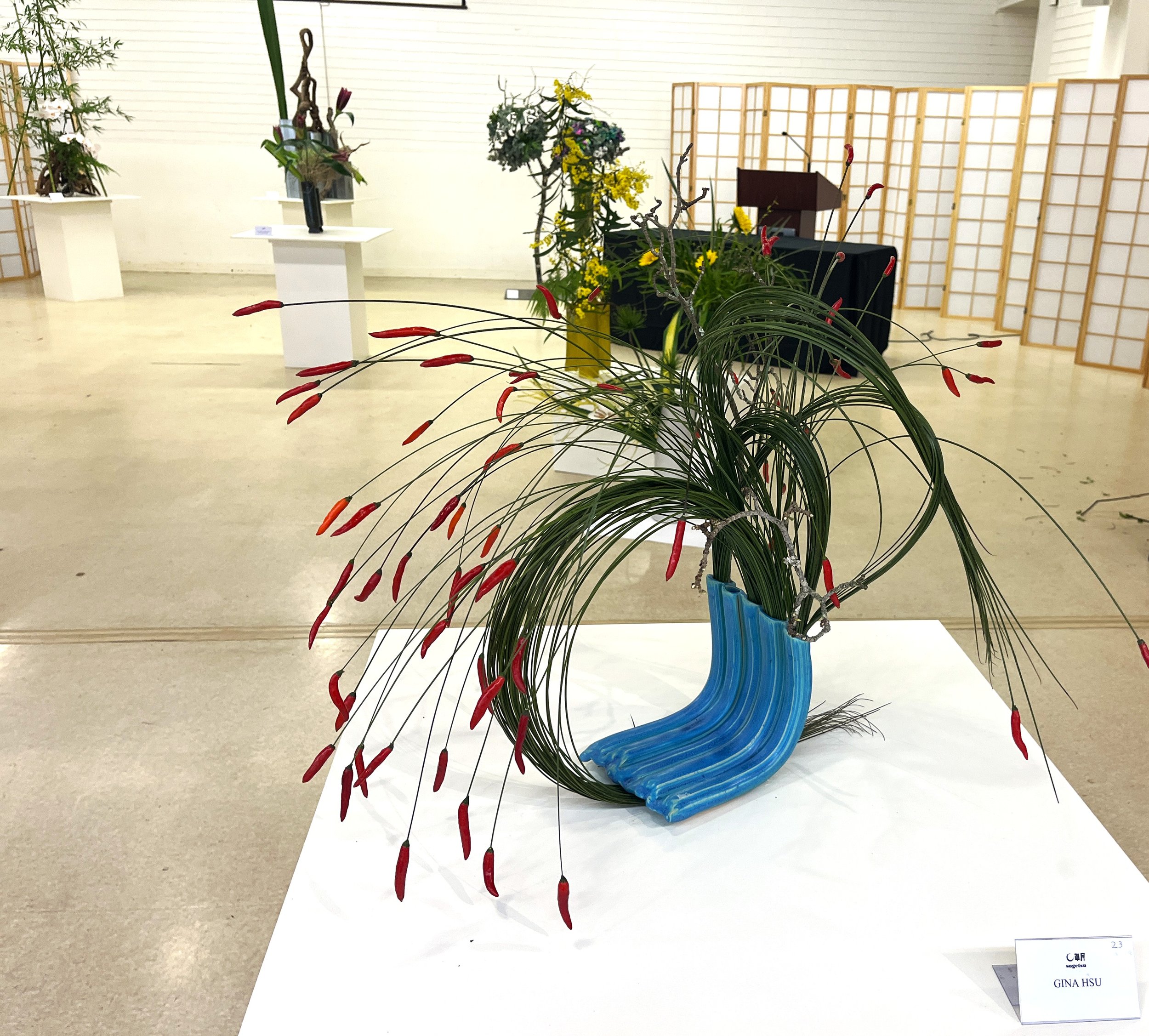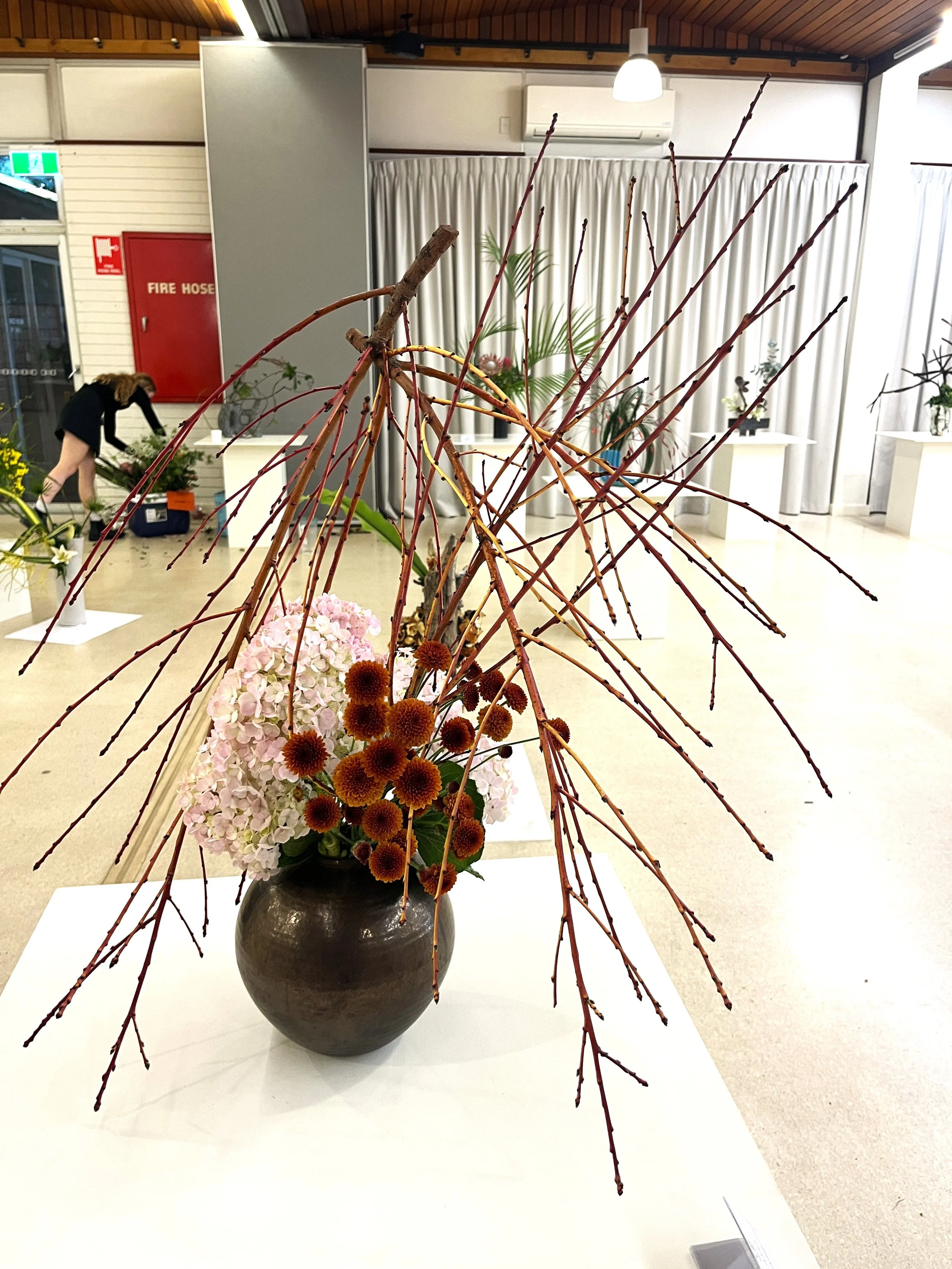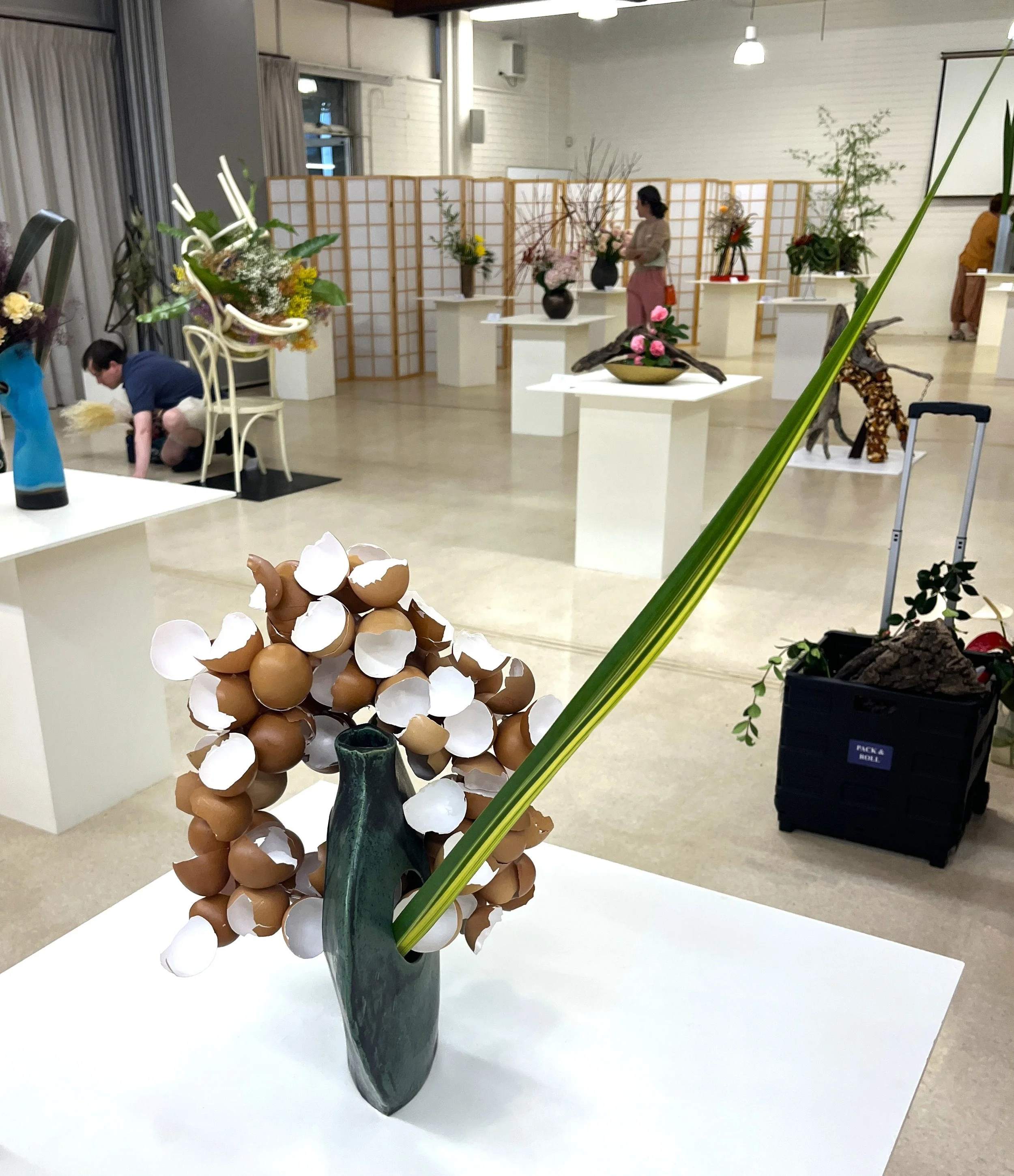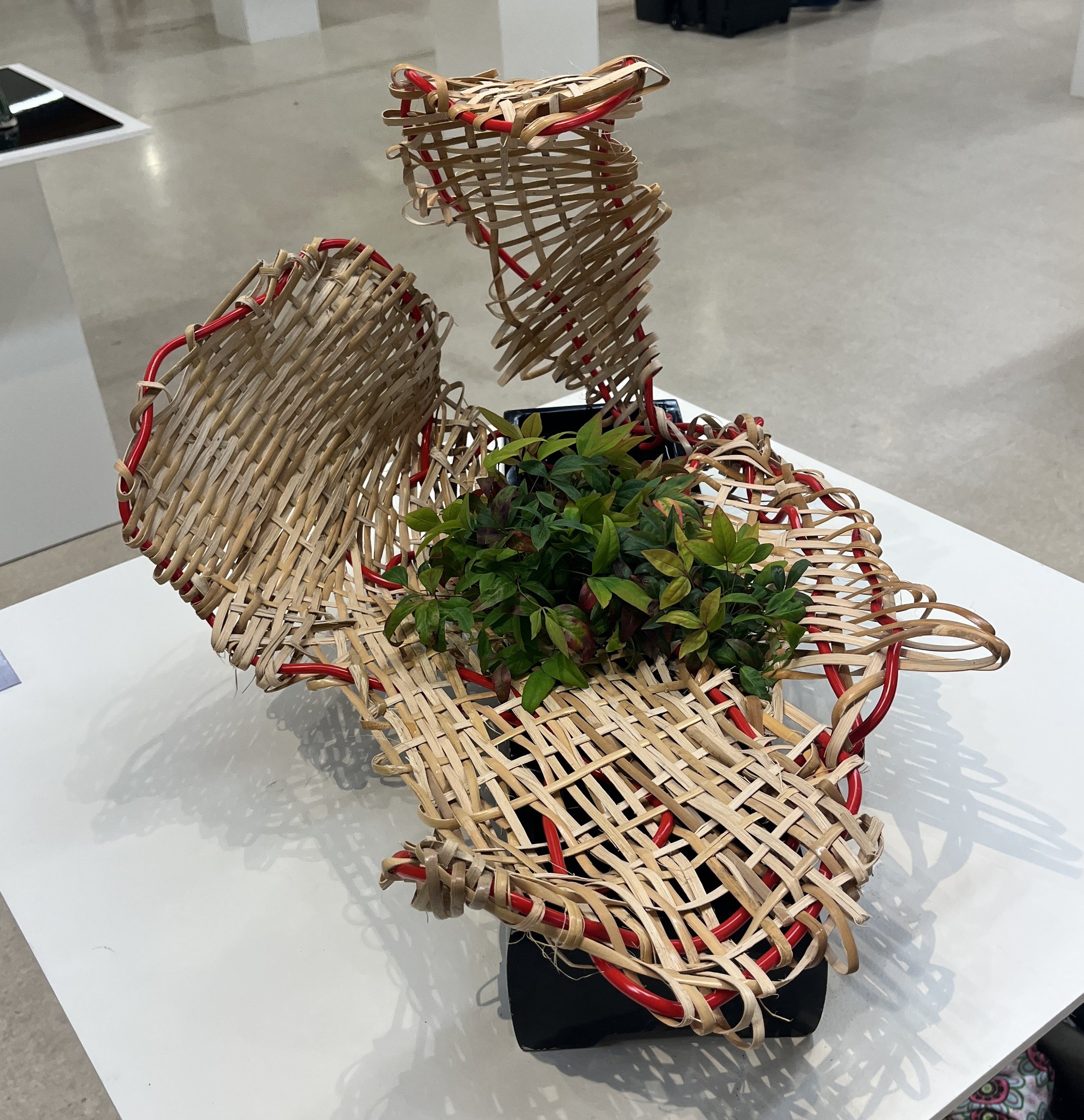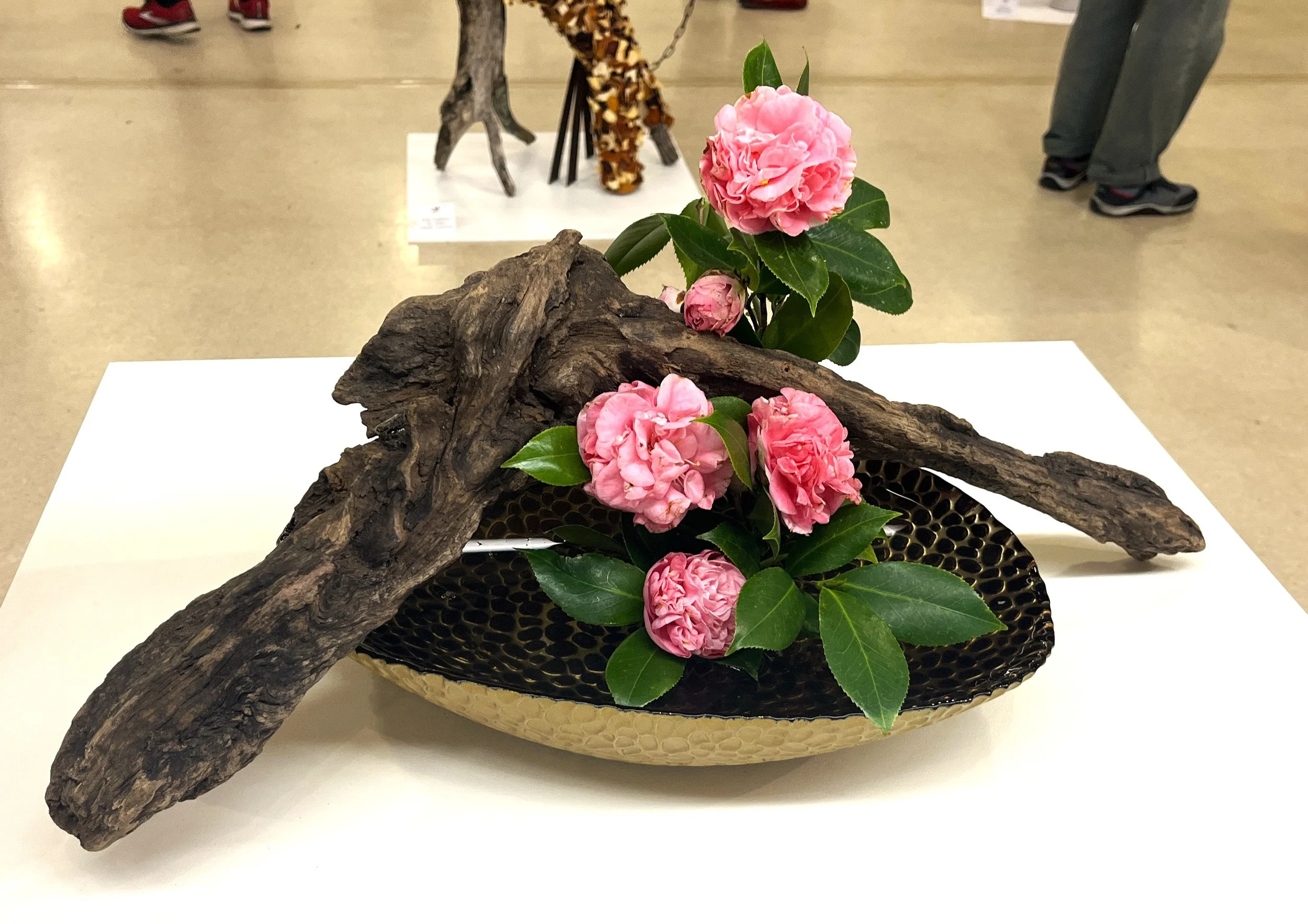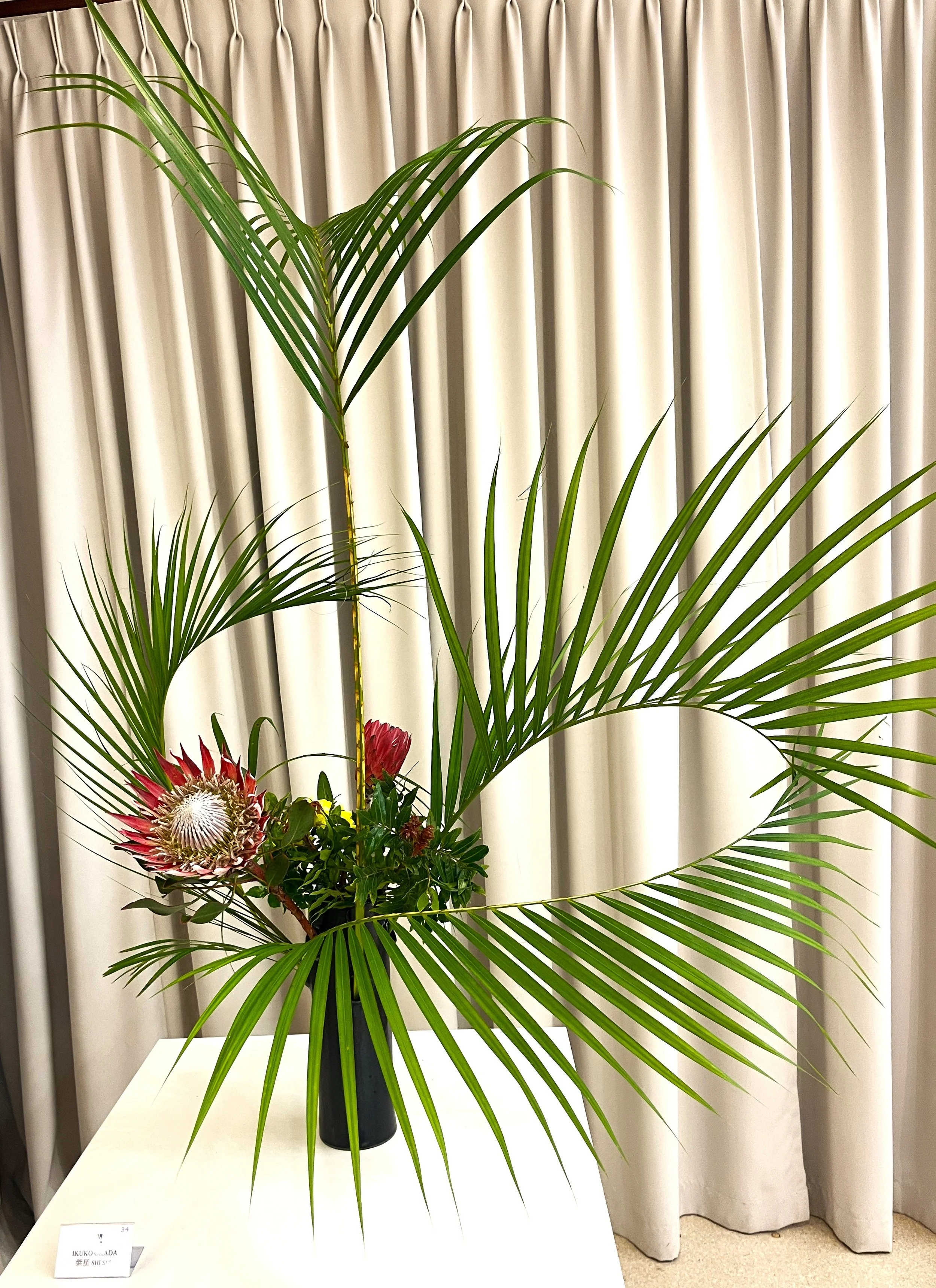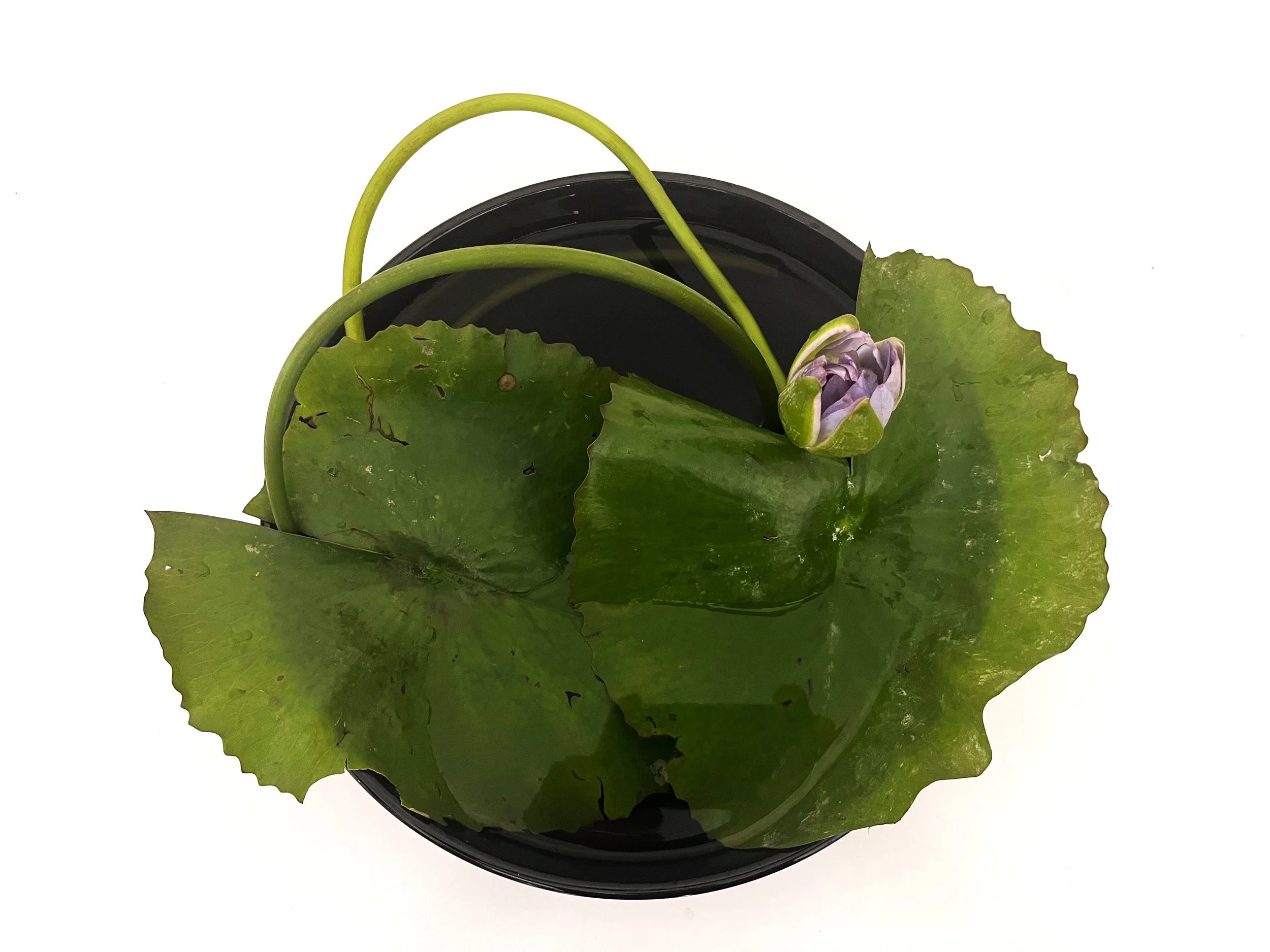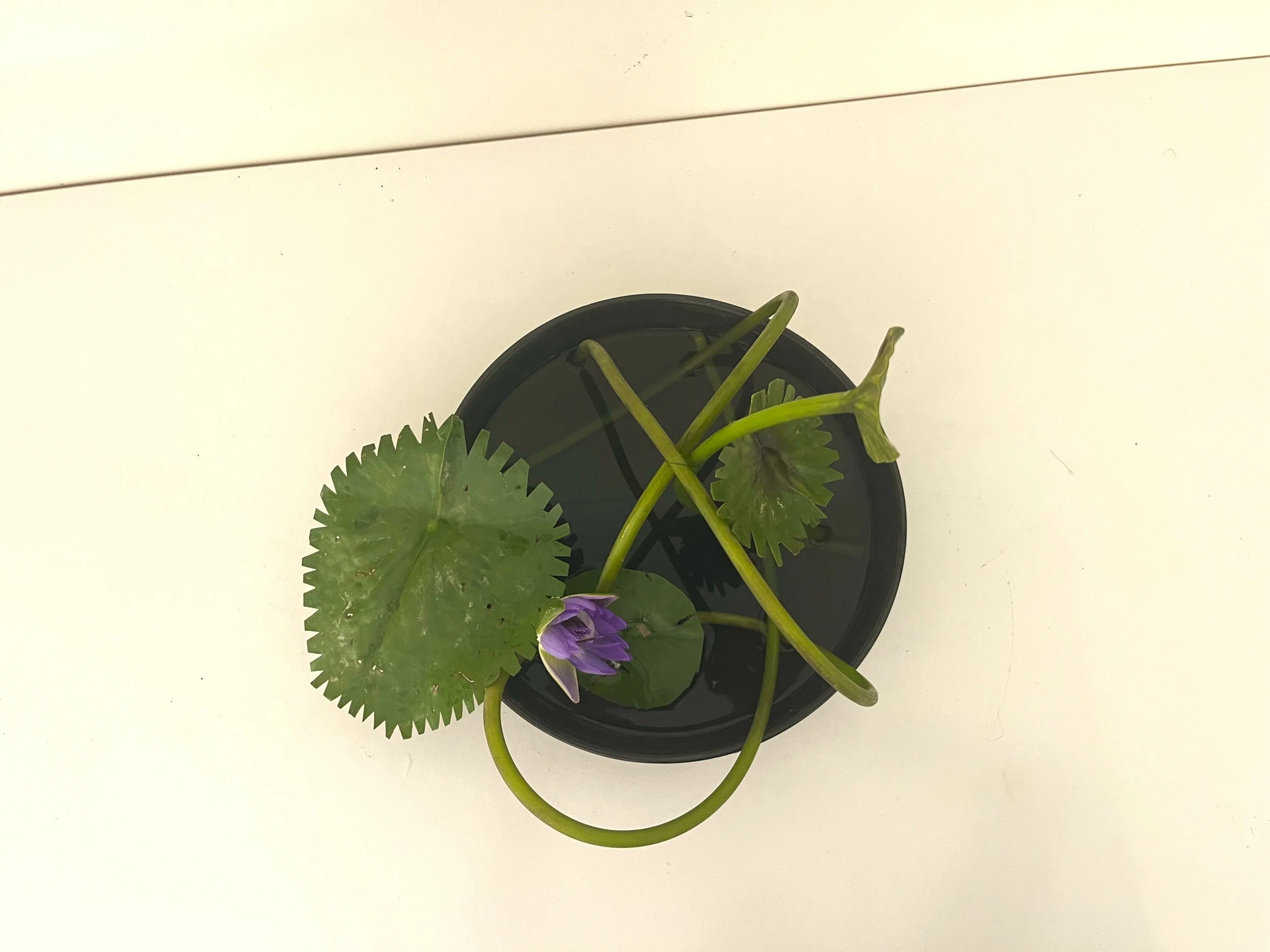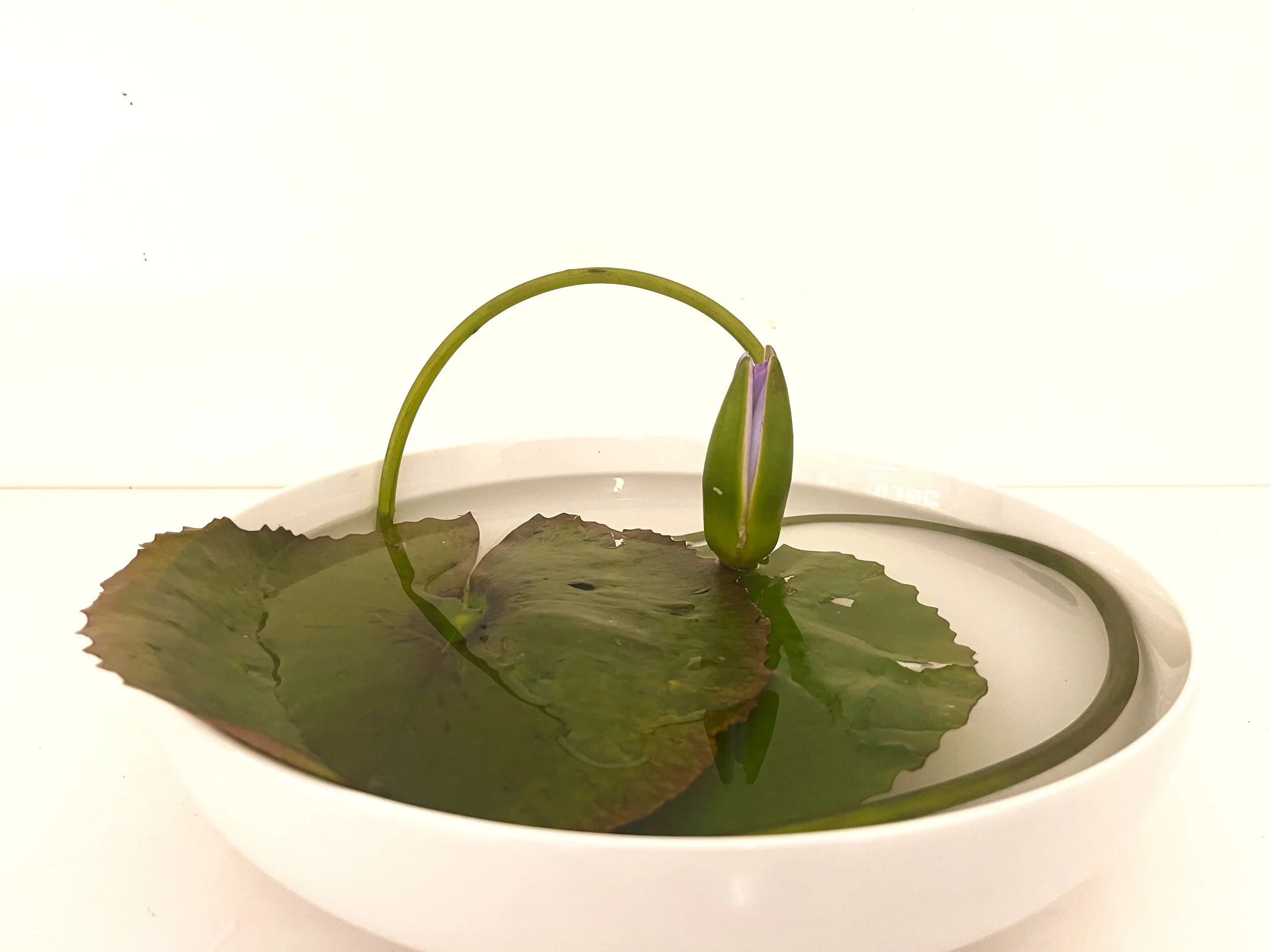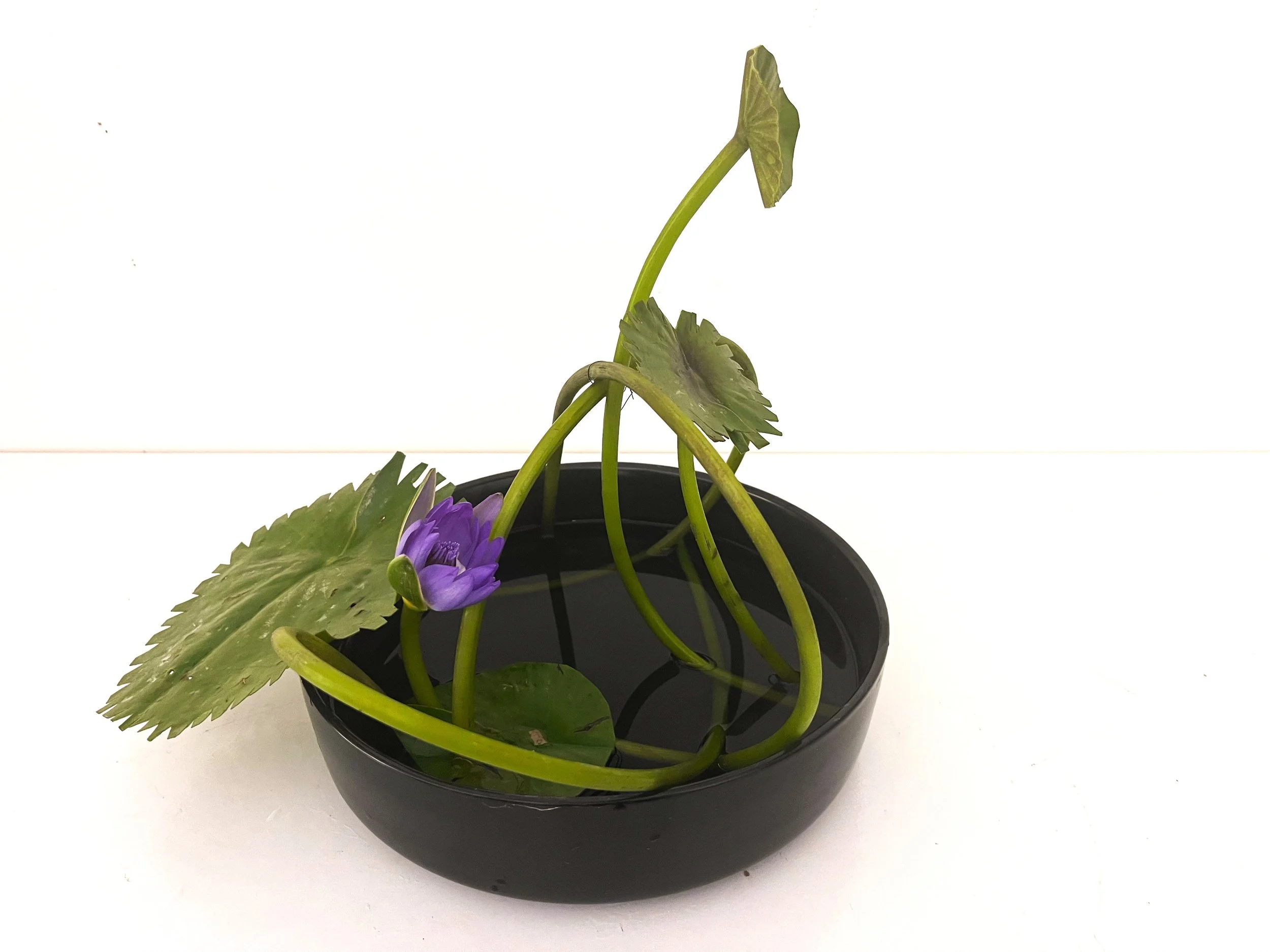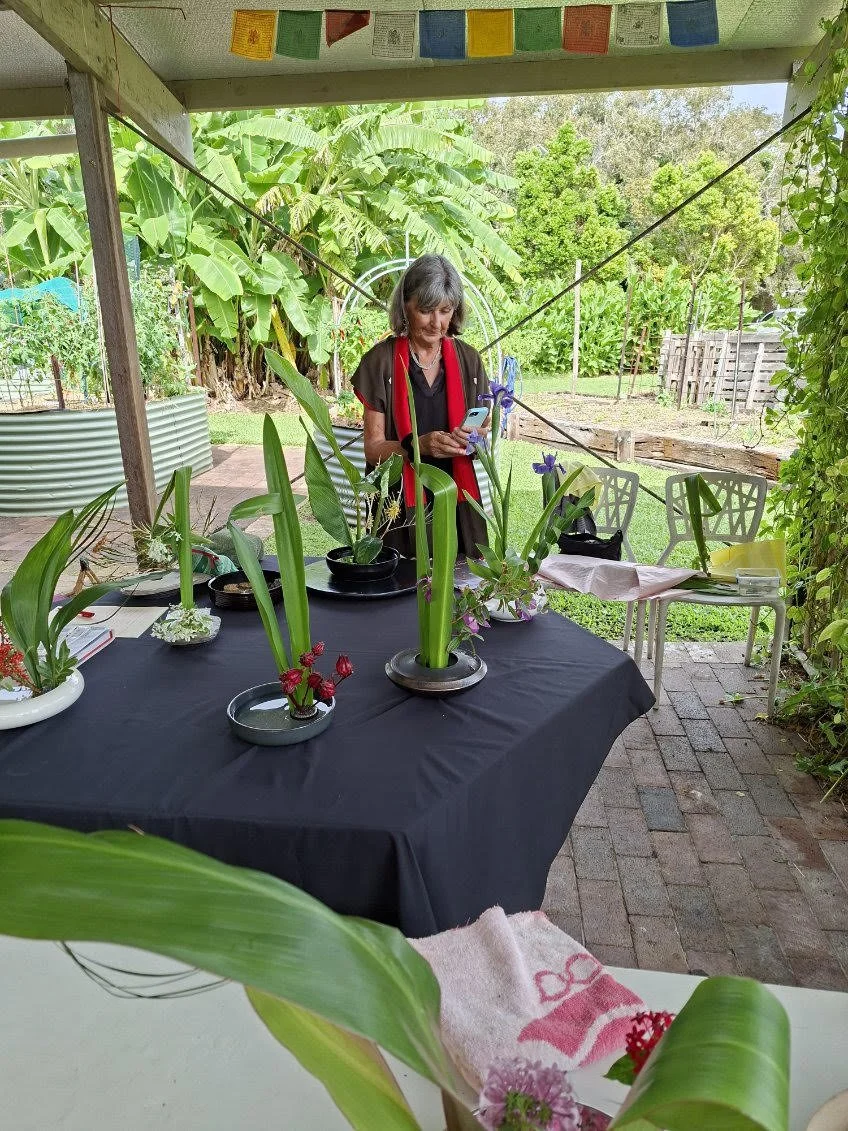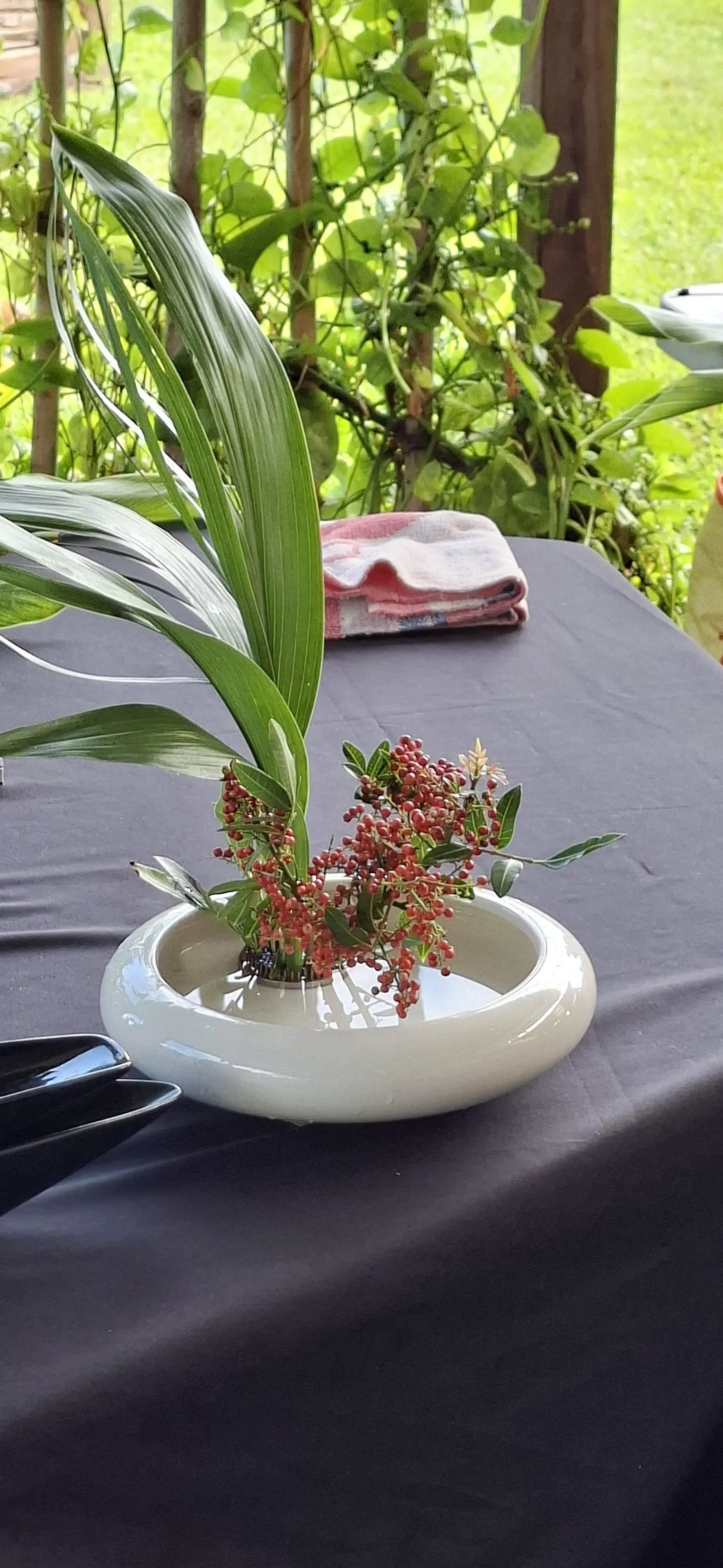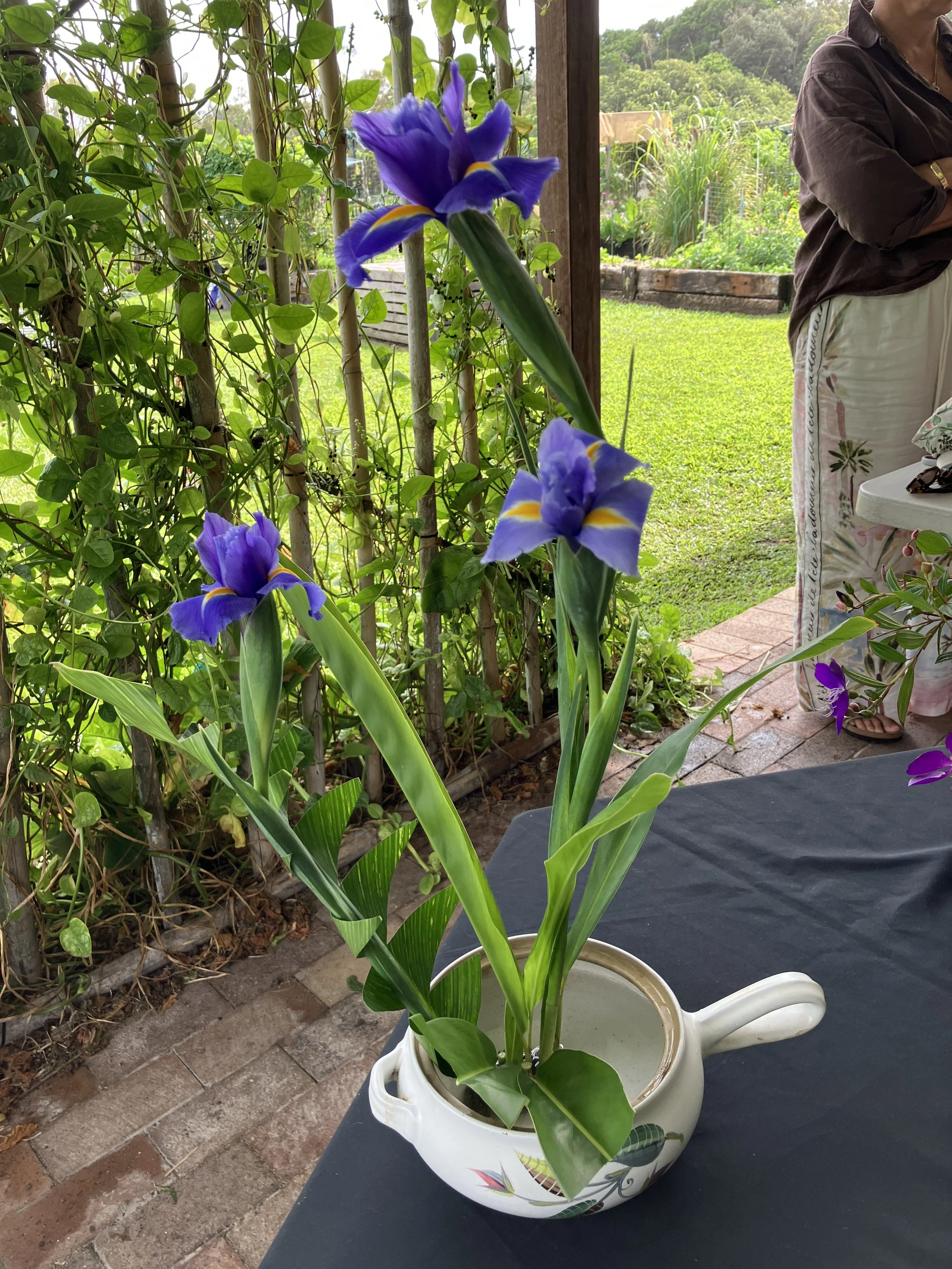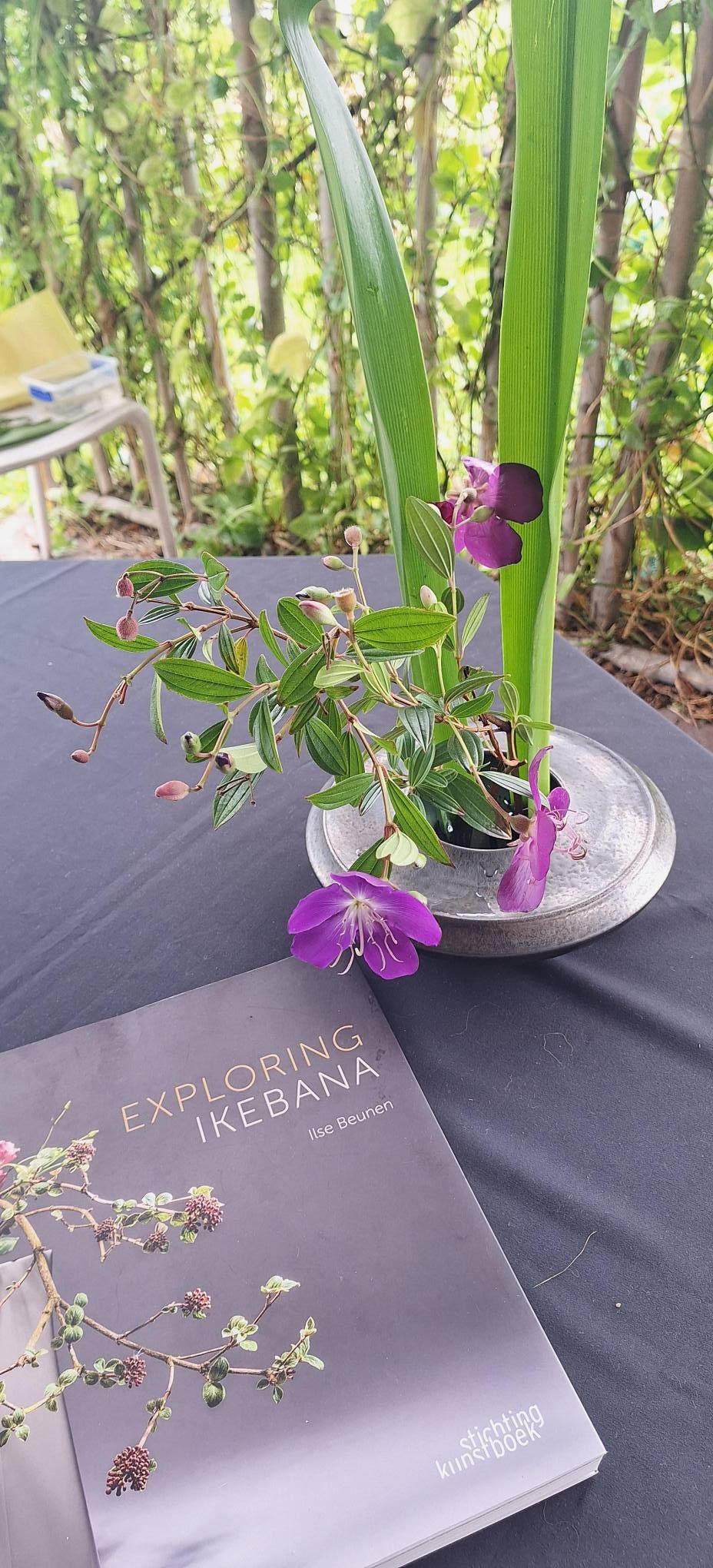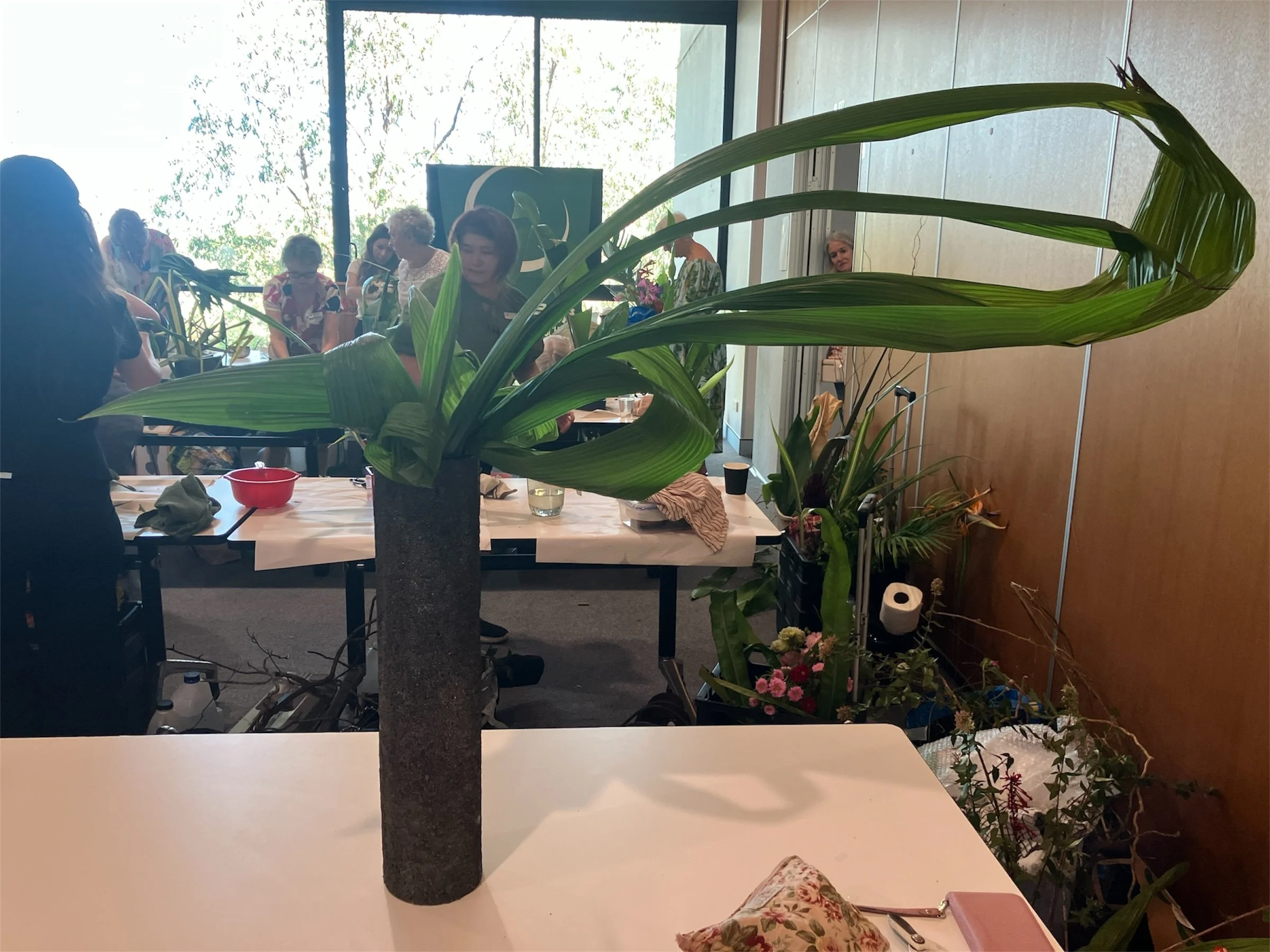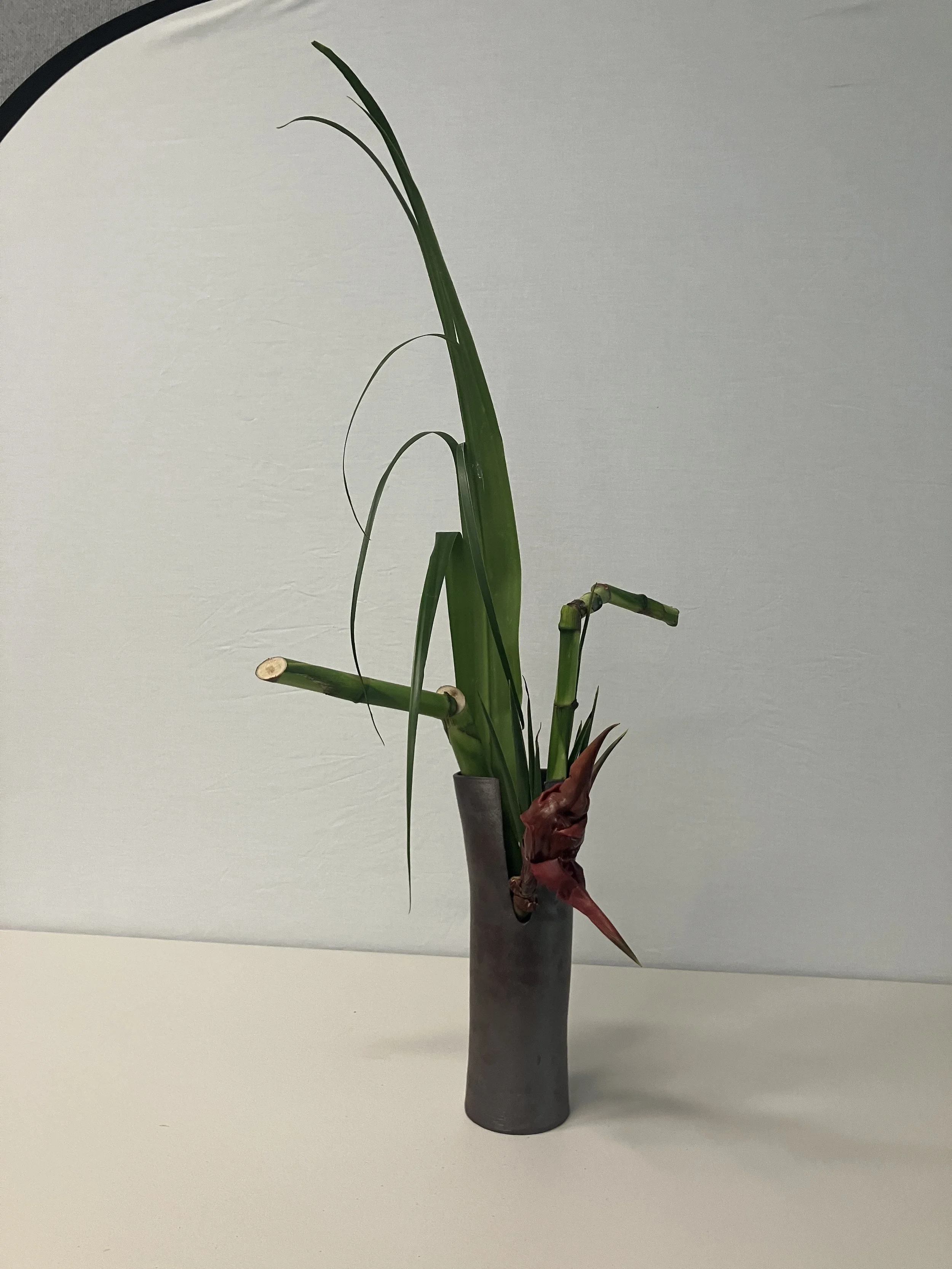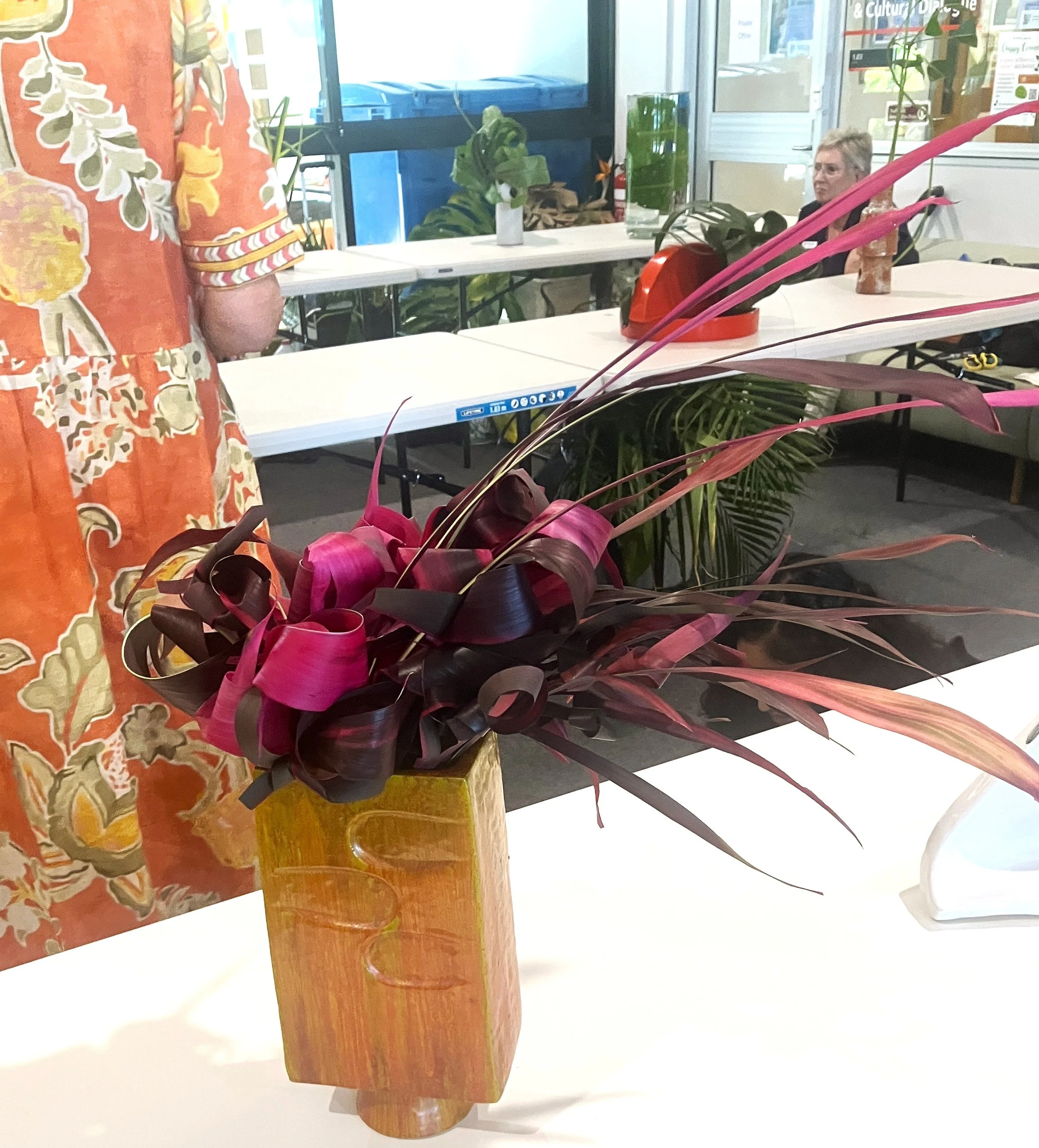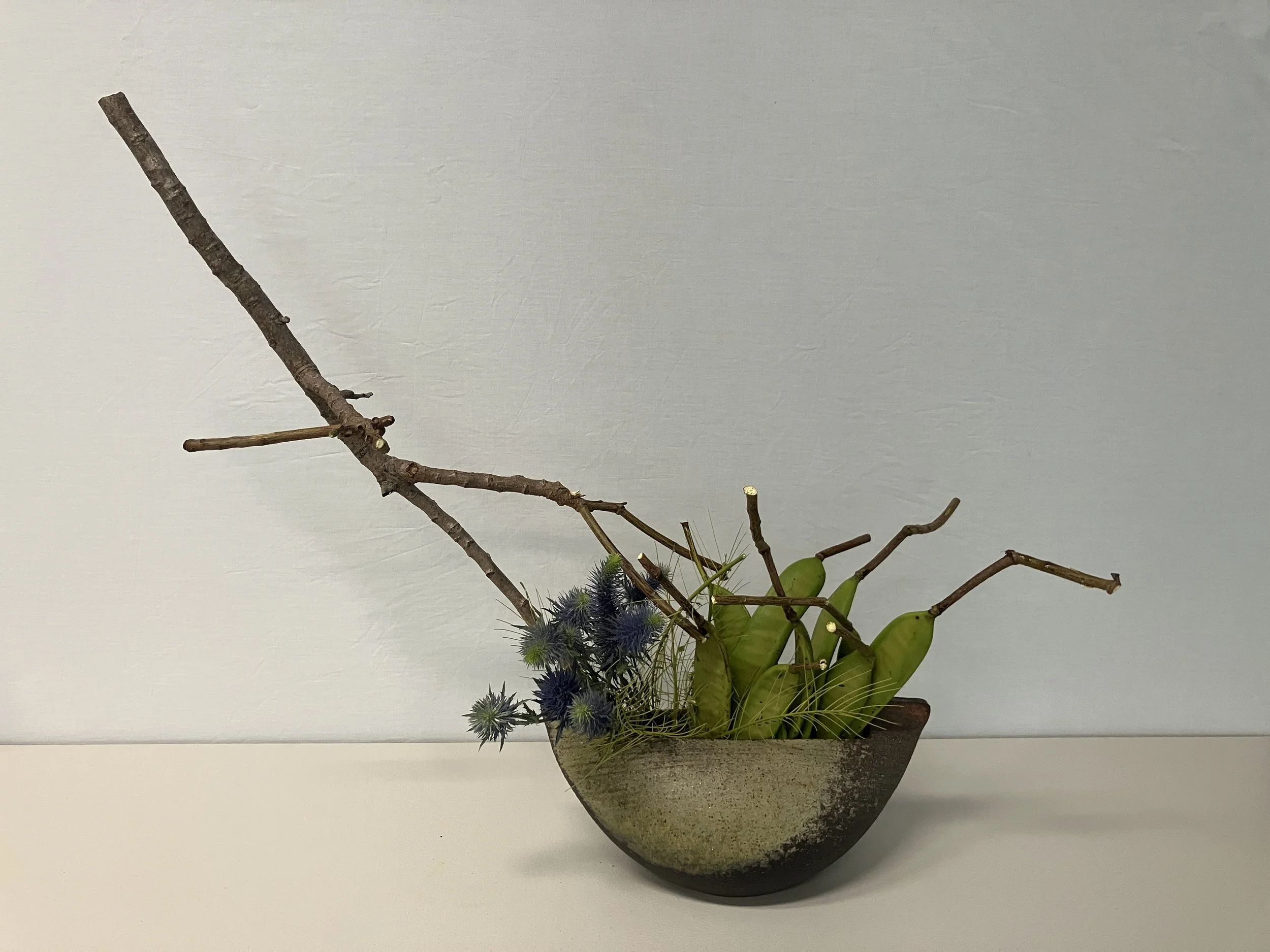
Transforming a Landscape into an Ikebana-Arrangement

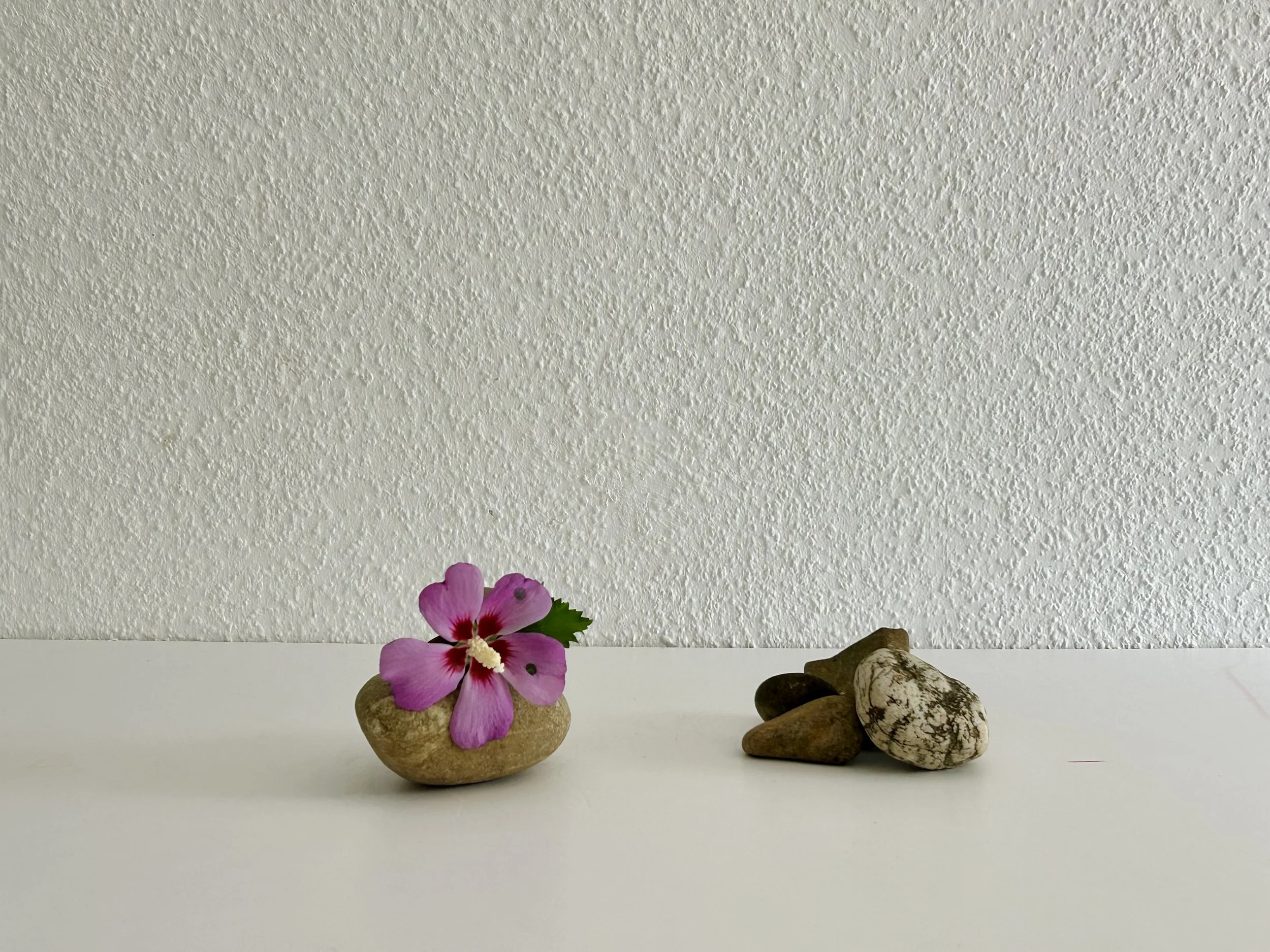
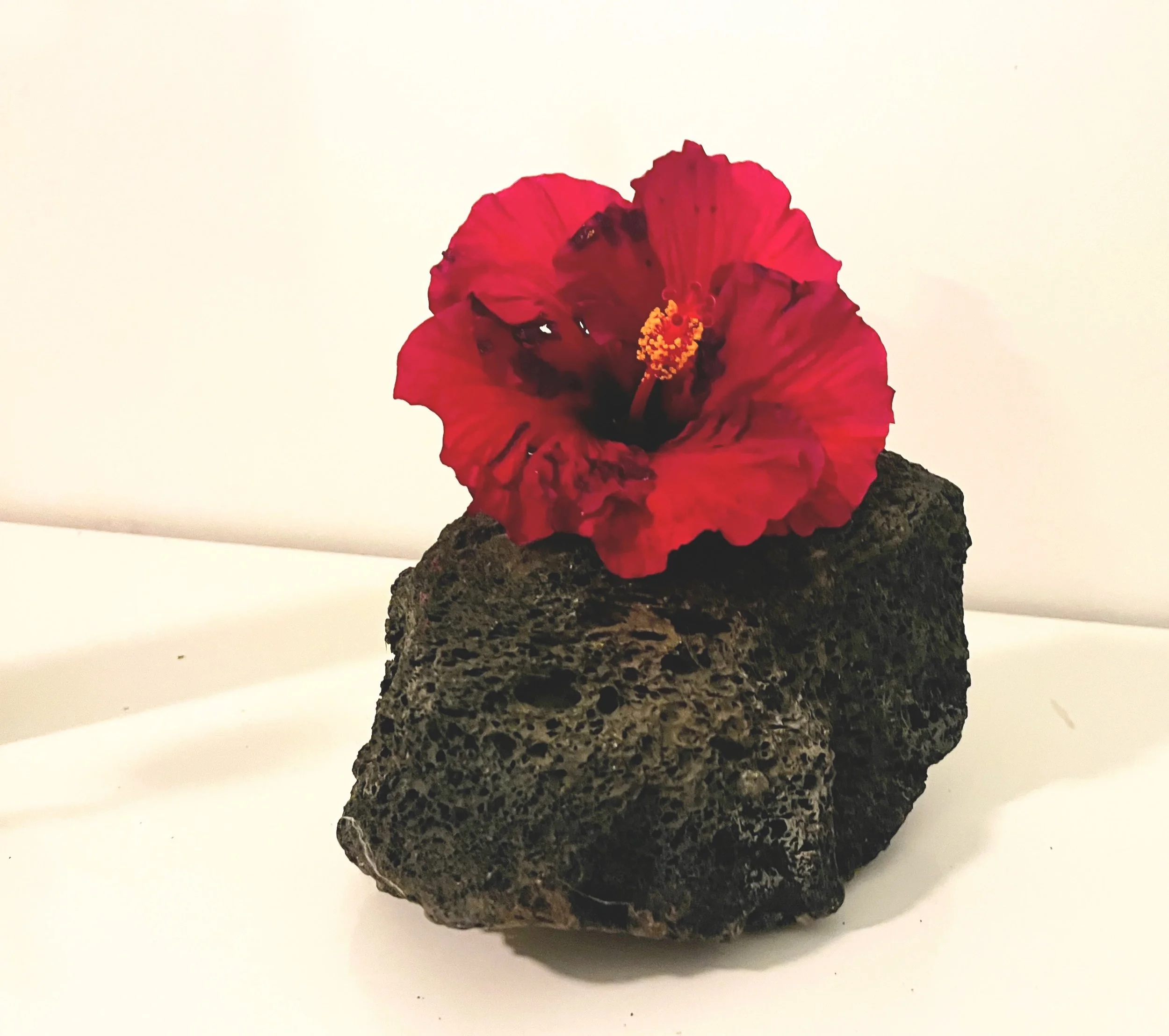
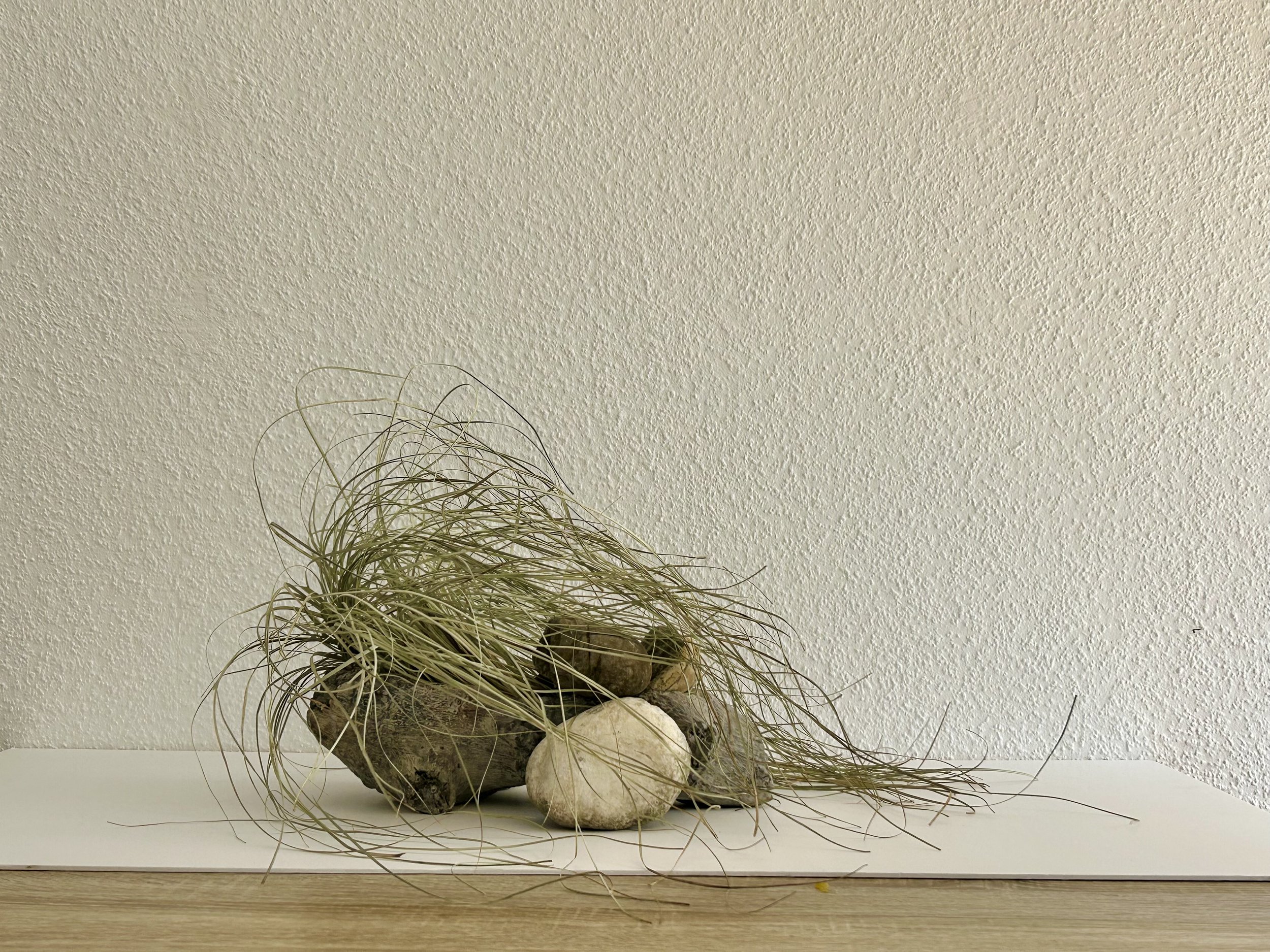
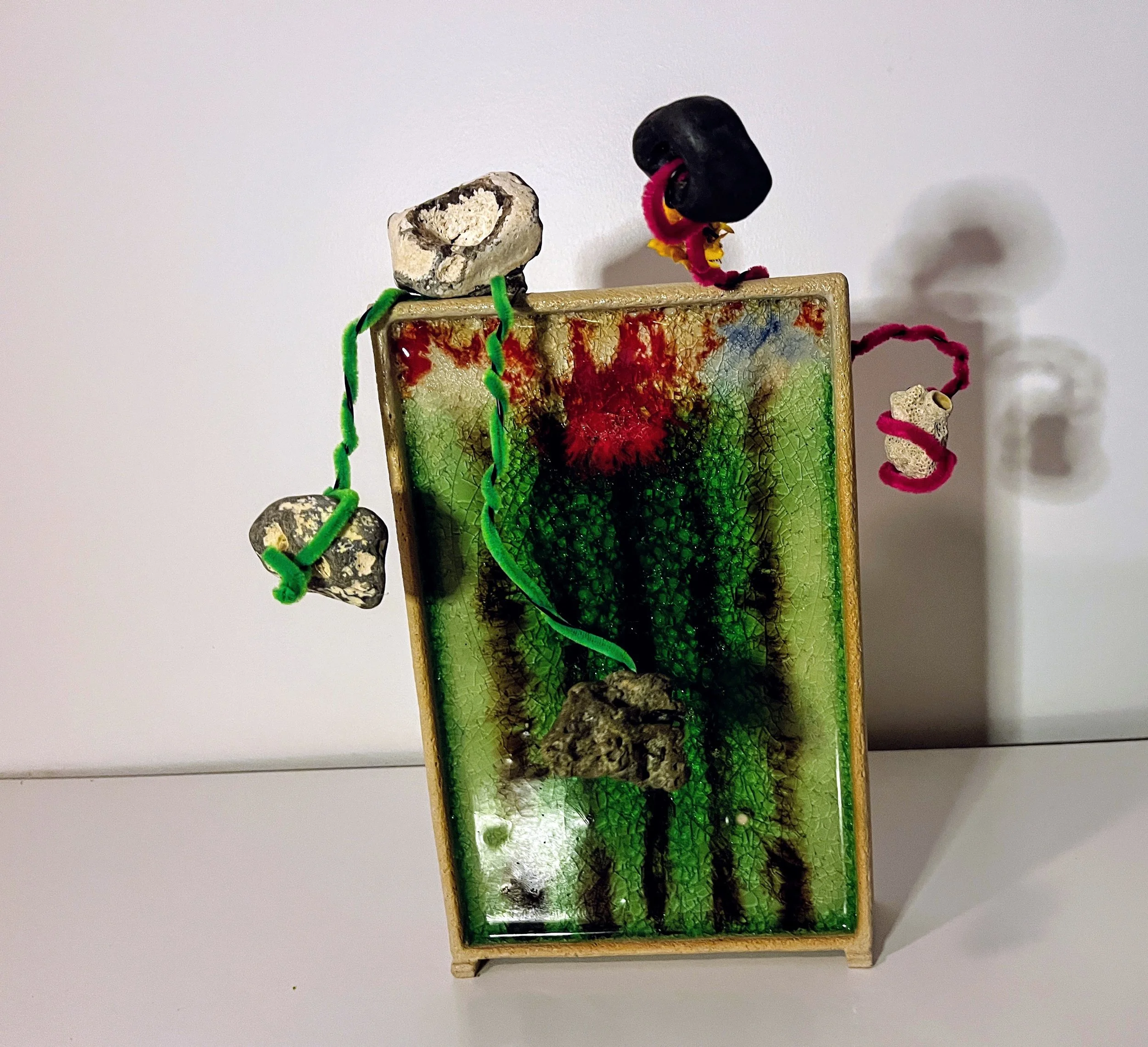
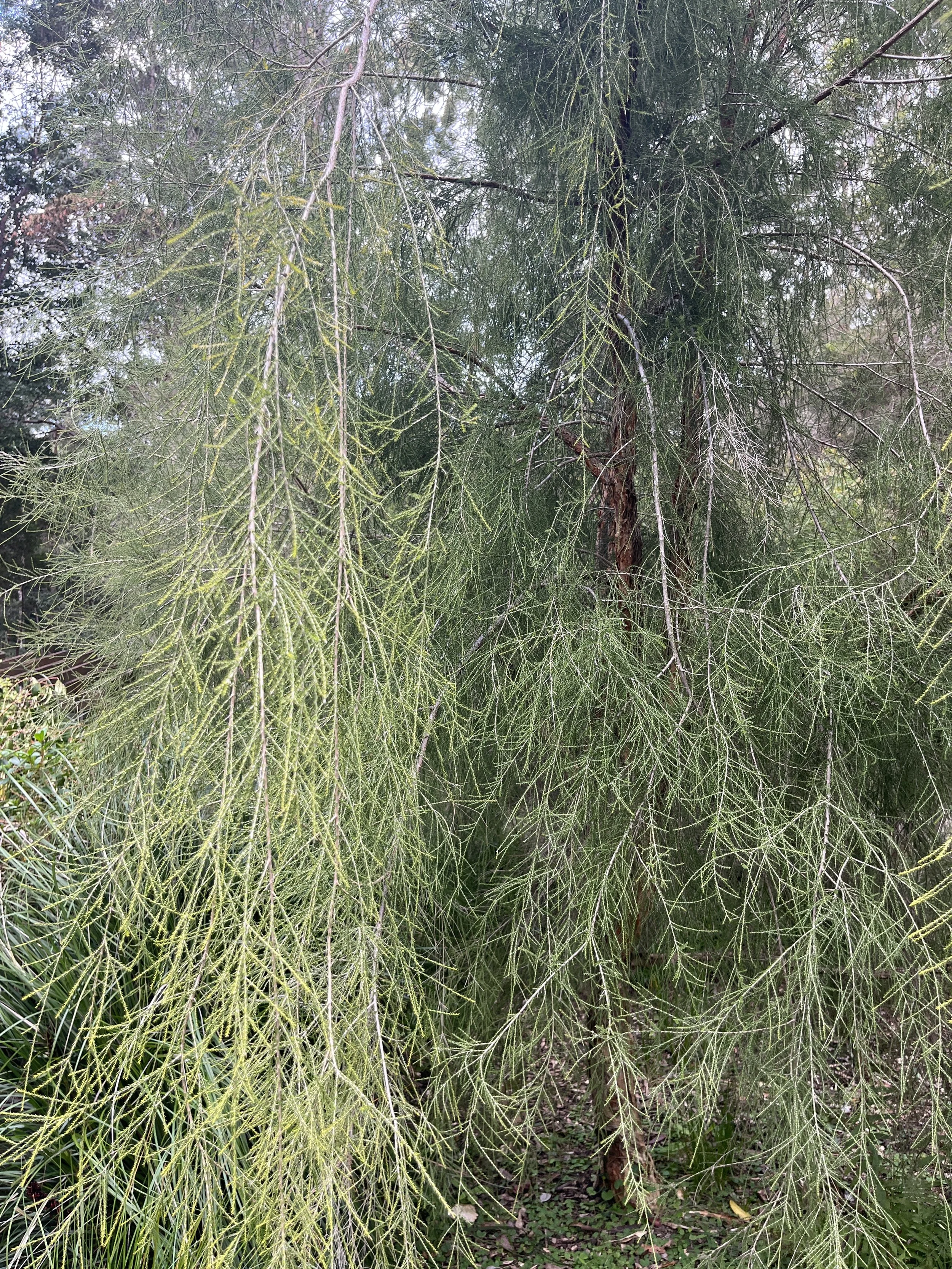
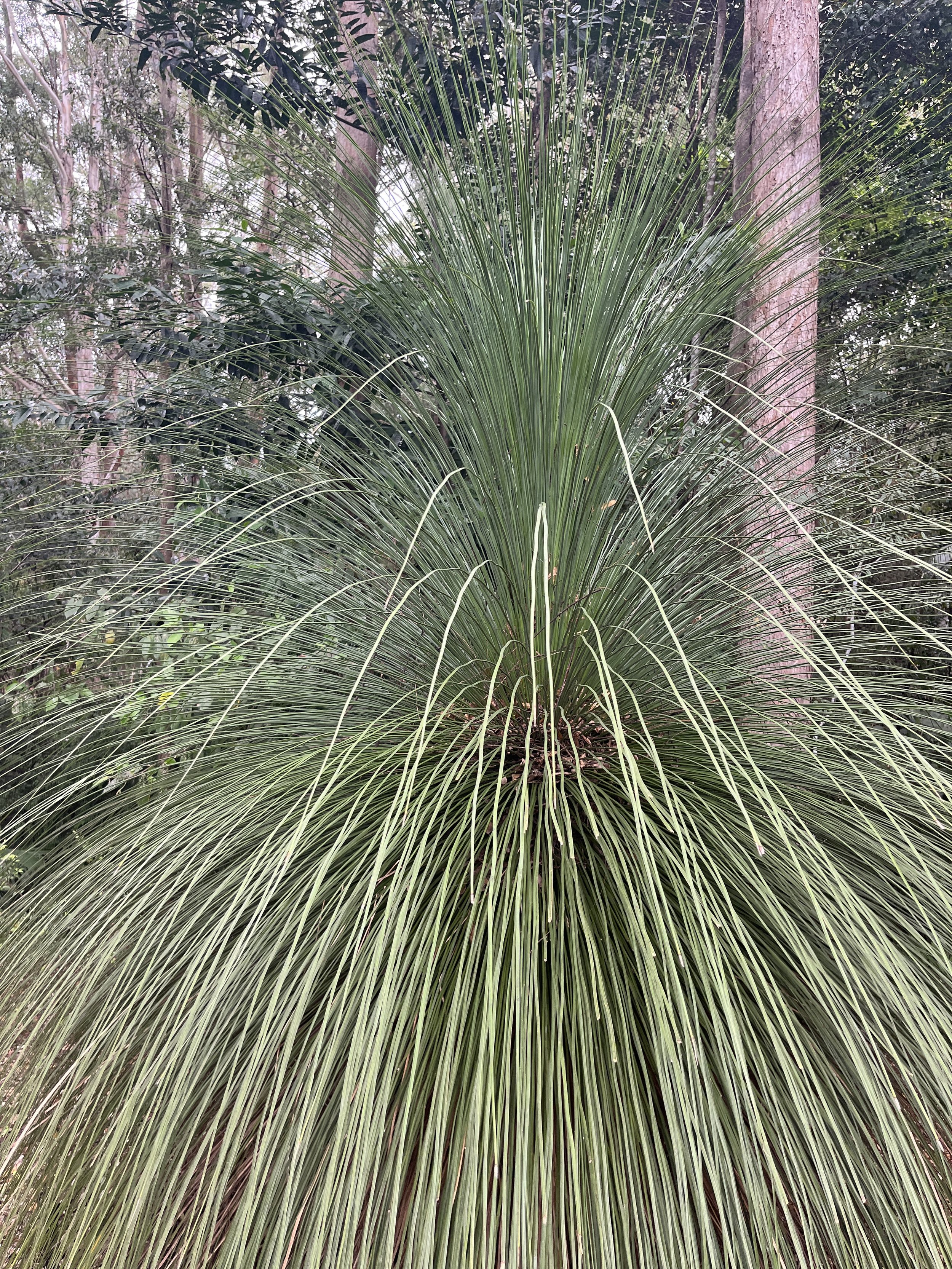
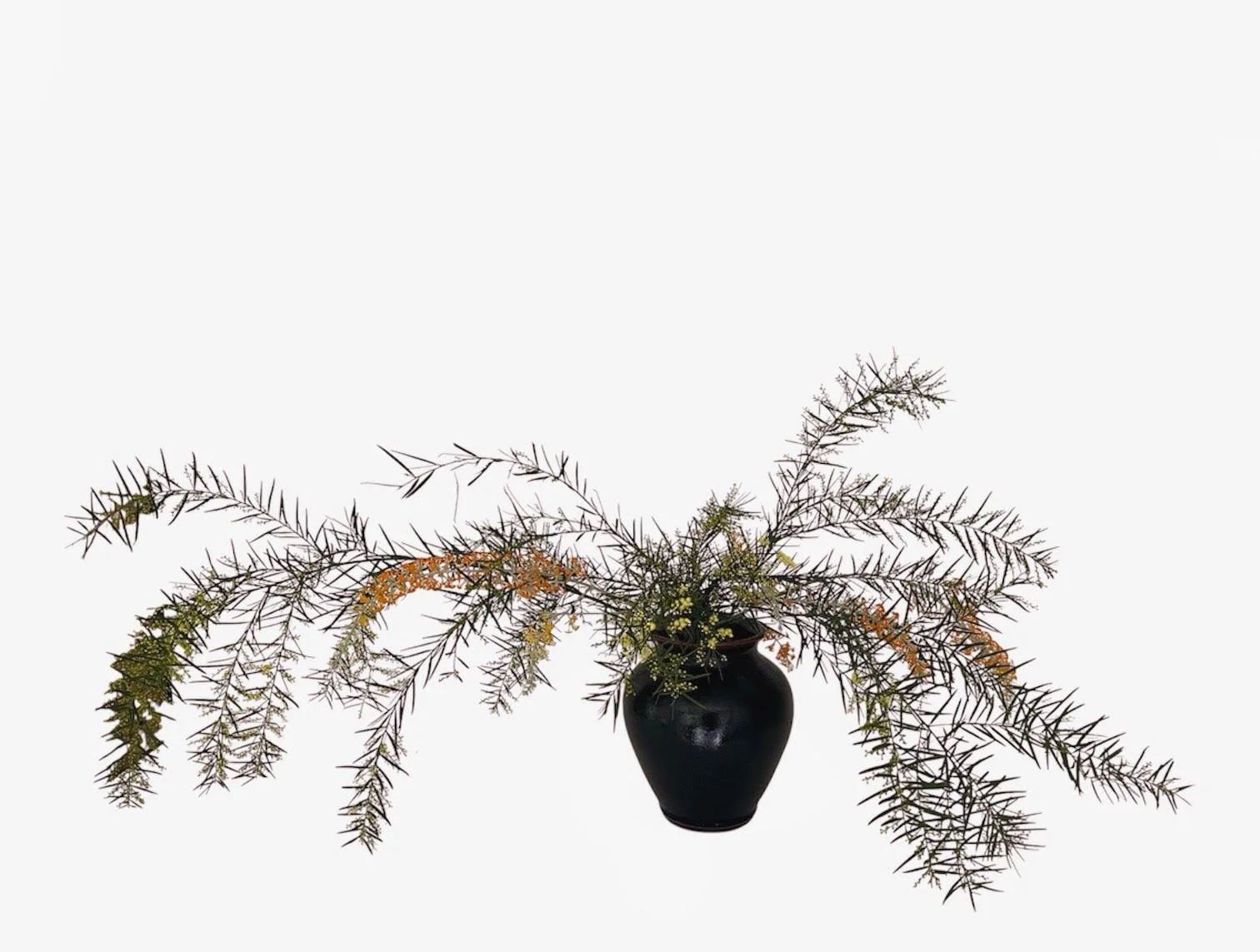
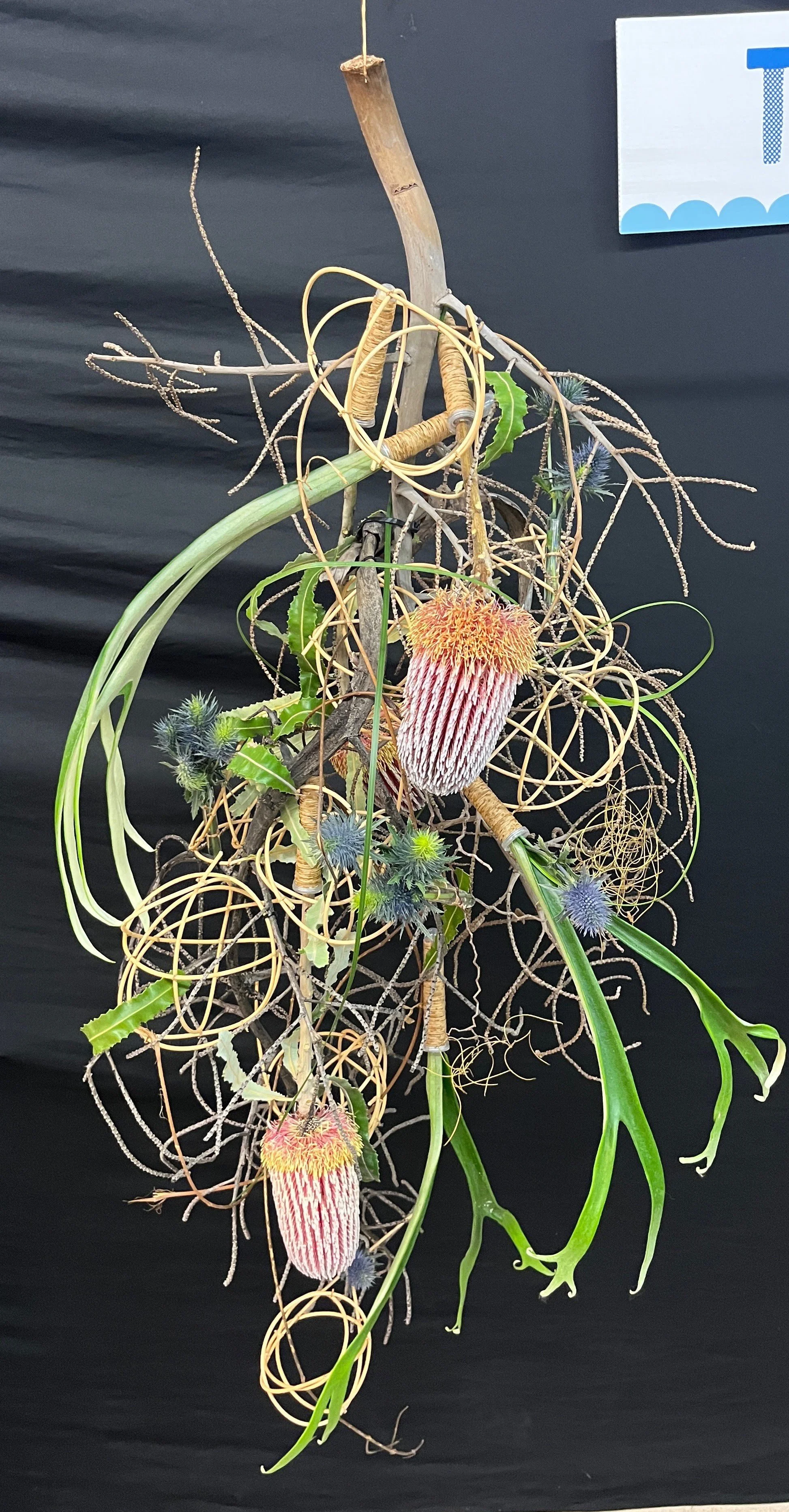
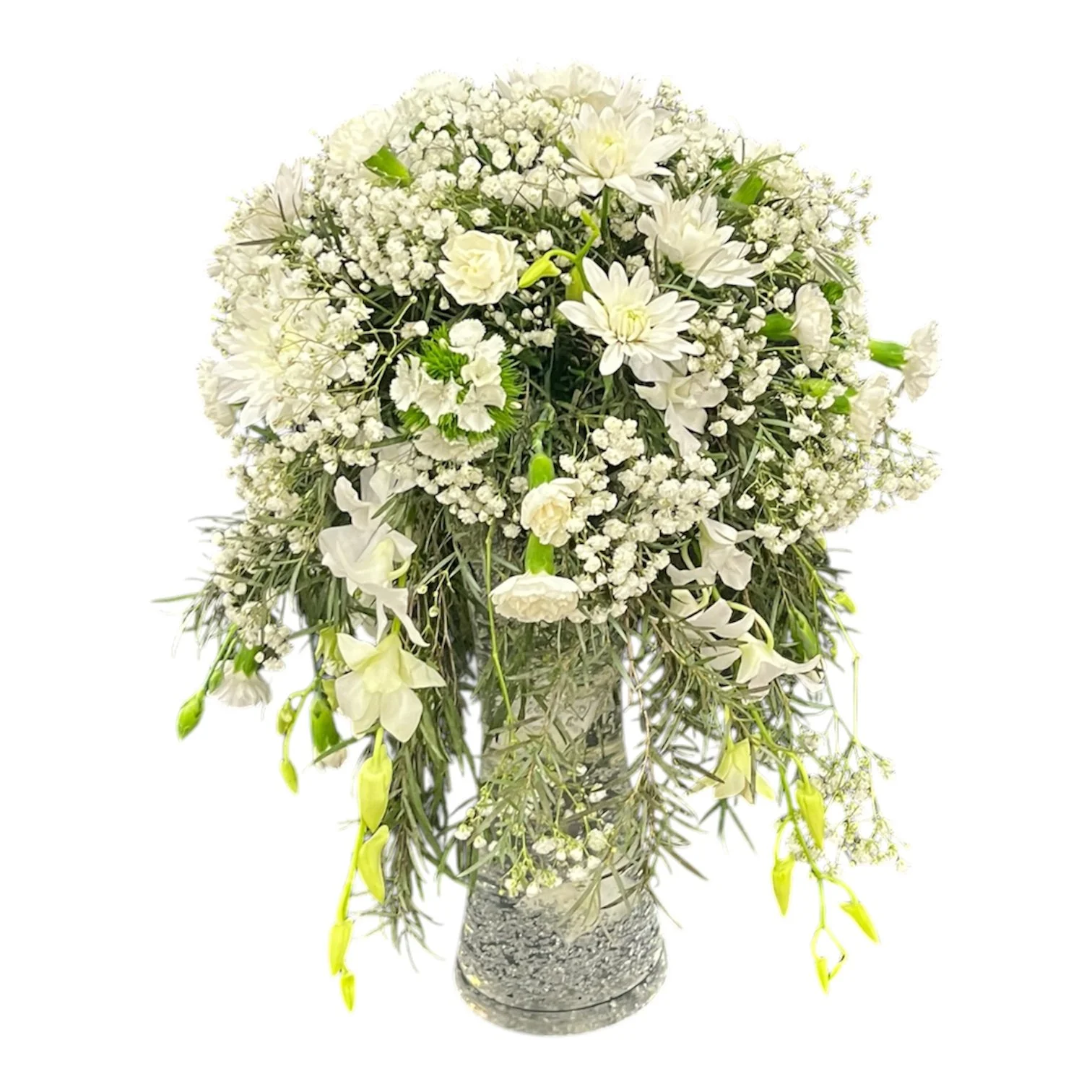
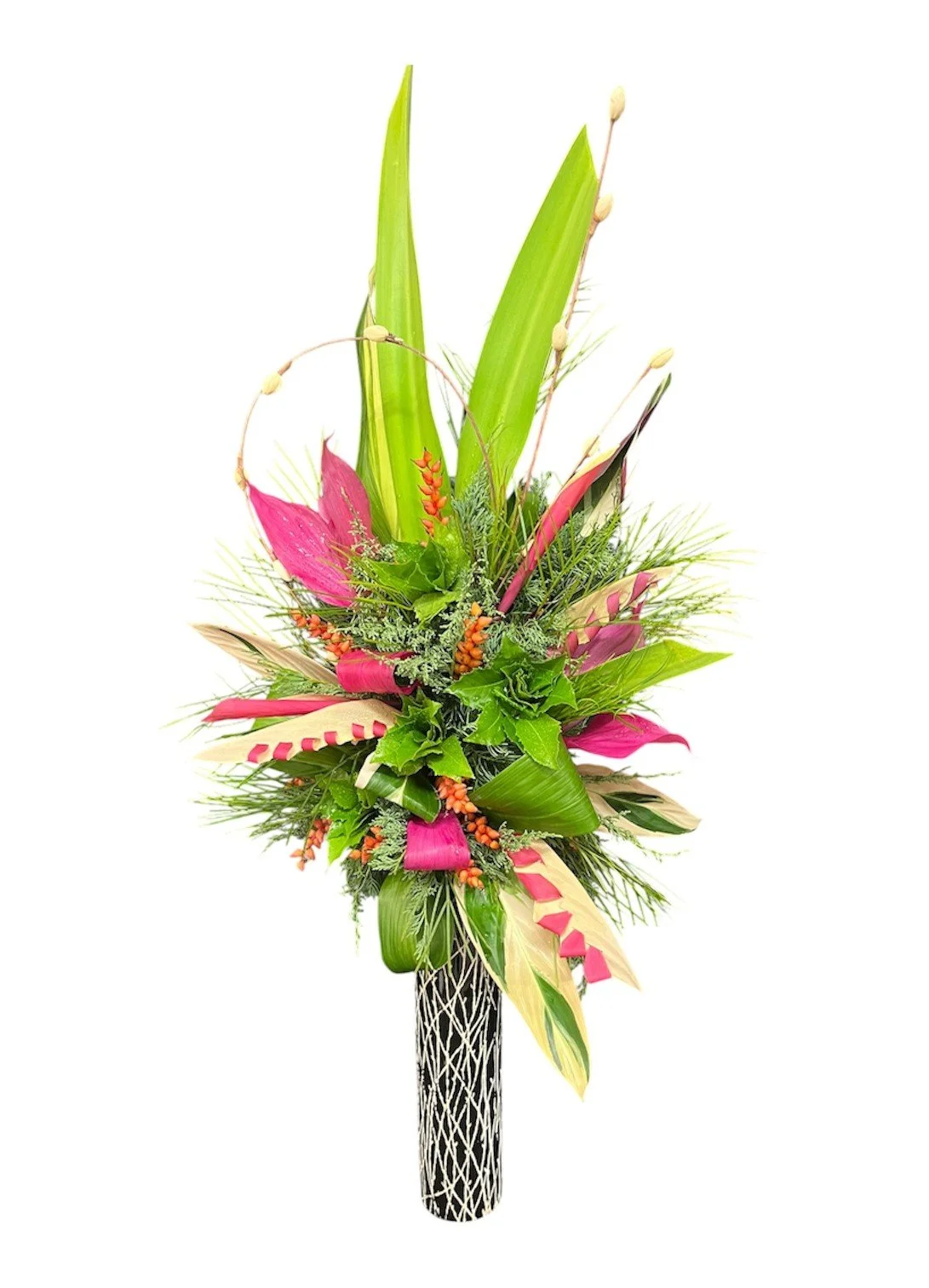
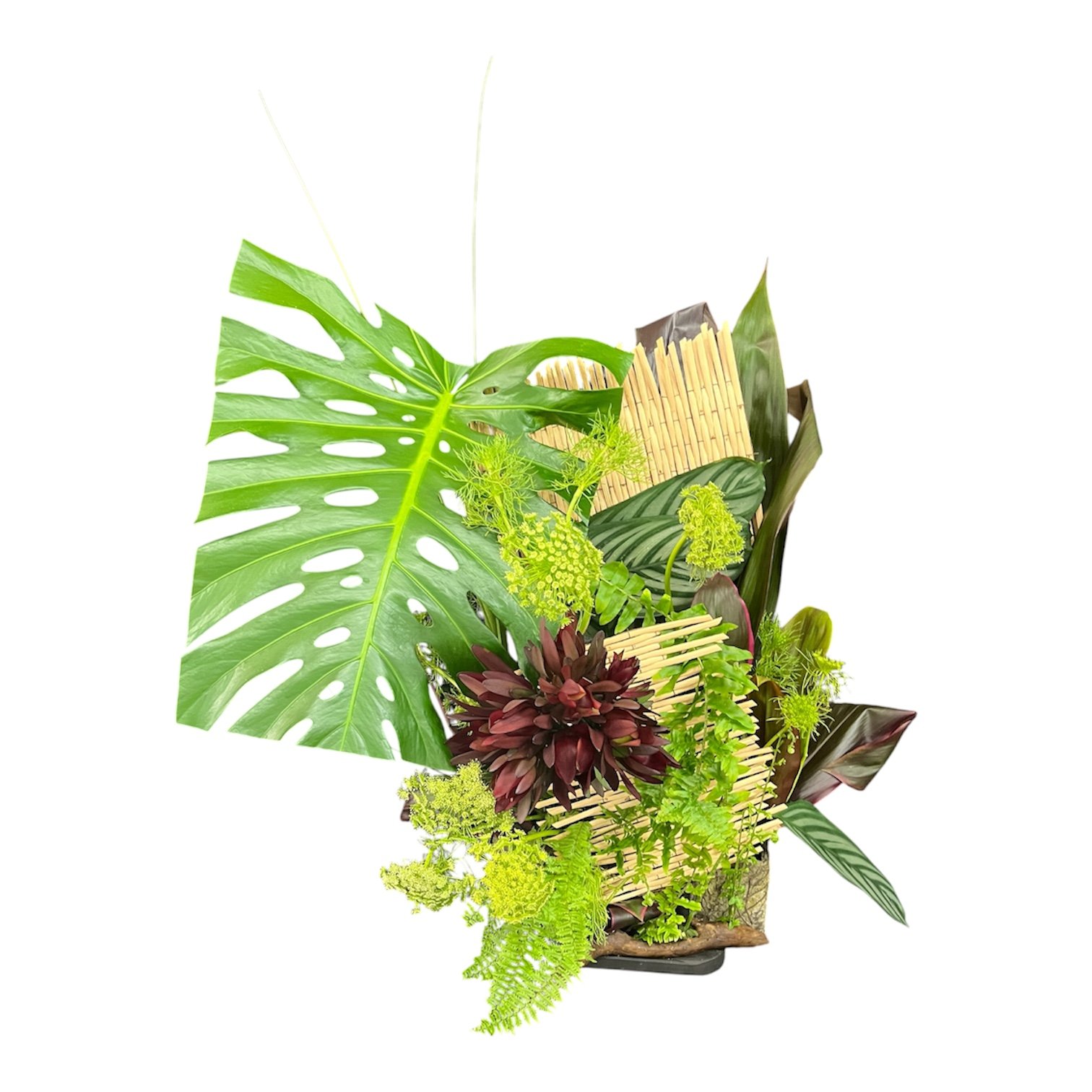
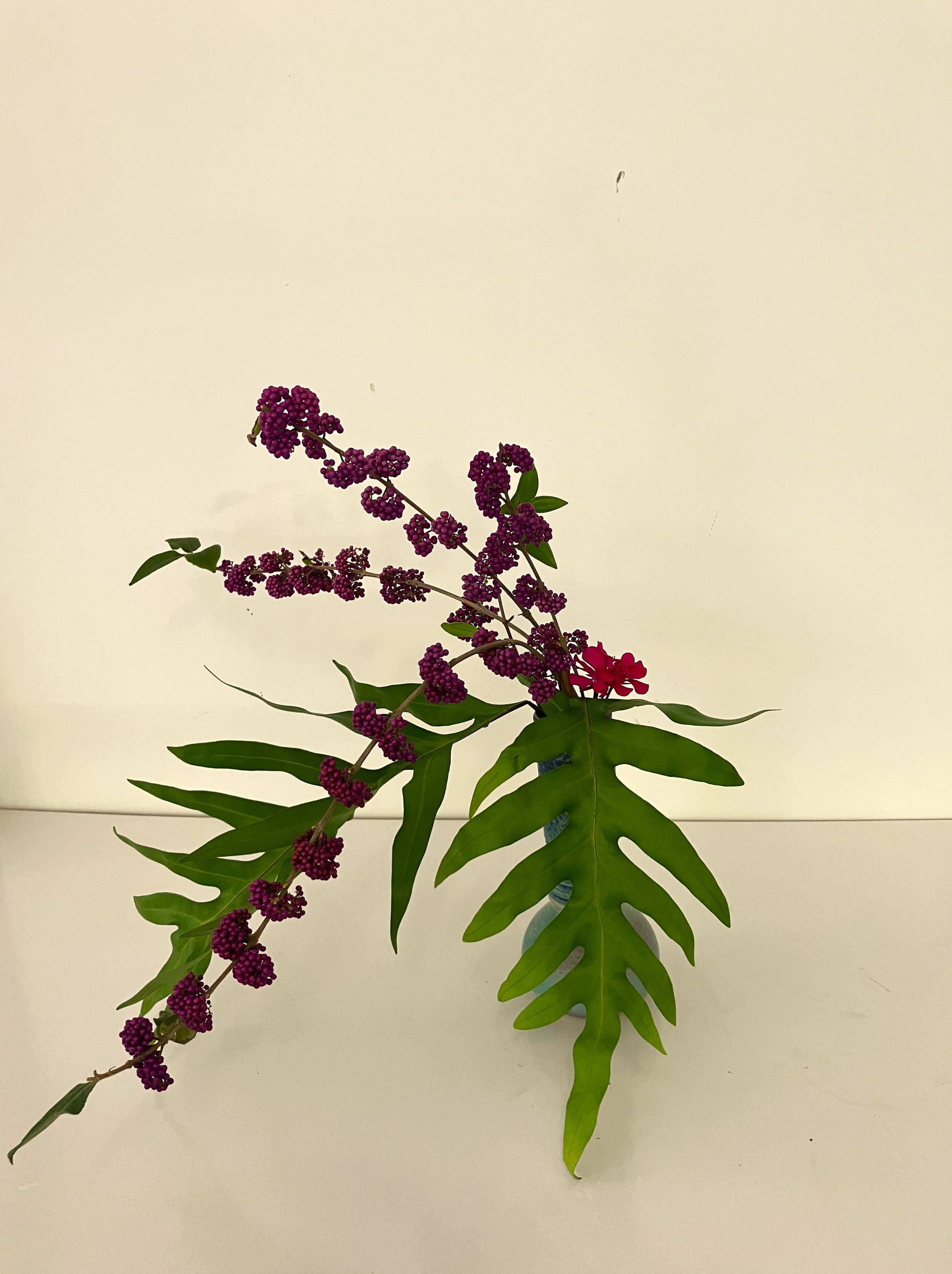
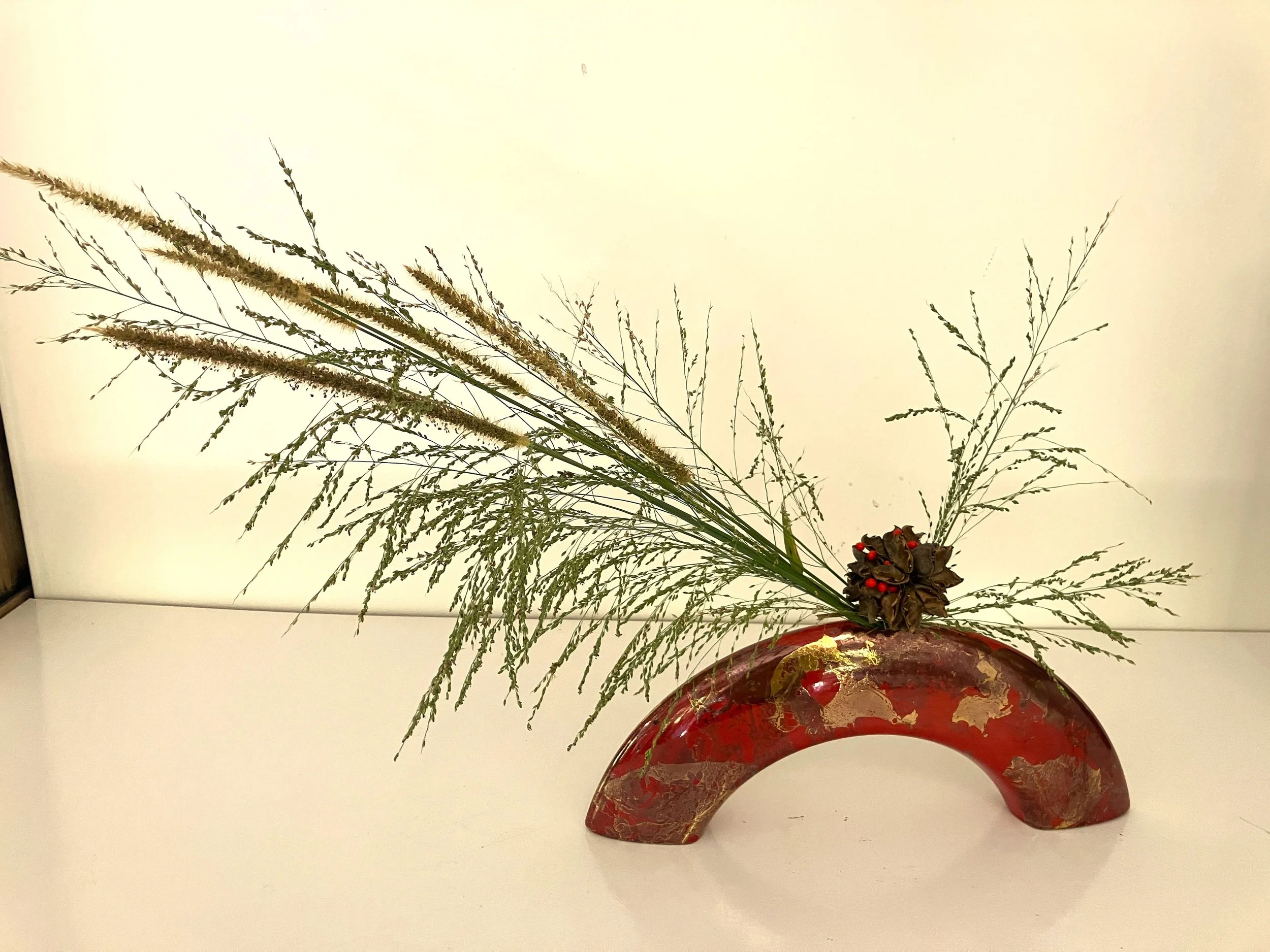
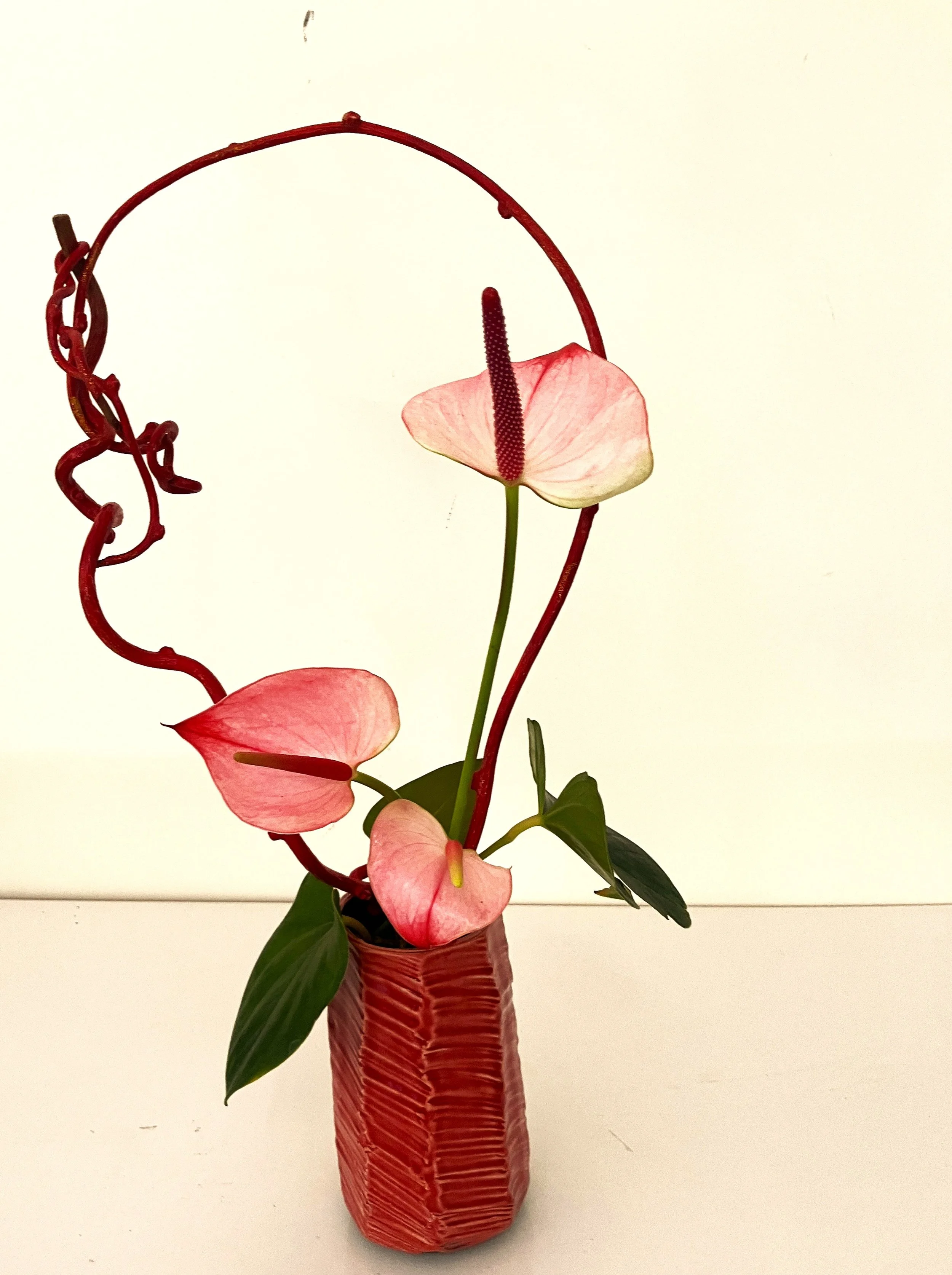
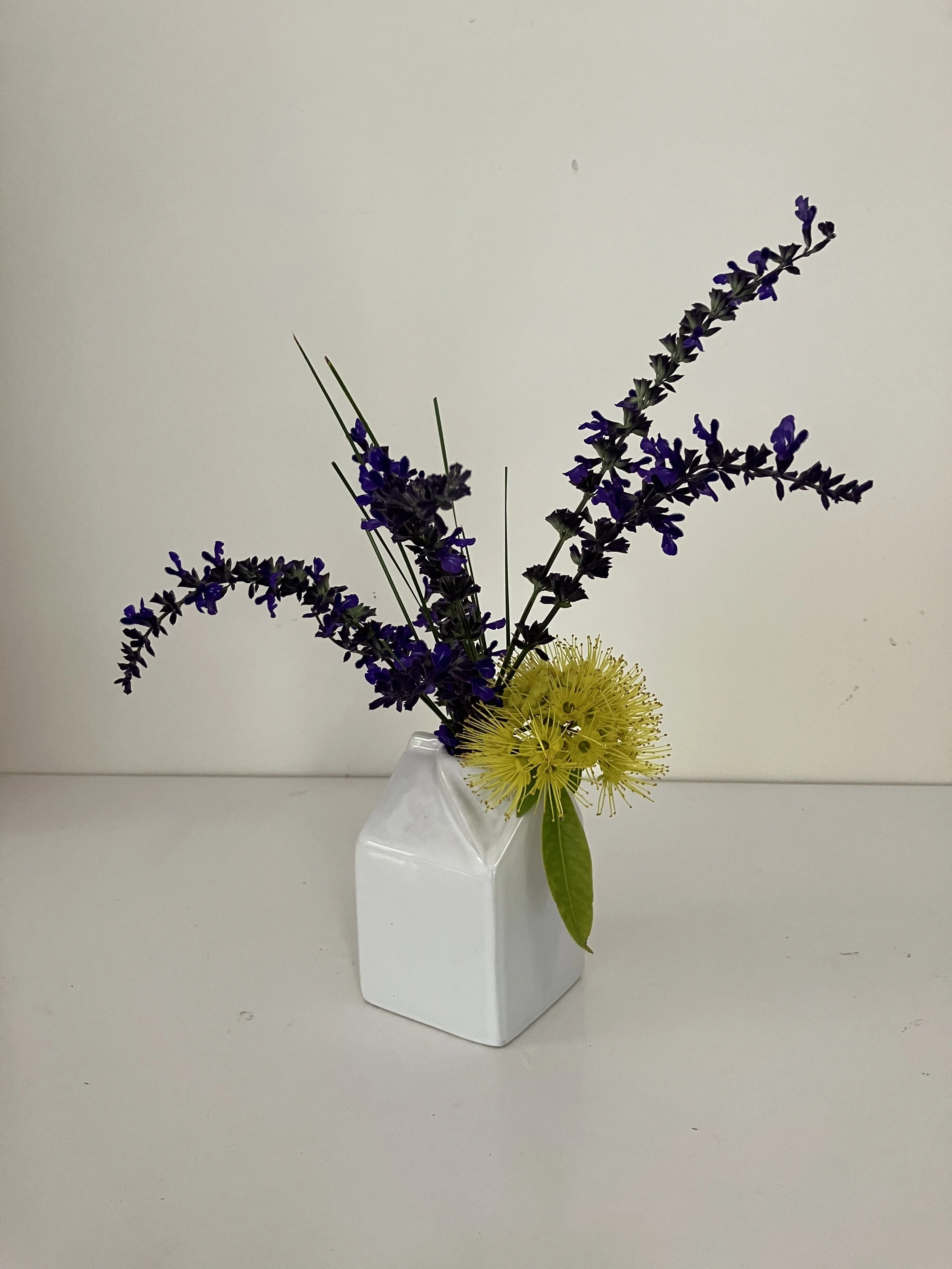
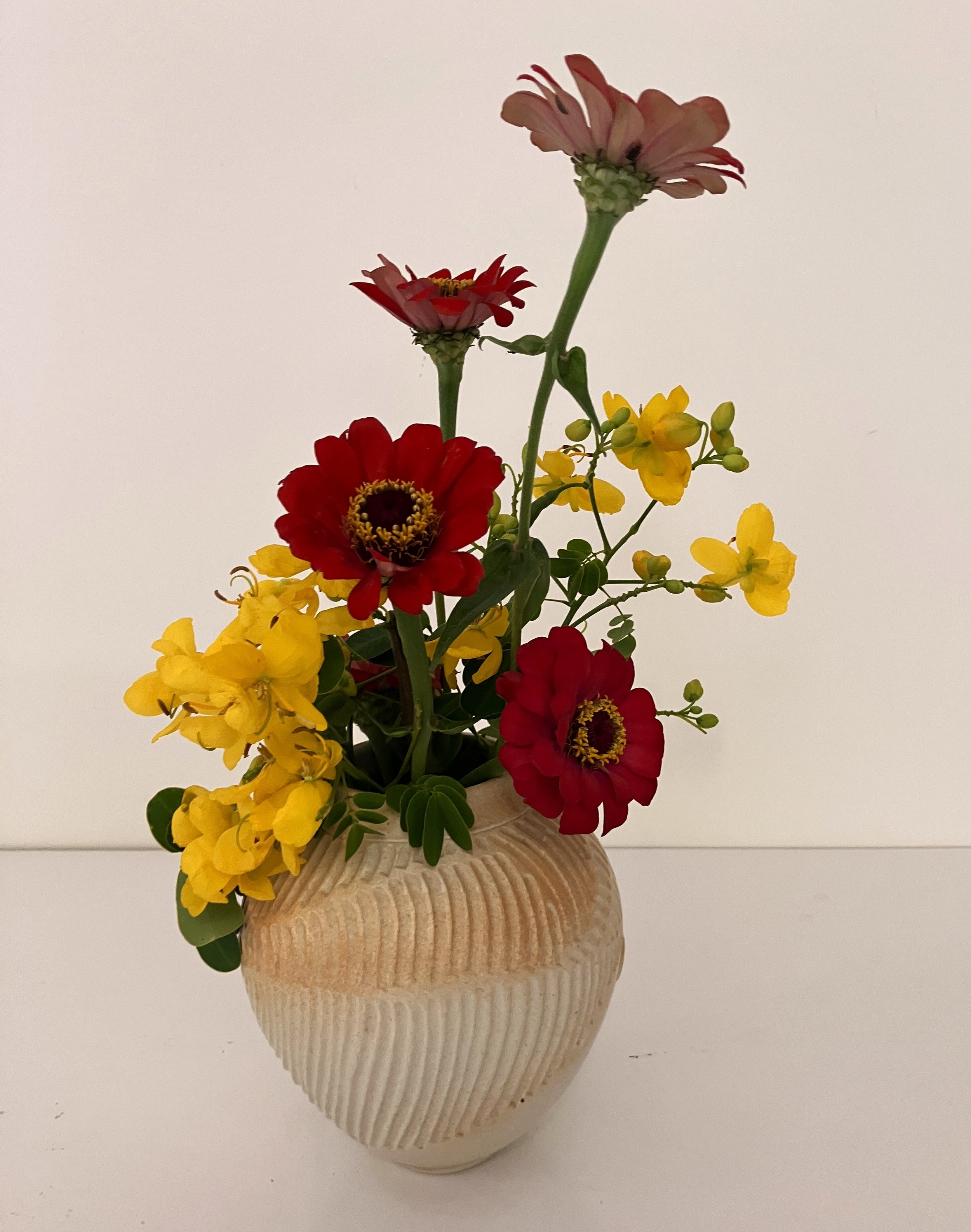
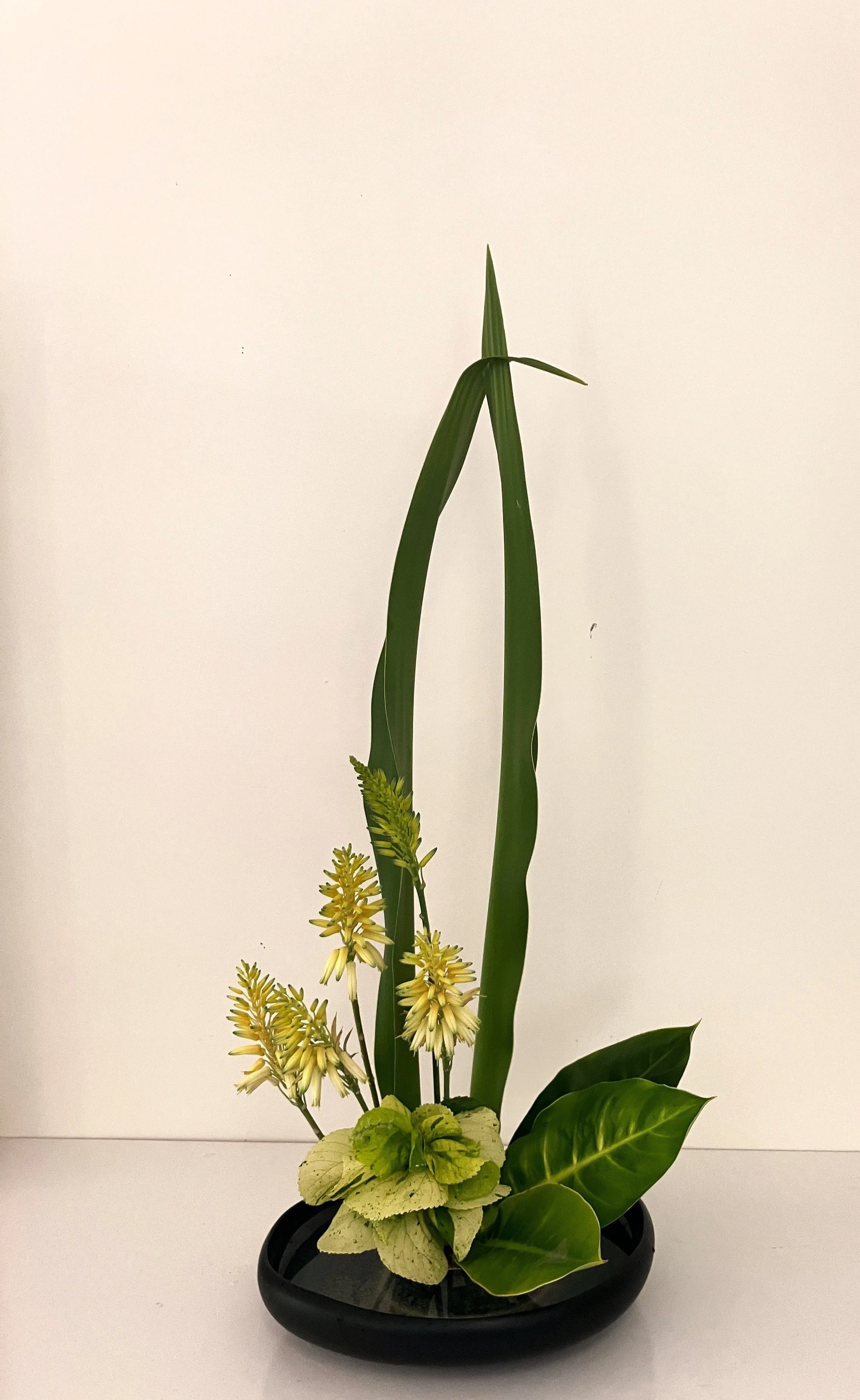
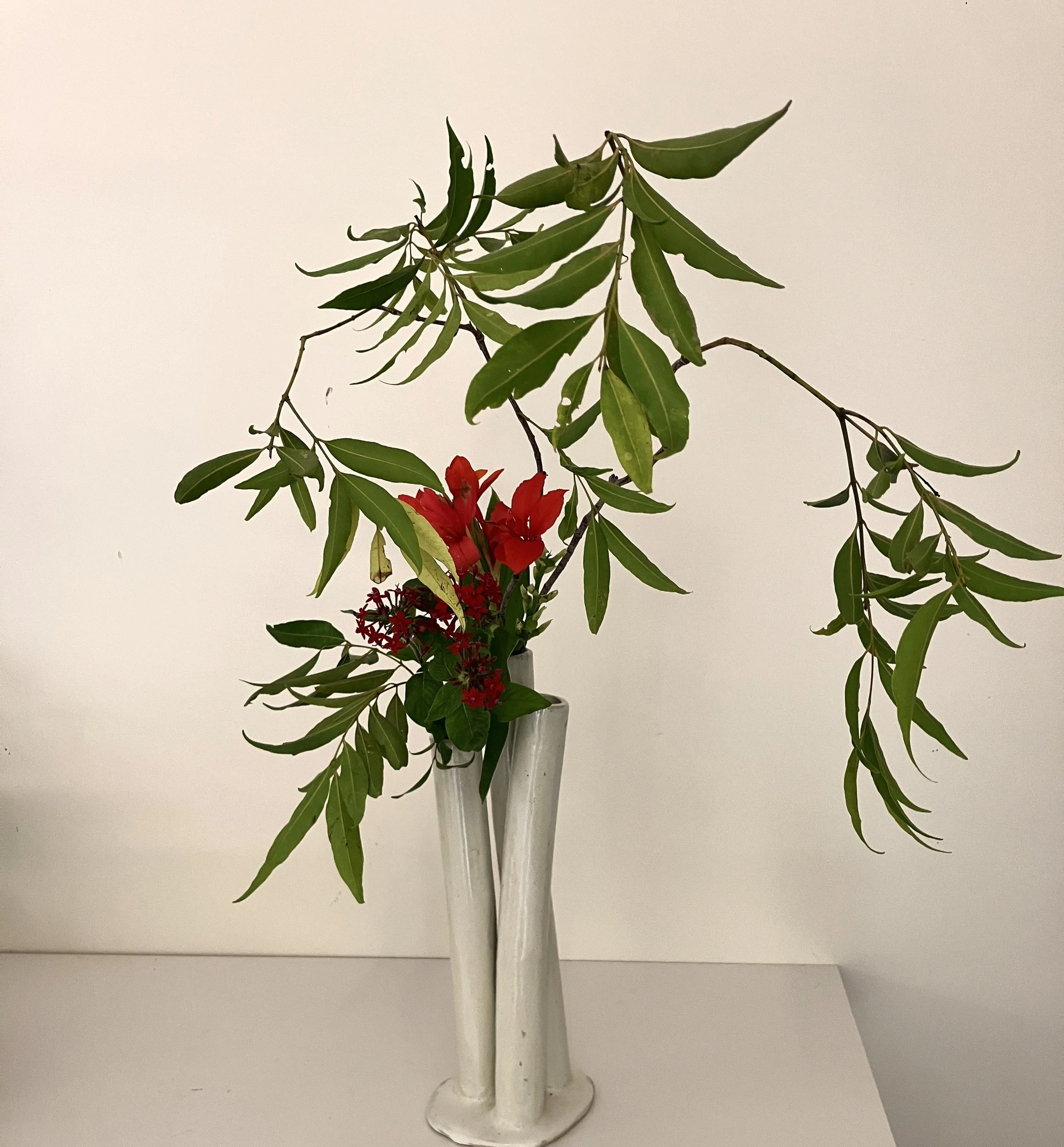
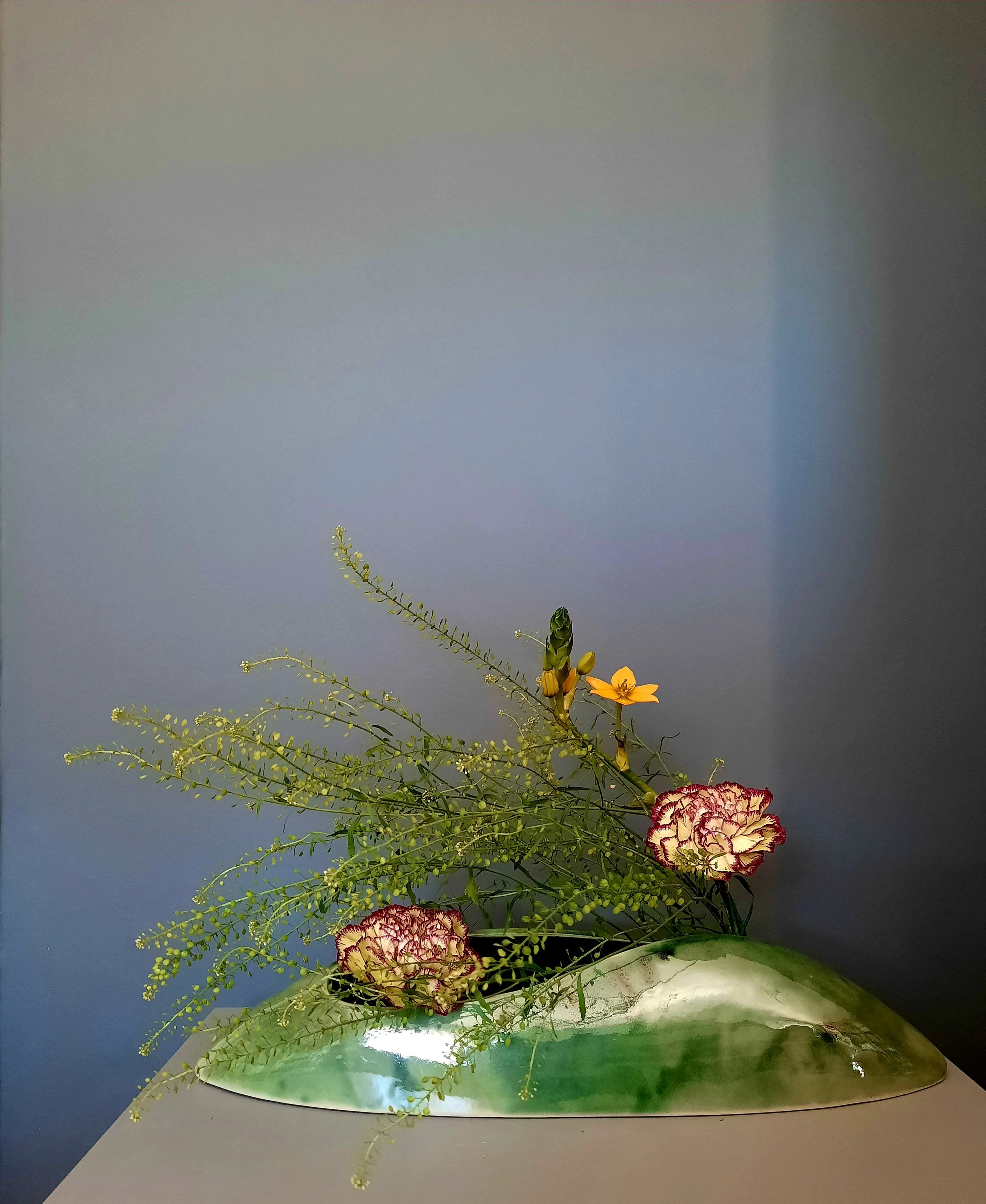
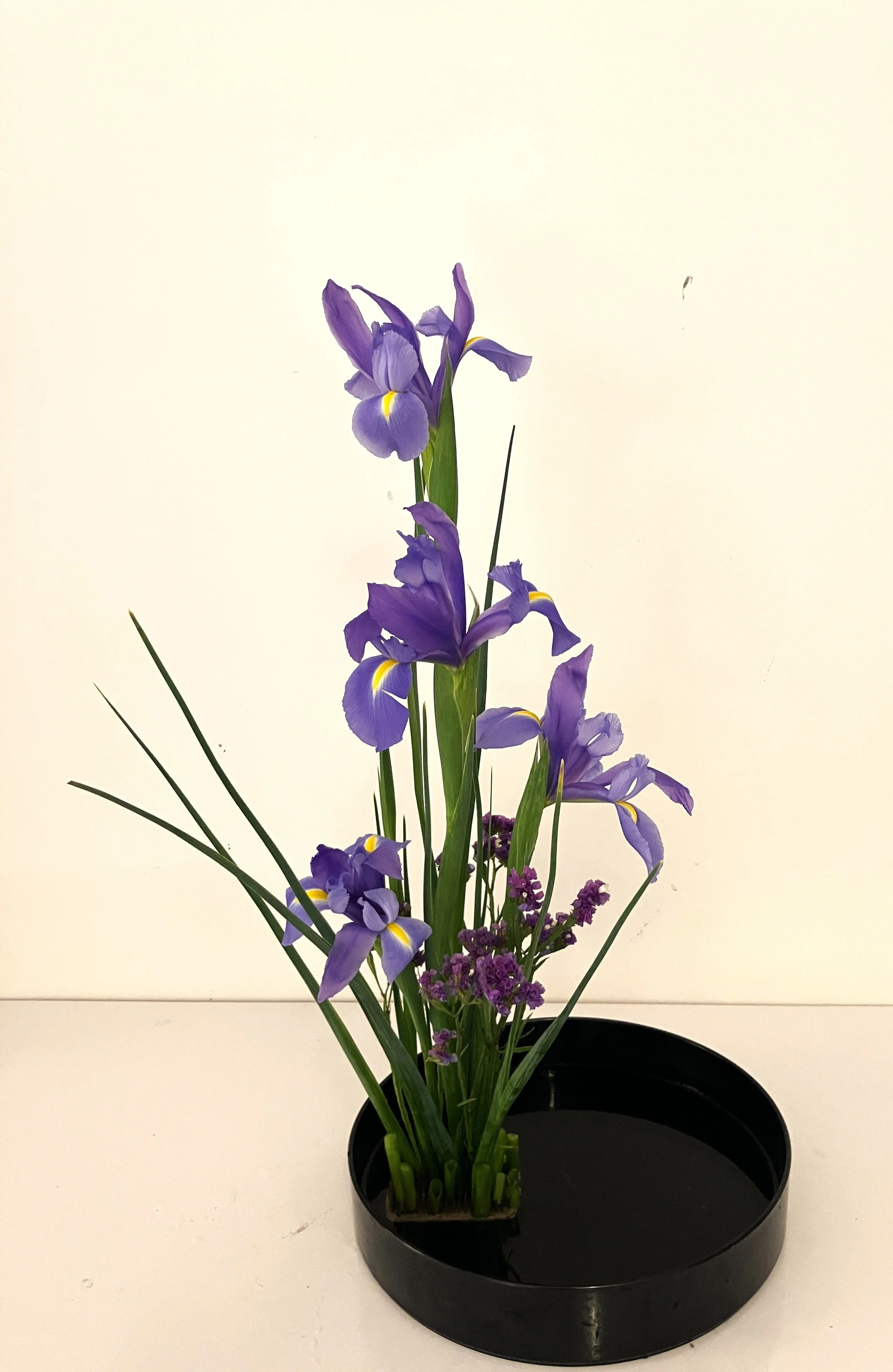
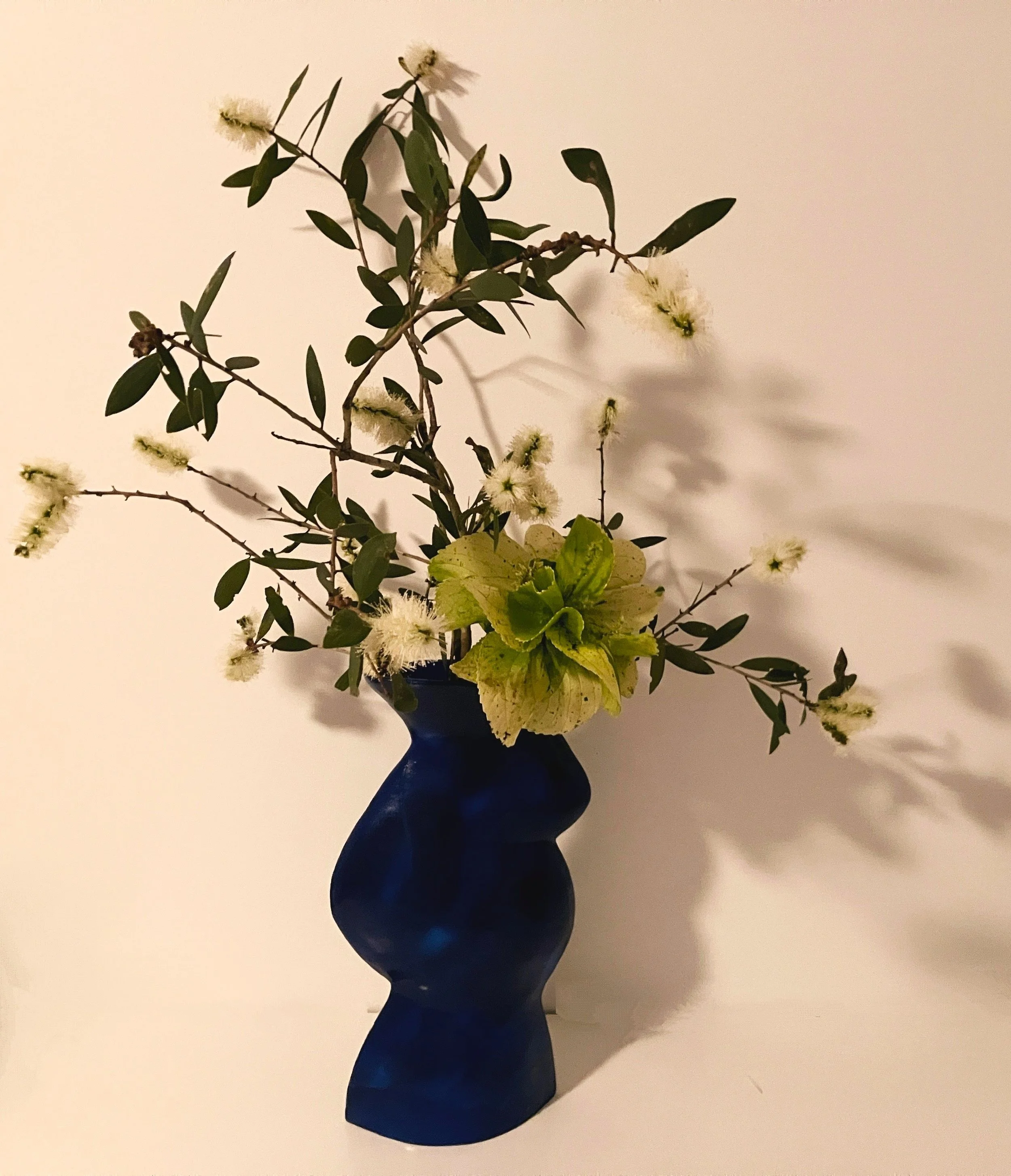
We used photographs that we had taken earlier this year during our holiday in Tasmania and transformed the impressions of beautiful landscapes into Ikebana arrangements. Rather than copying the landscapes, we tried to capture the atmosphere and the colours of this remarkable scenerys. We worked with natural Australian materials, freshly collected from the bush, and the results turned out very beautifully.

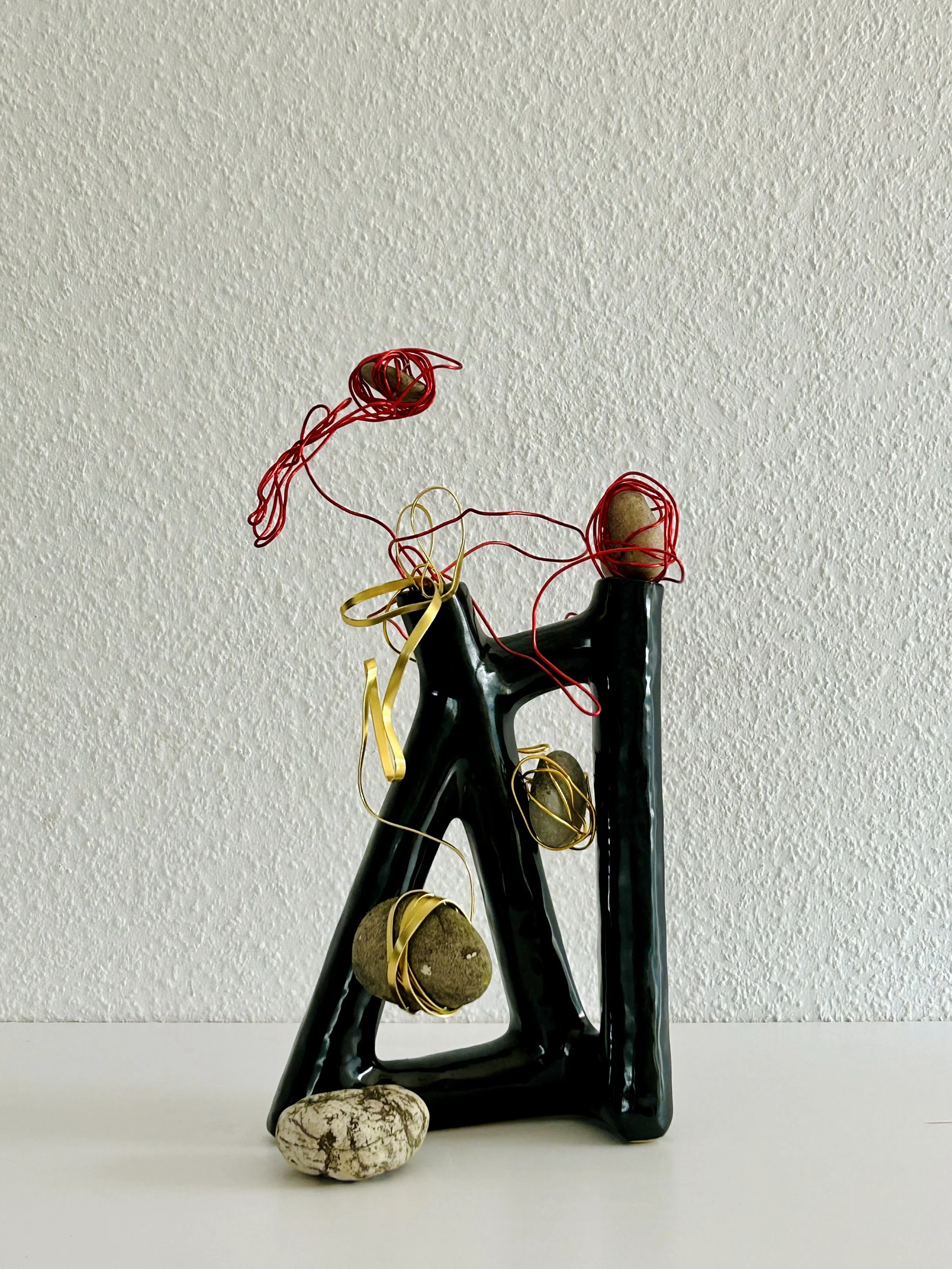
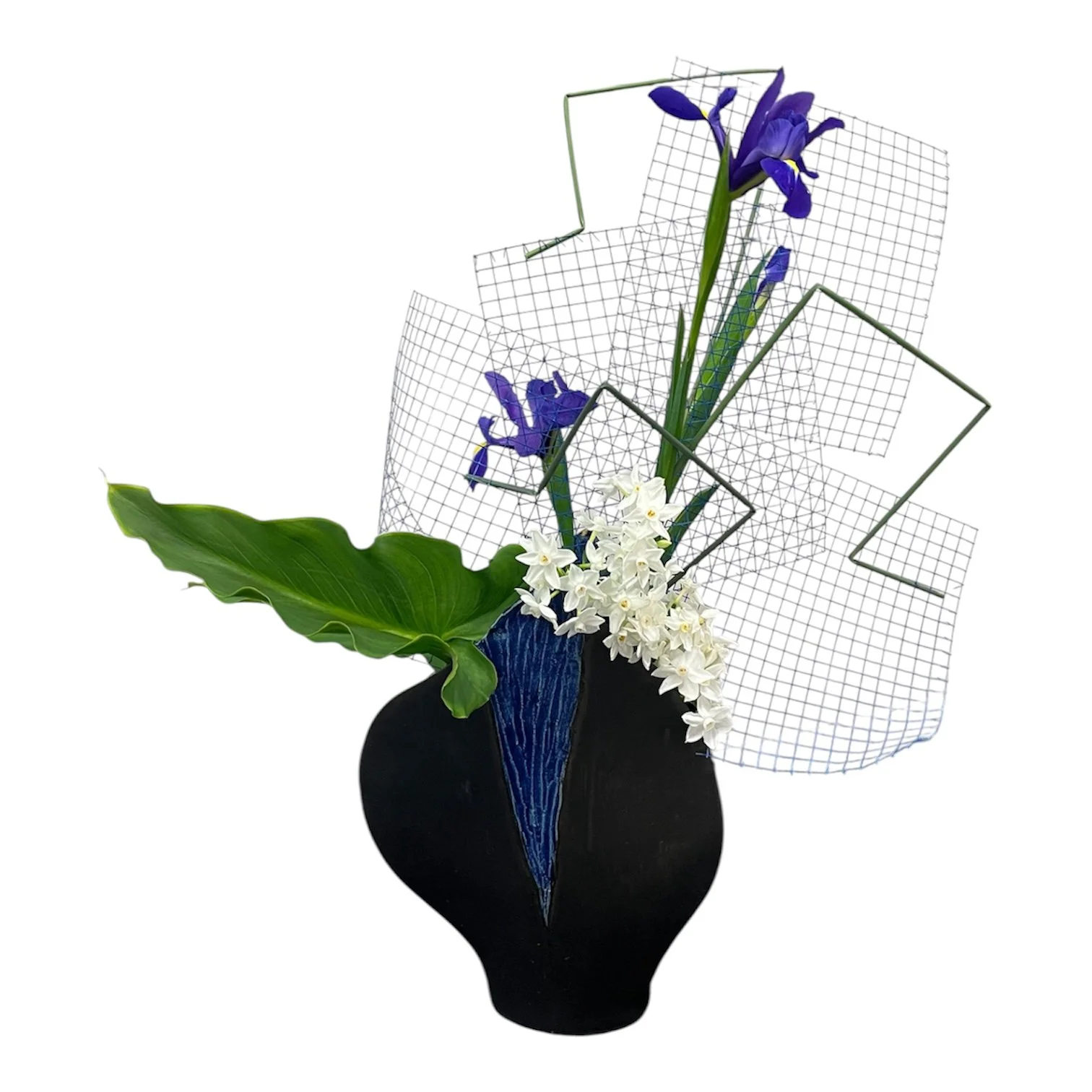
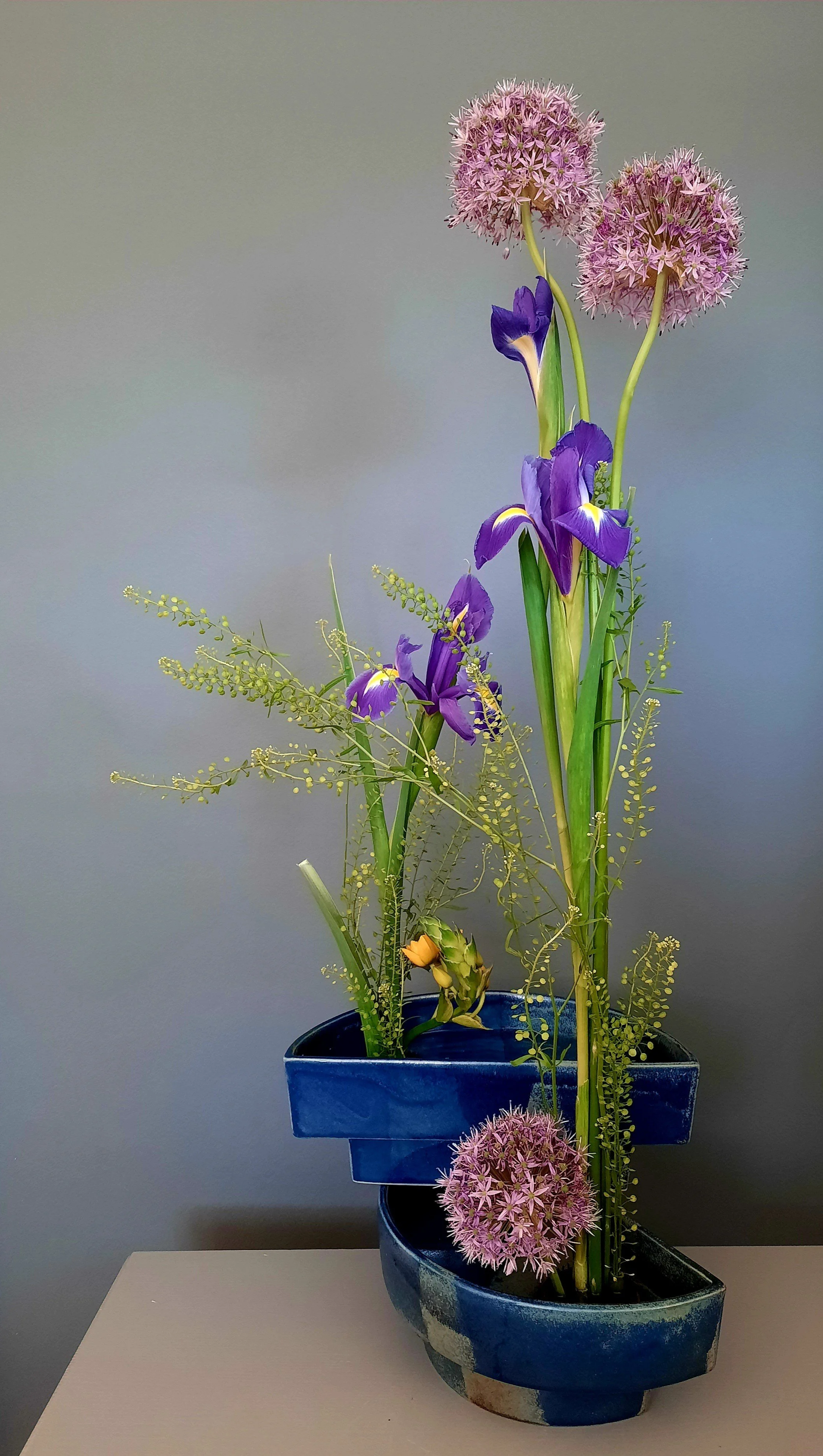
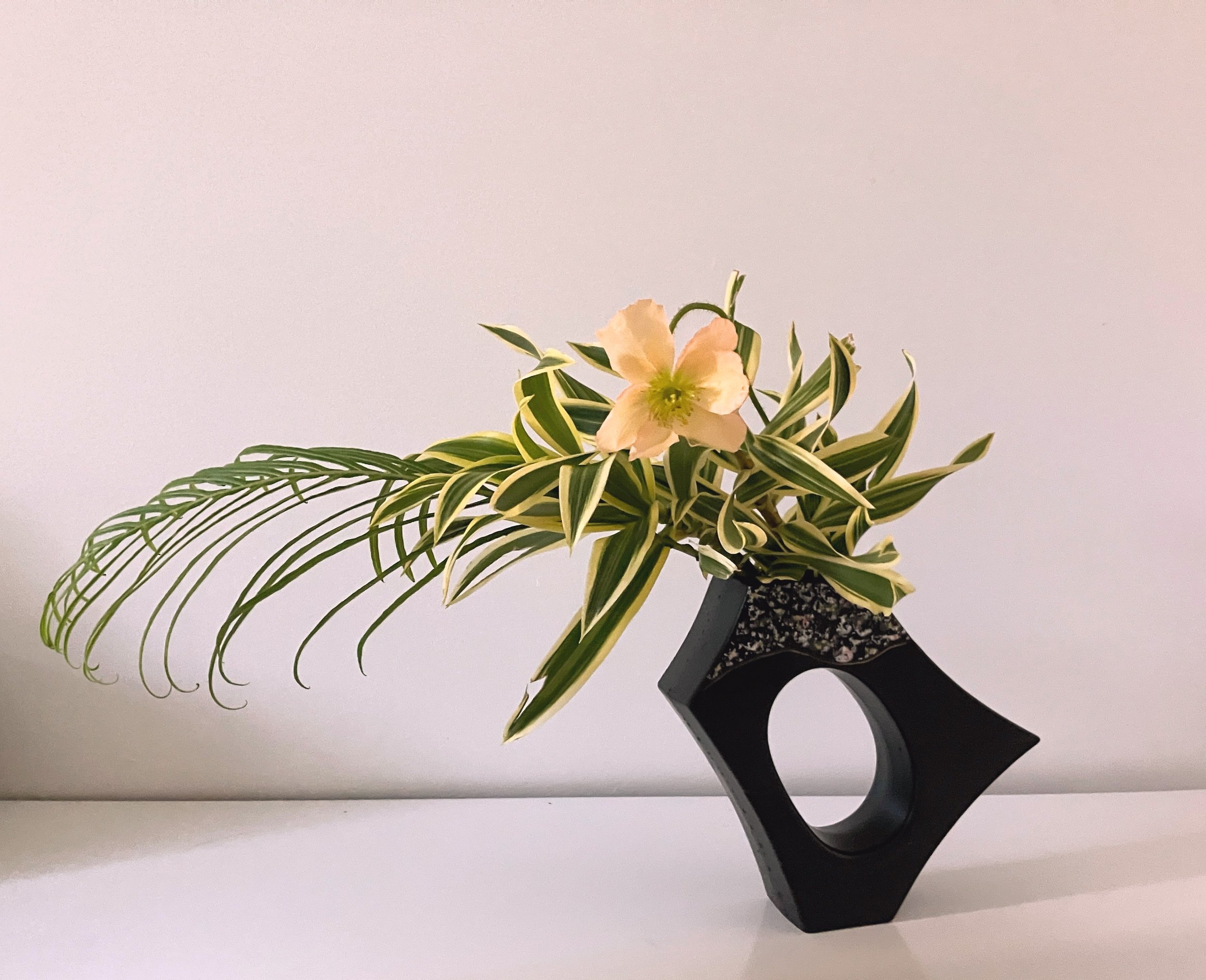
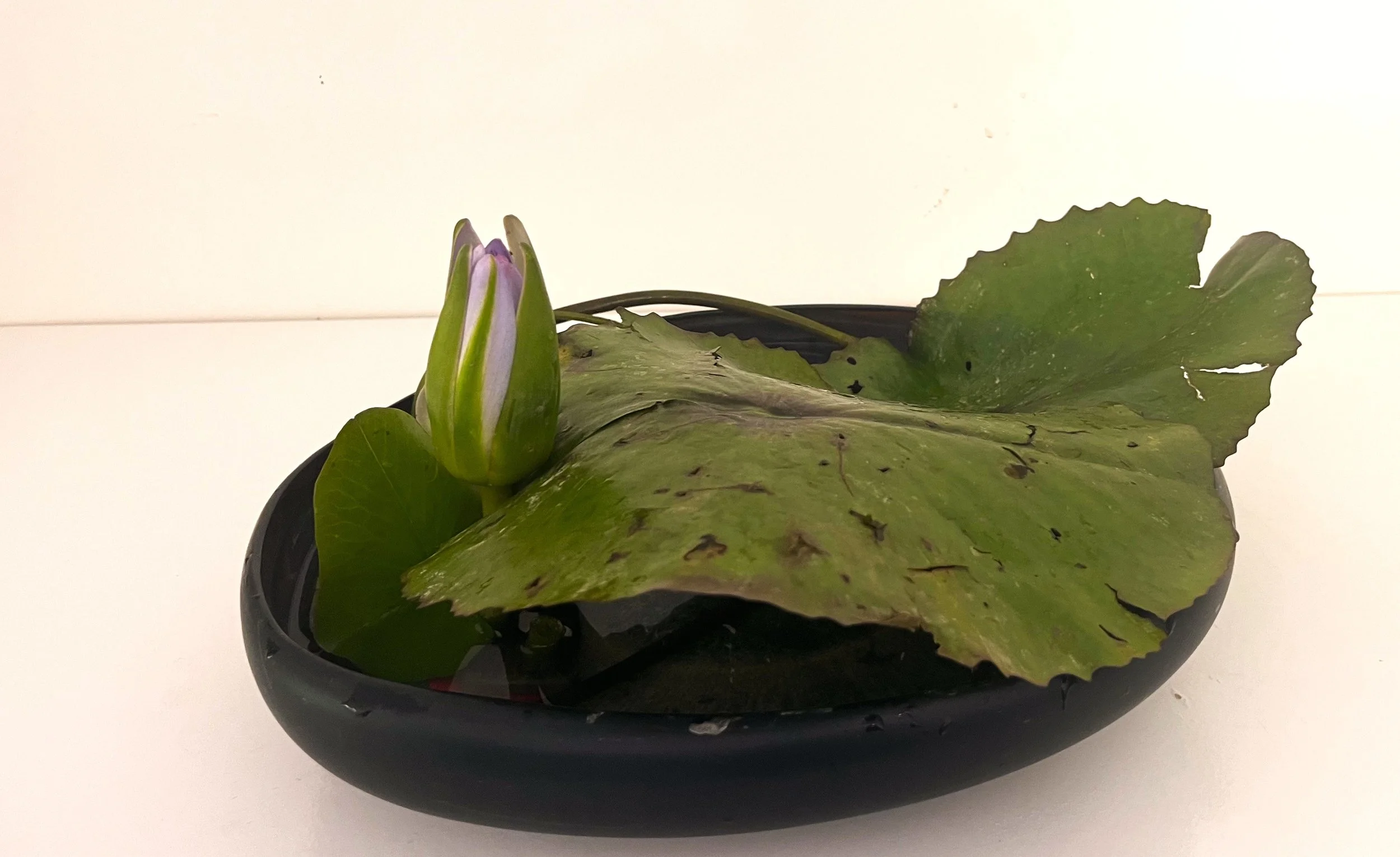
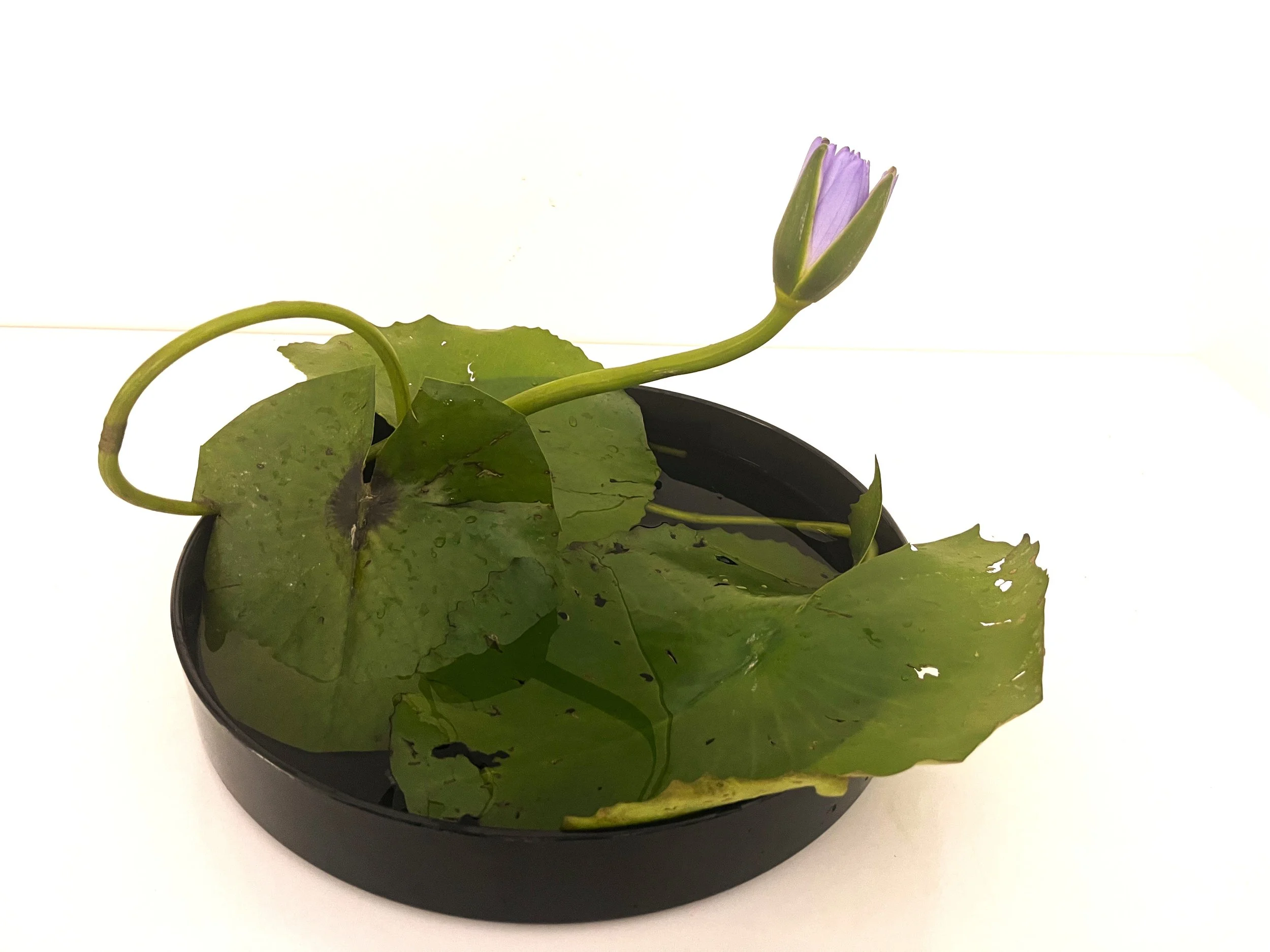
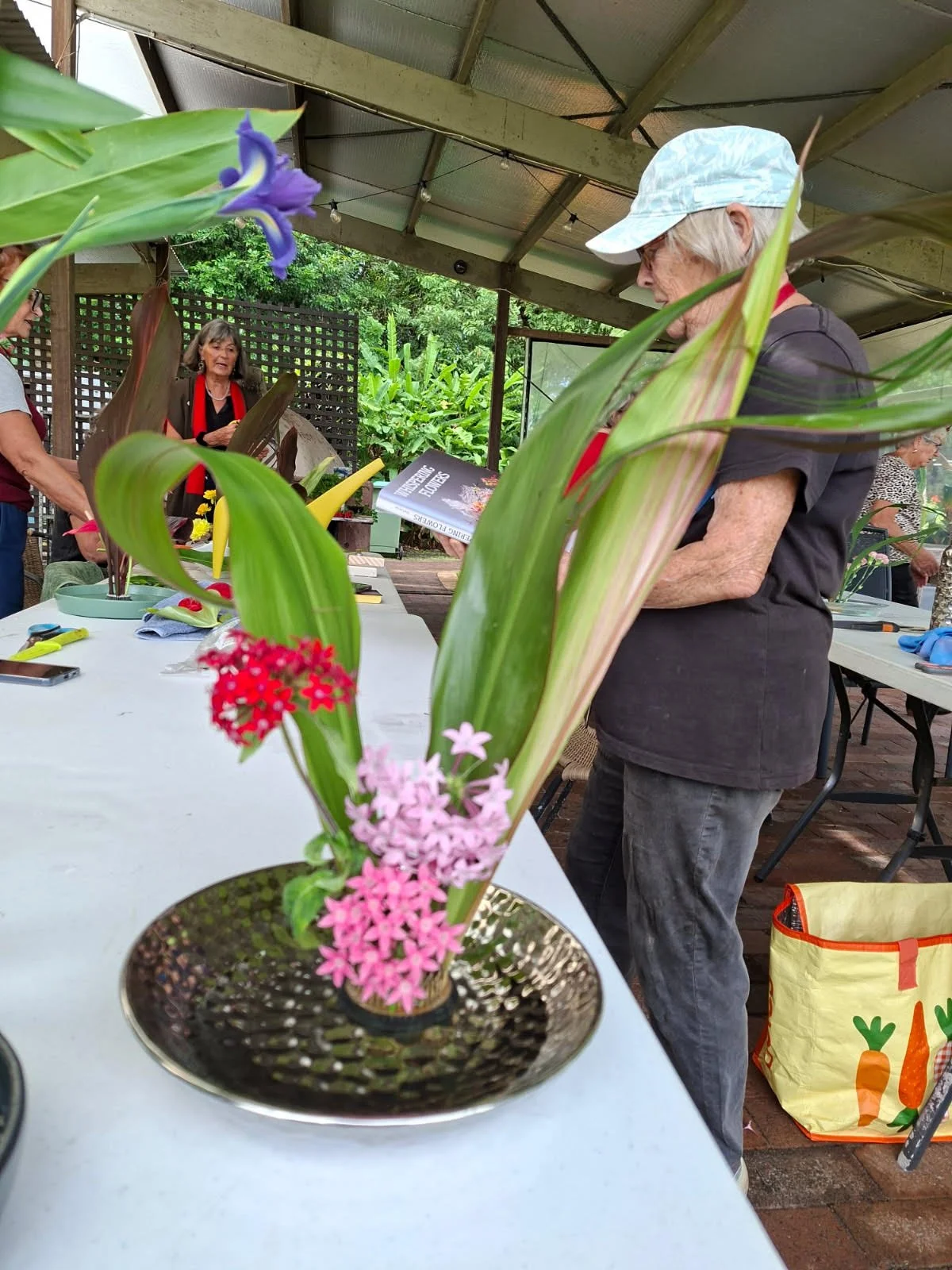
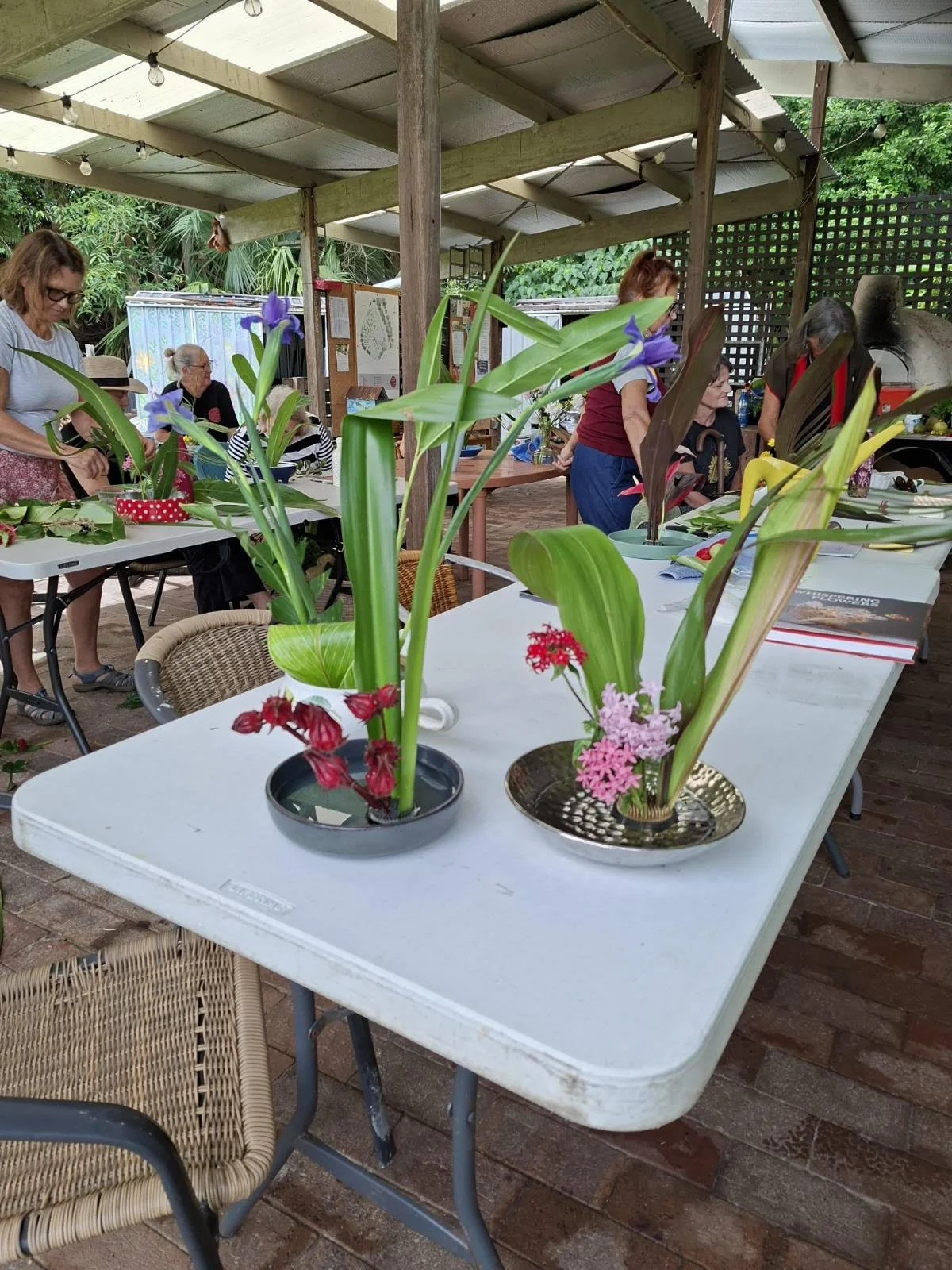
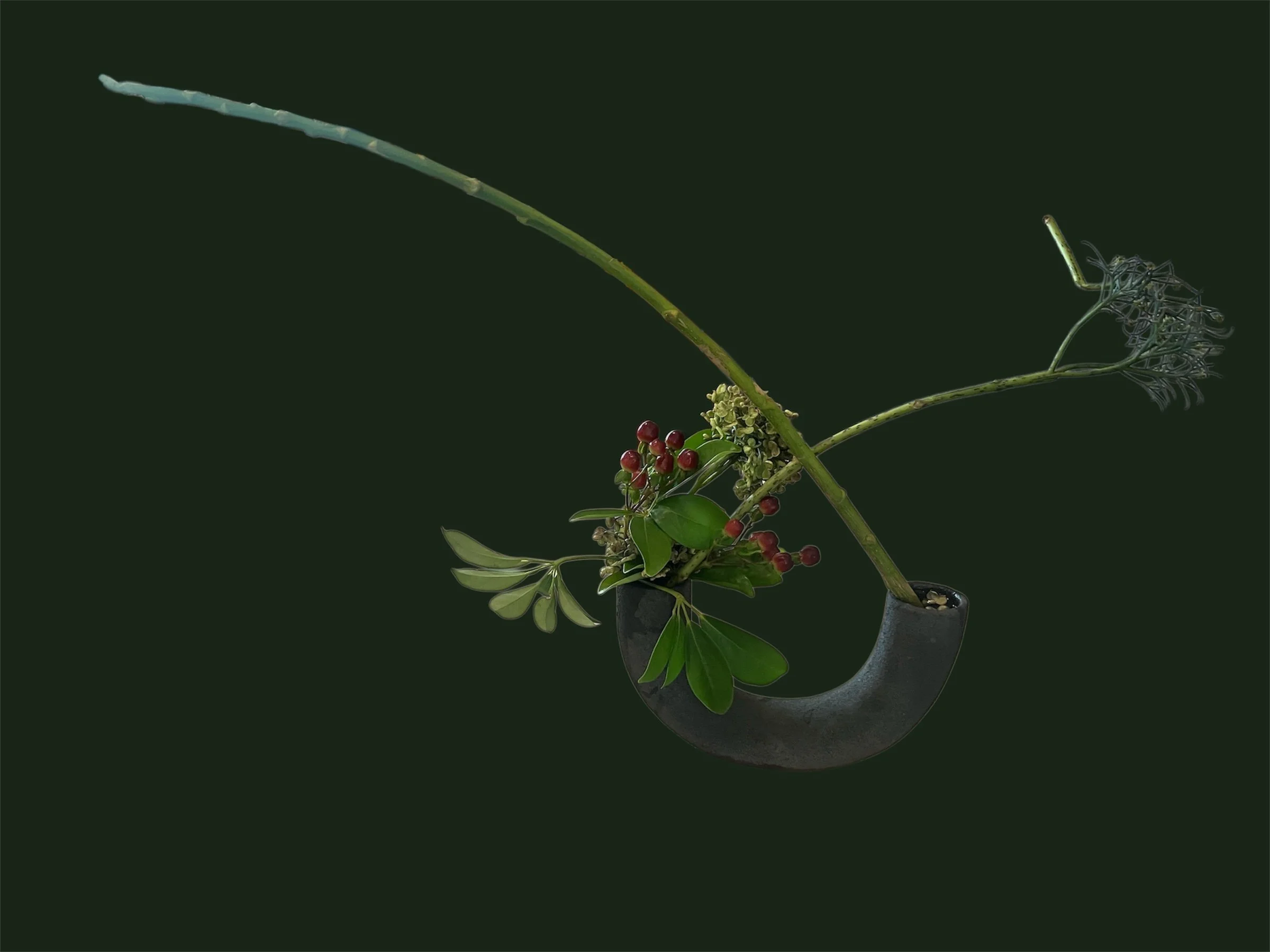
Meanwhile, the German students created simplified arrangements for the tea ceremony, as well as their first freestyle Ikebana in a triangle container.

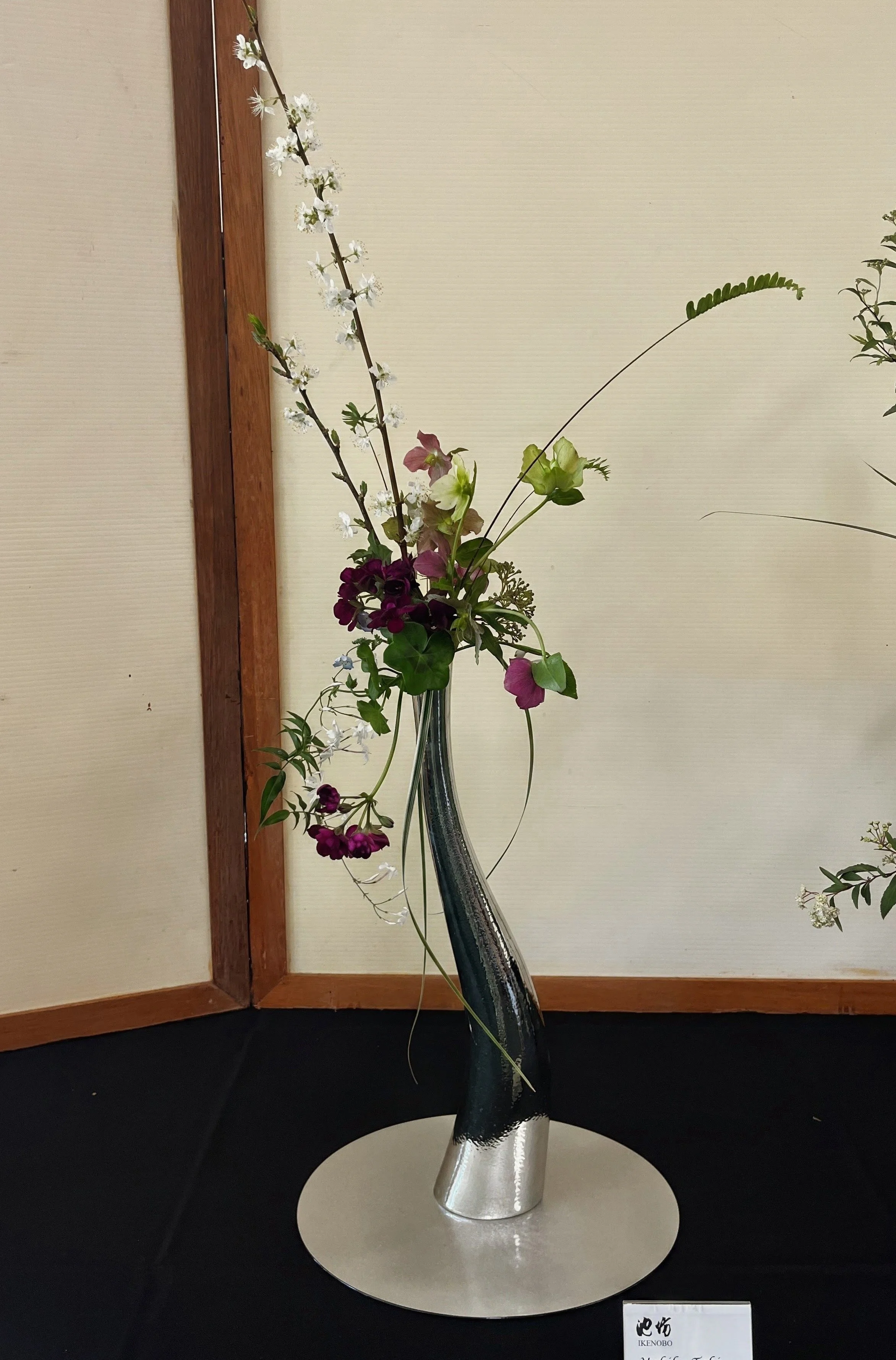
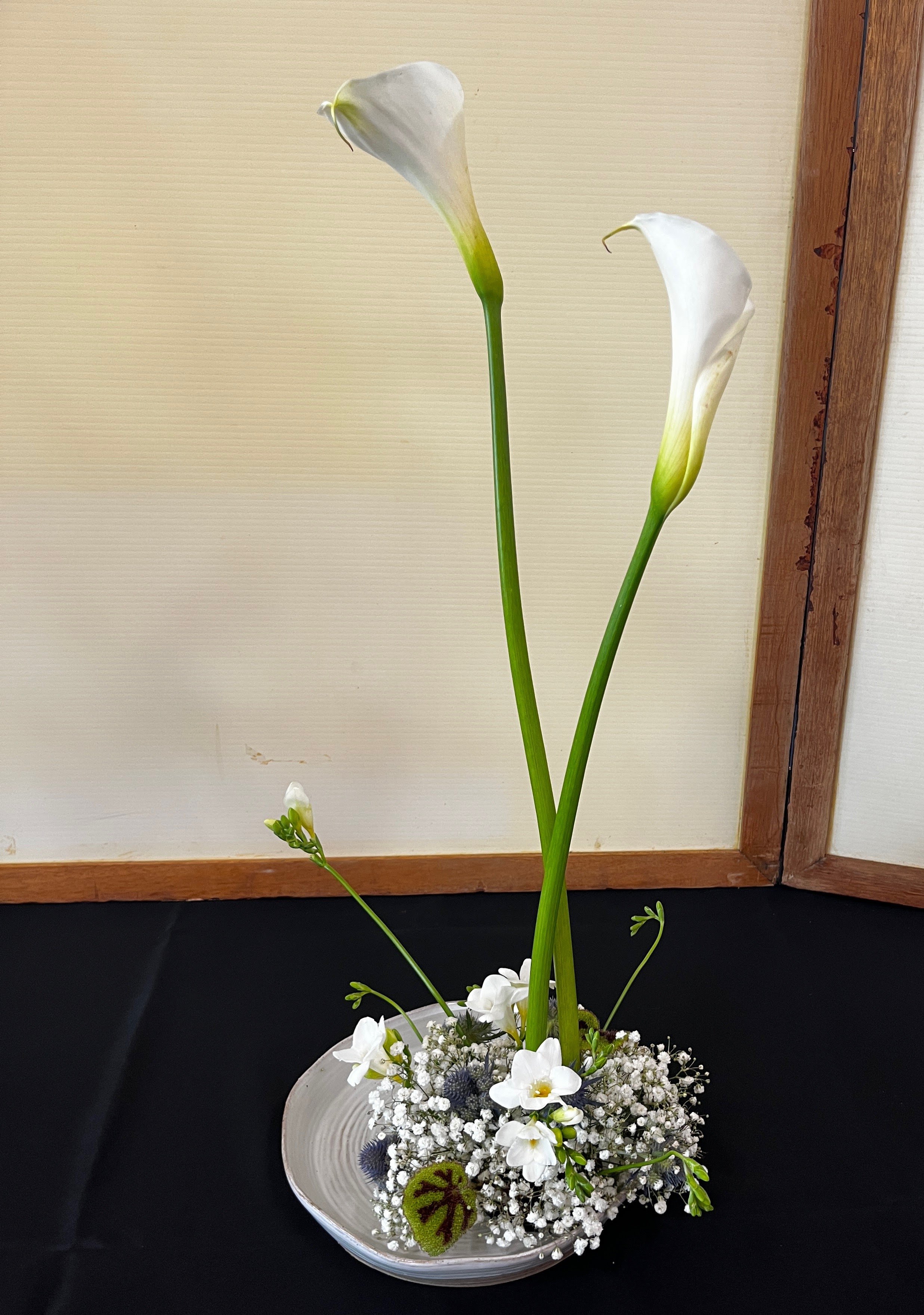
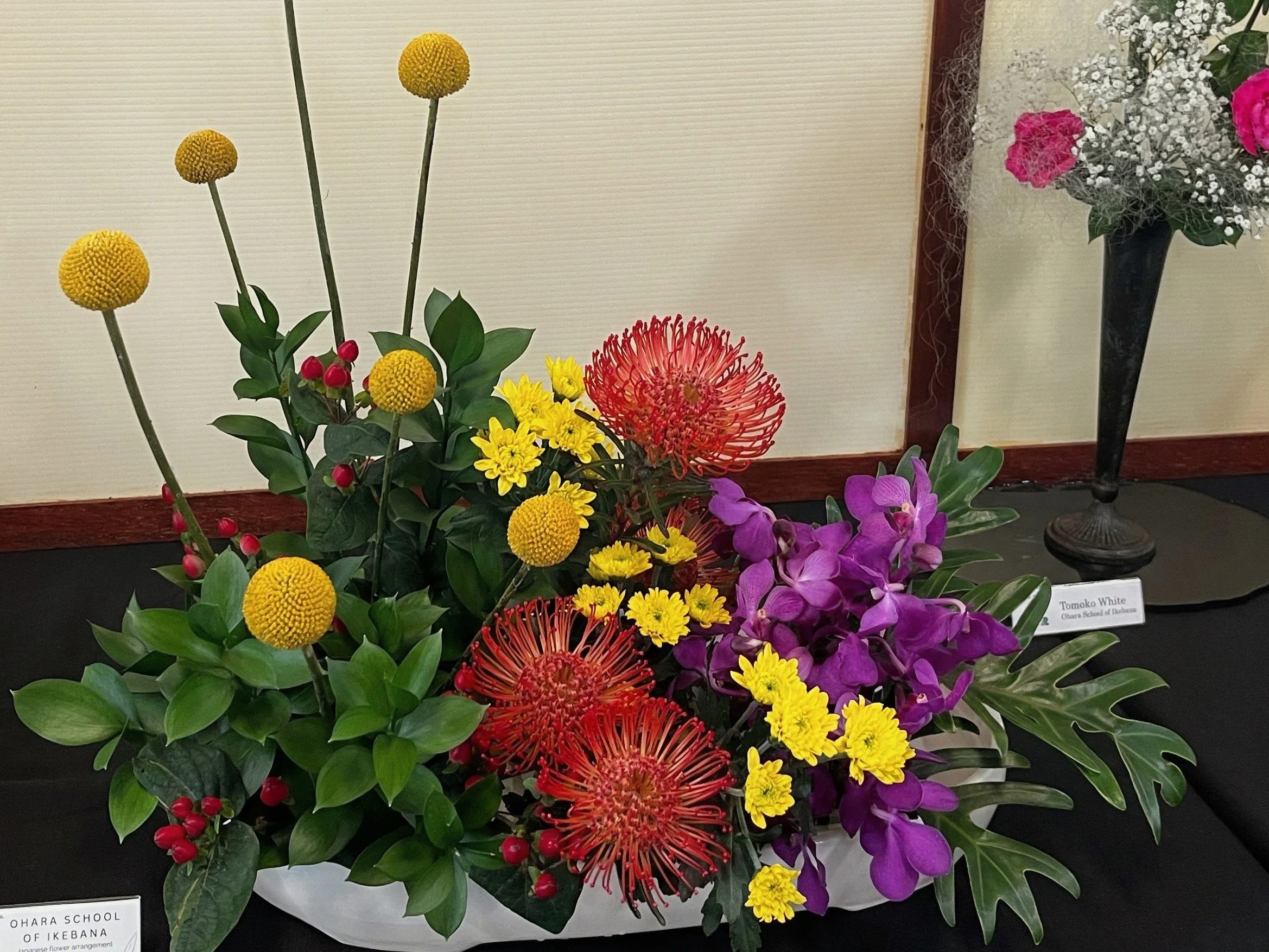
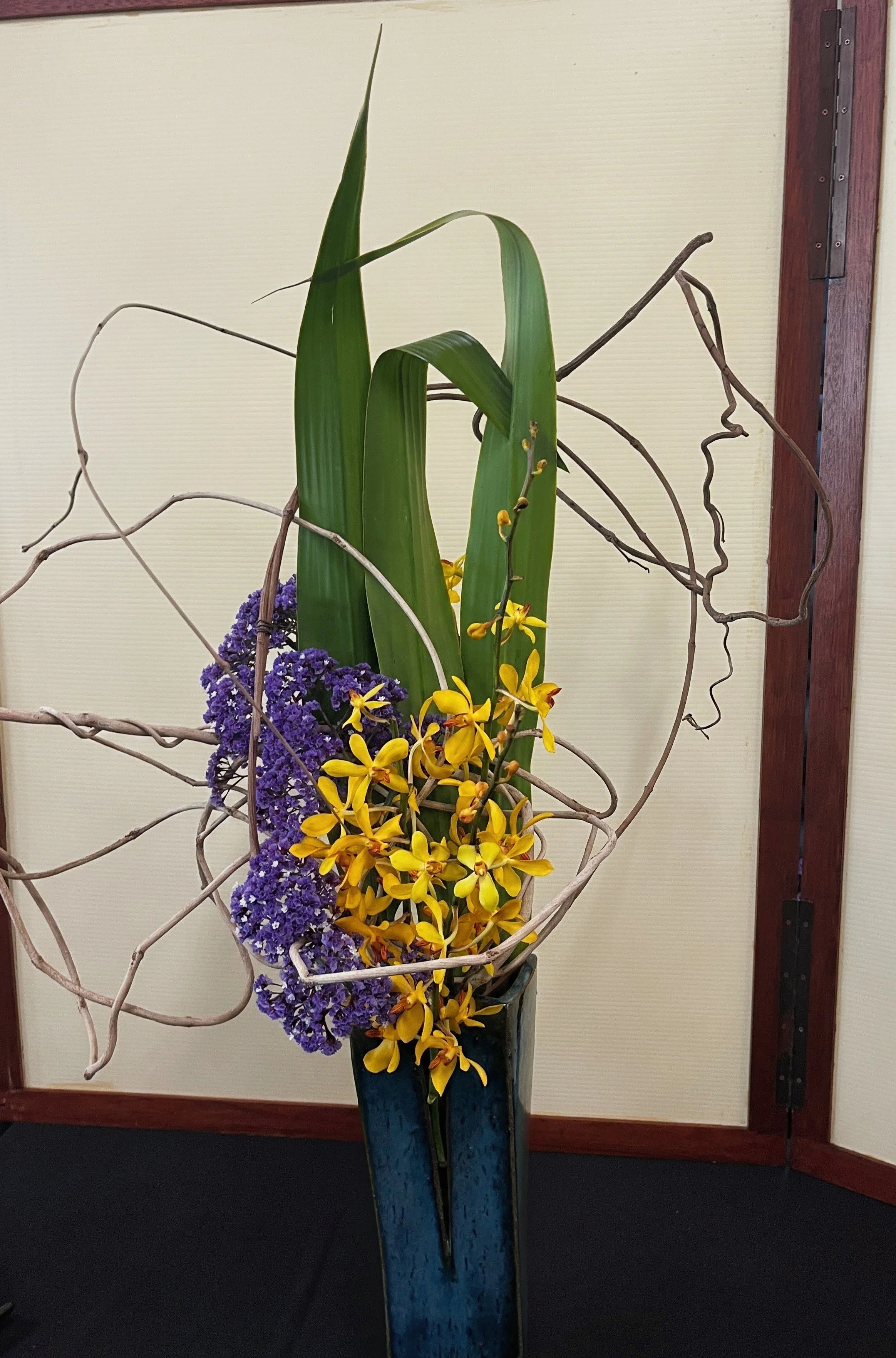
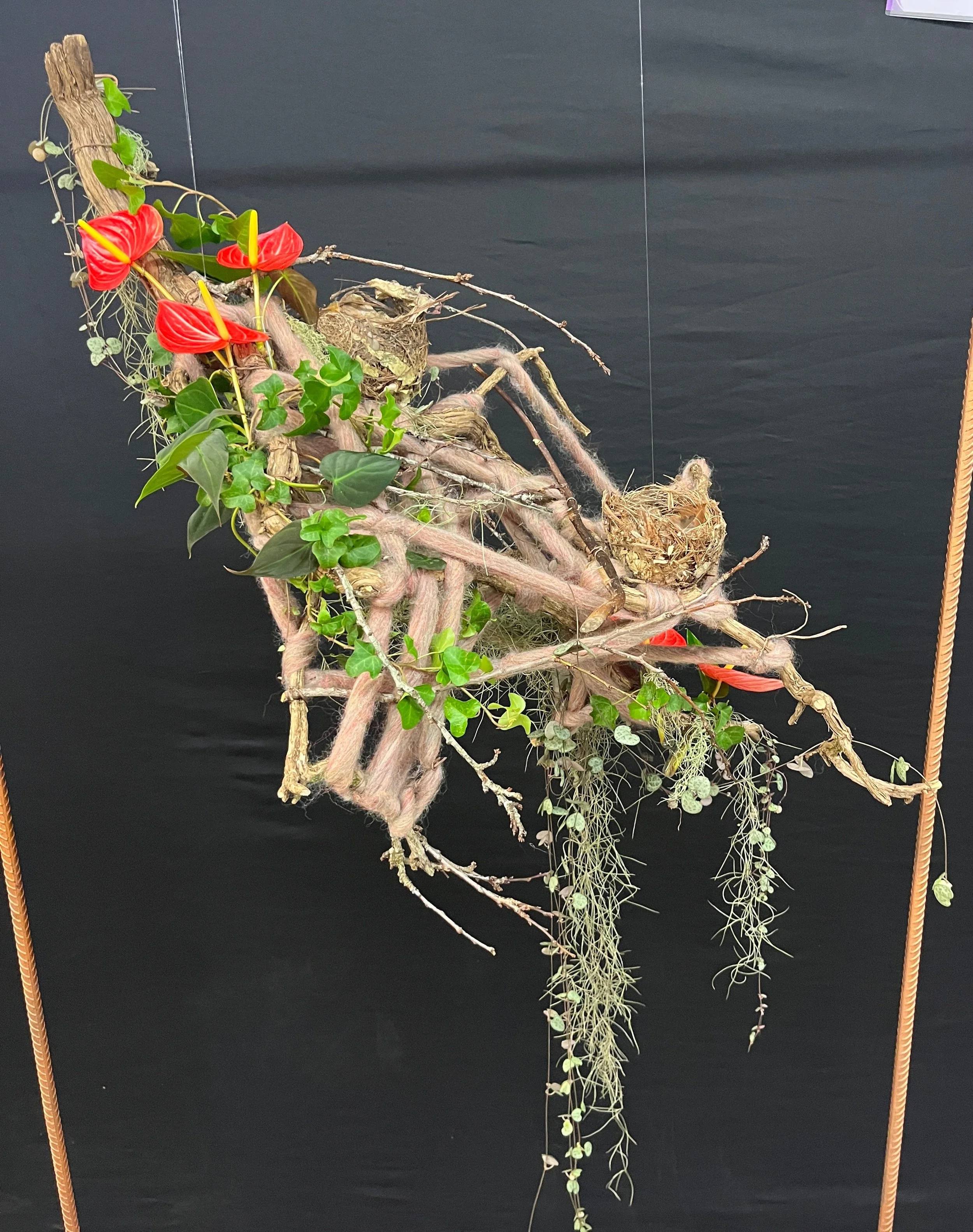
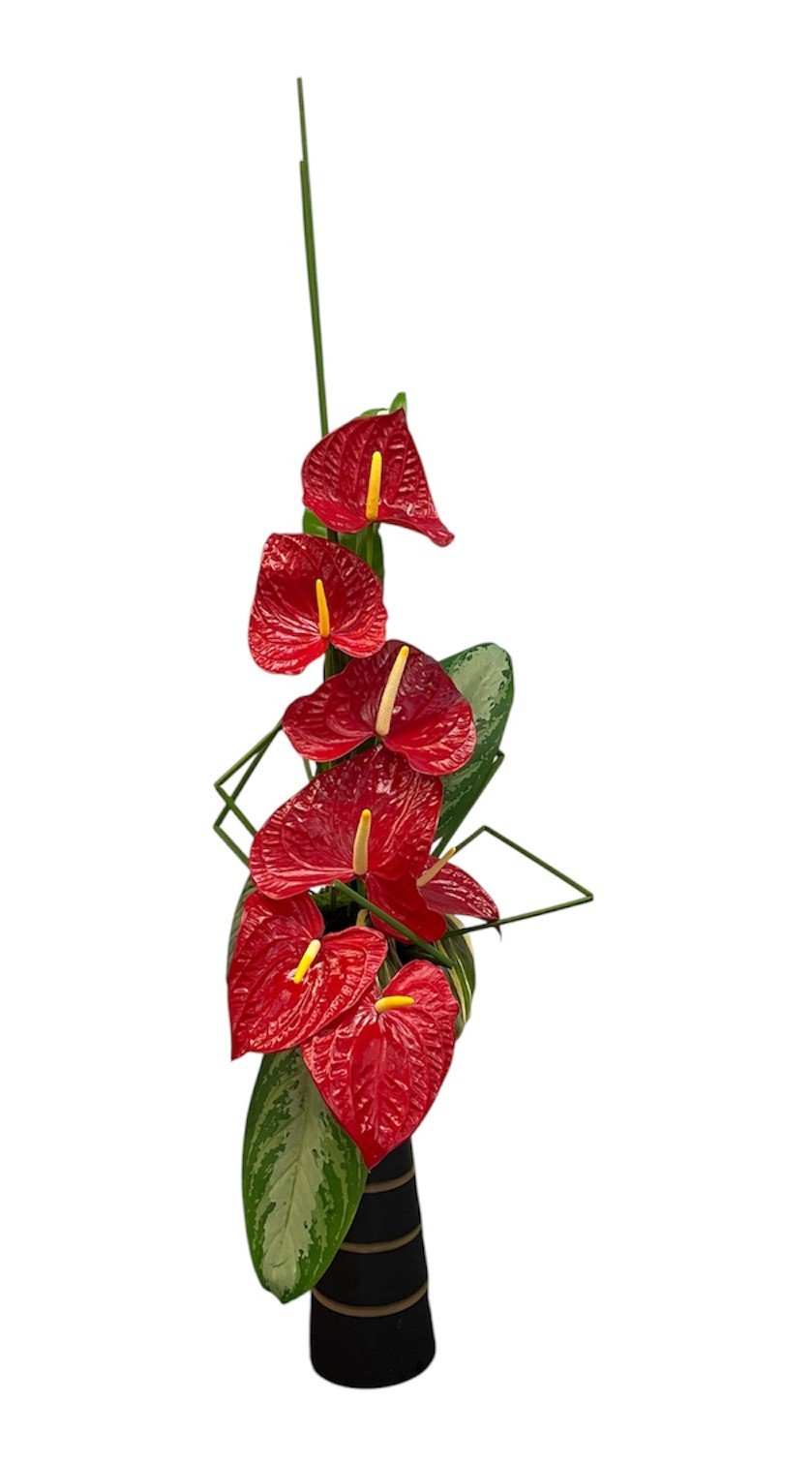
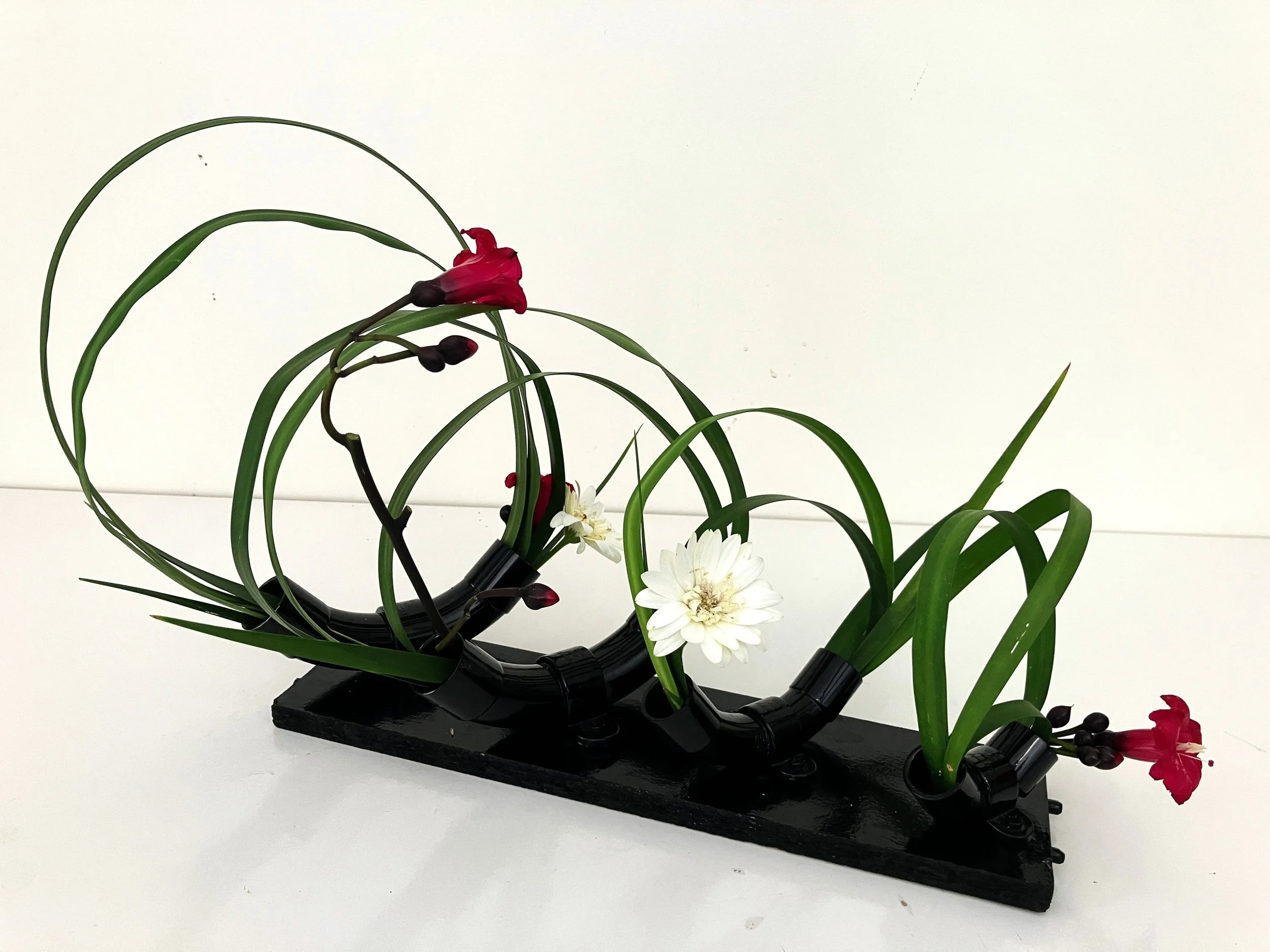
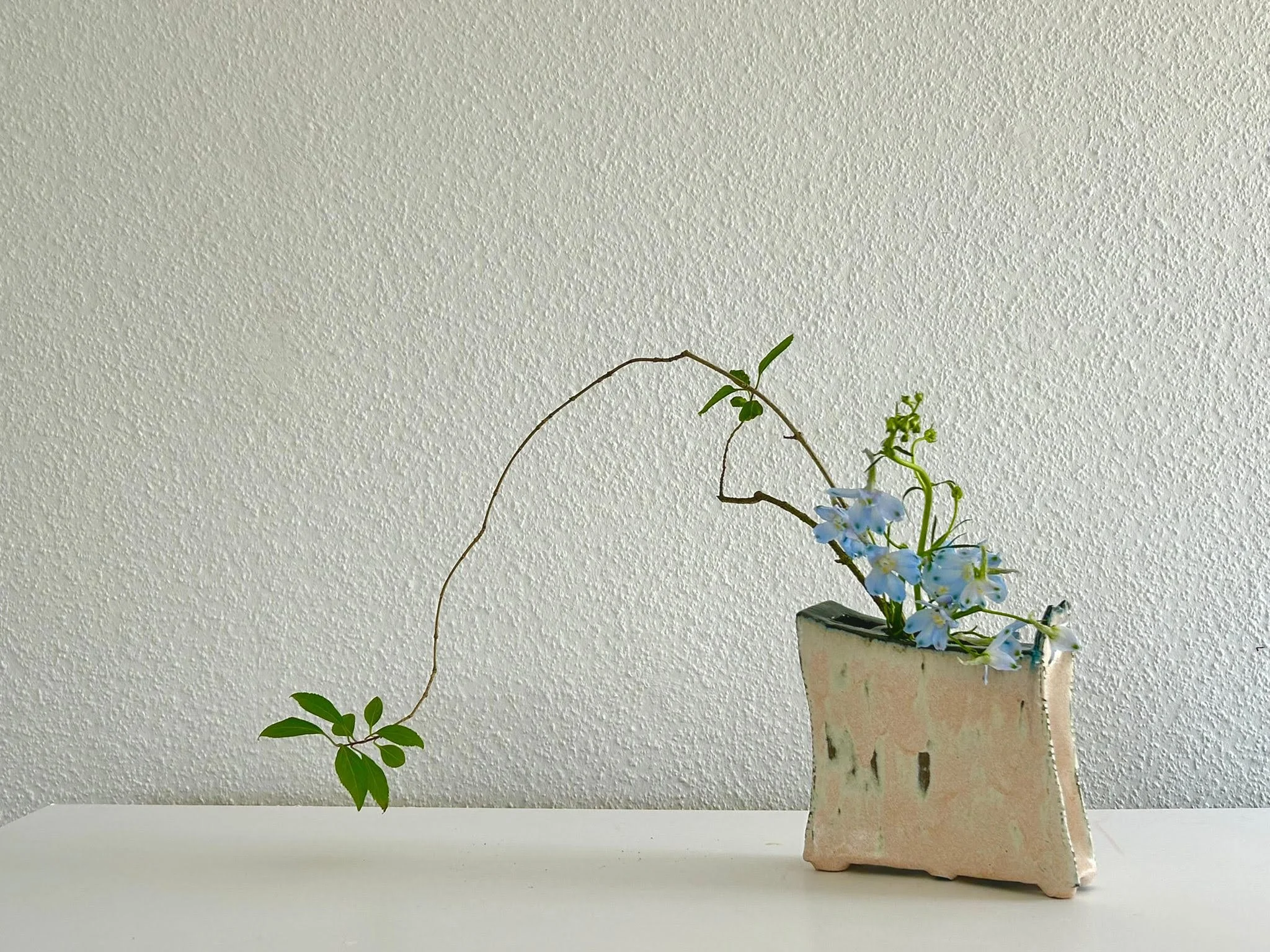
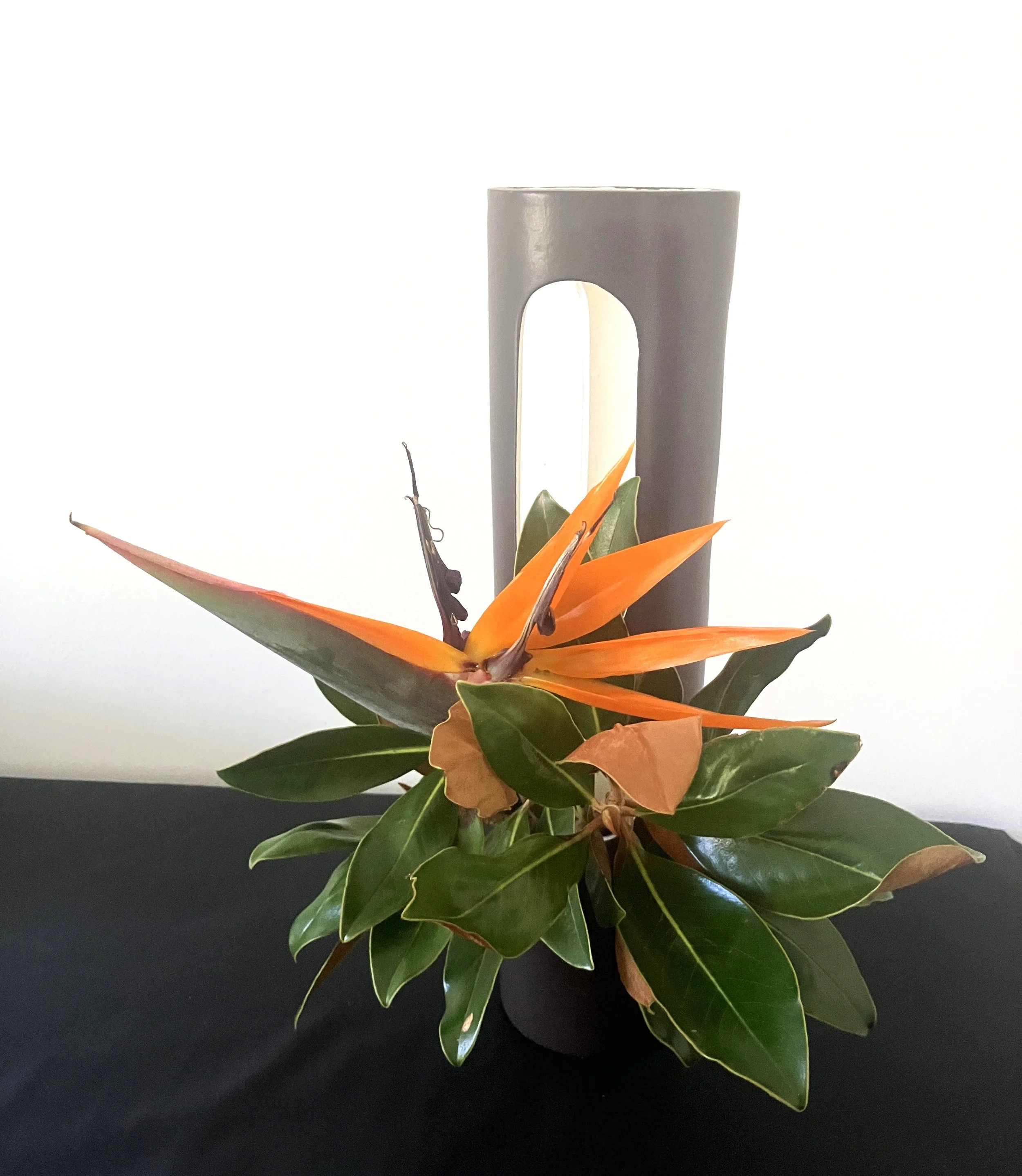
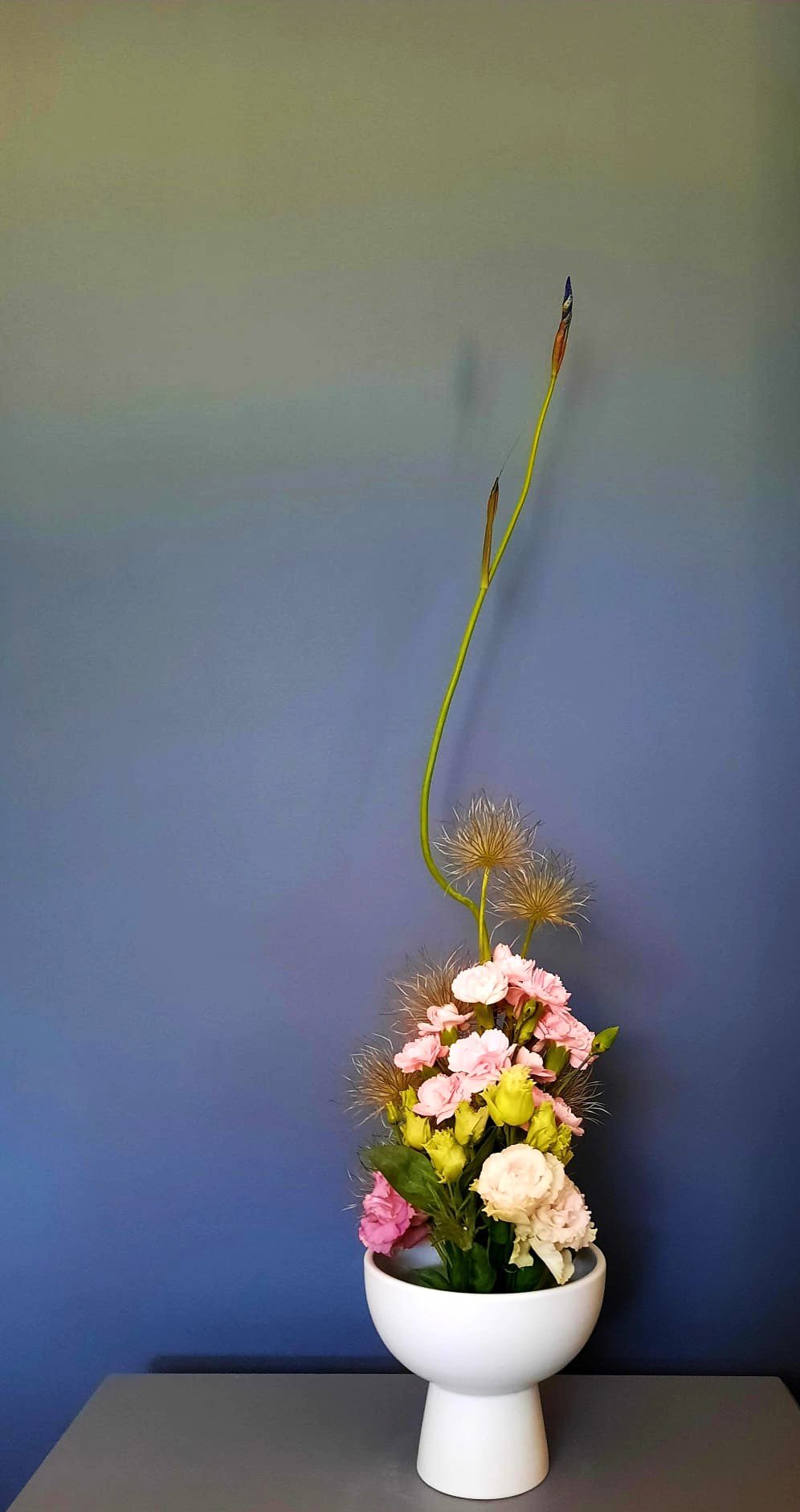
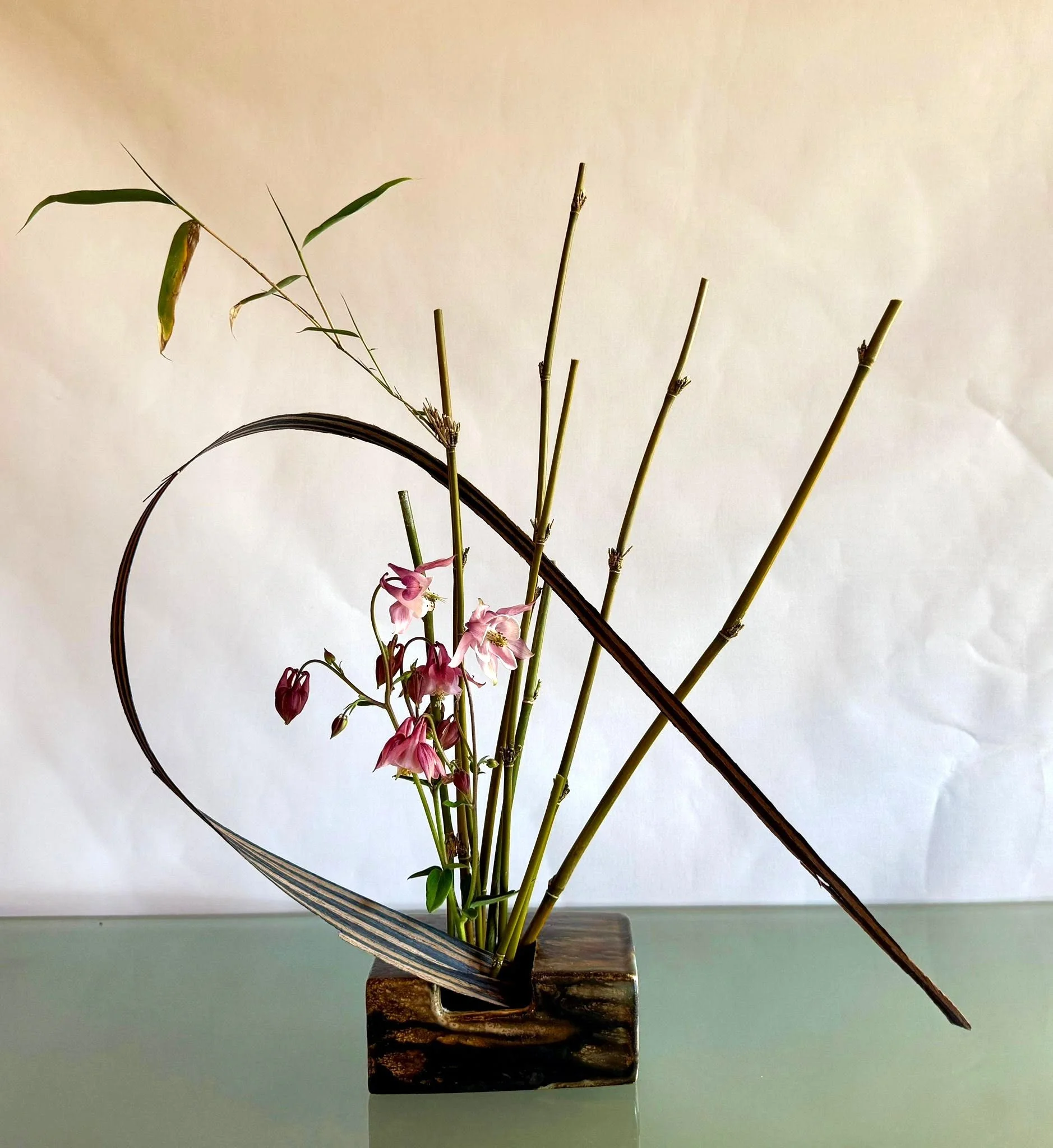
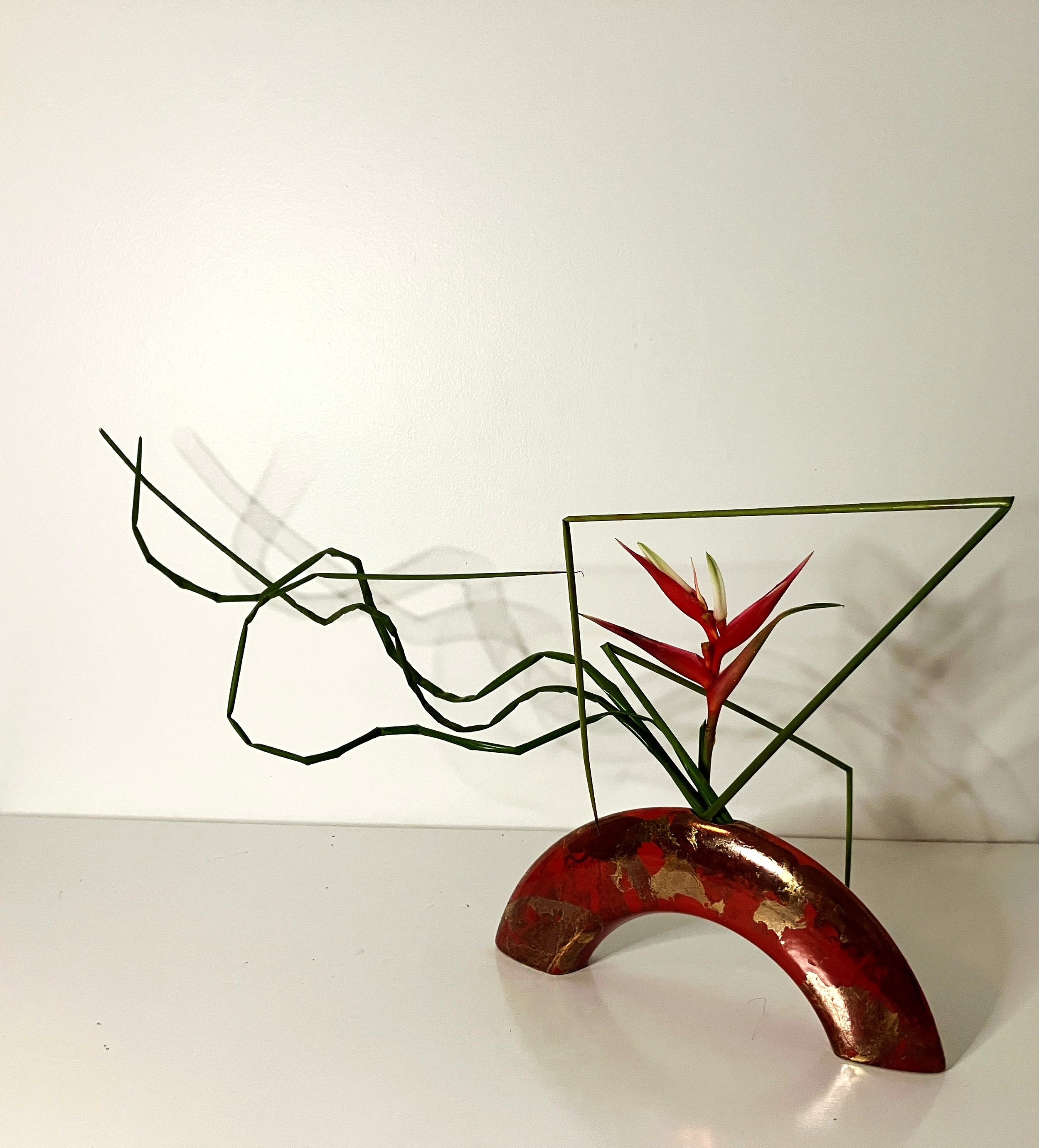
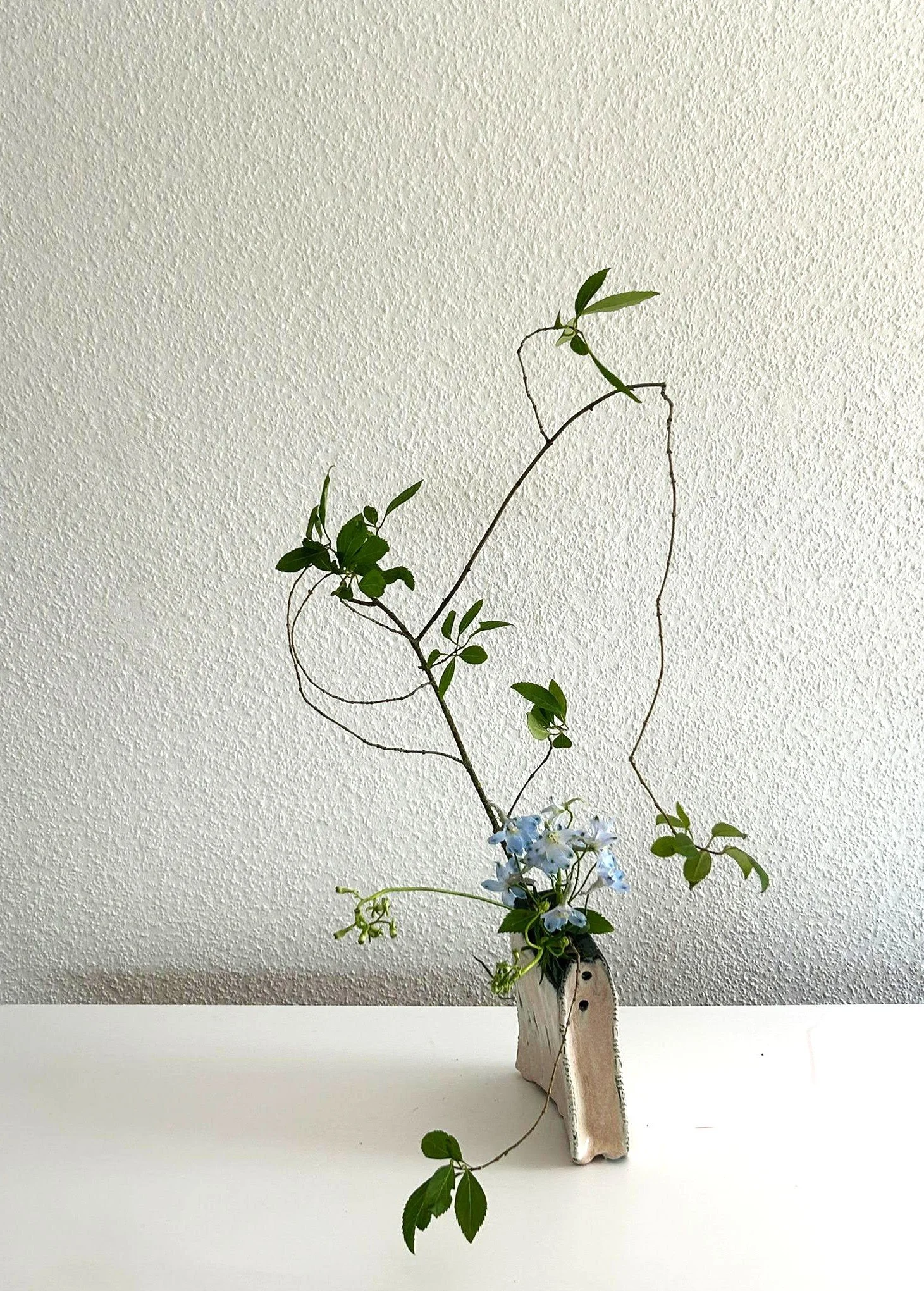
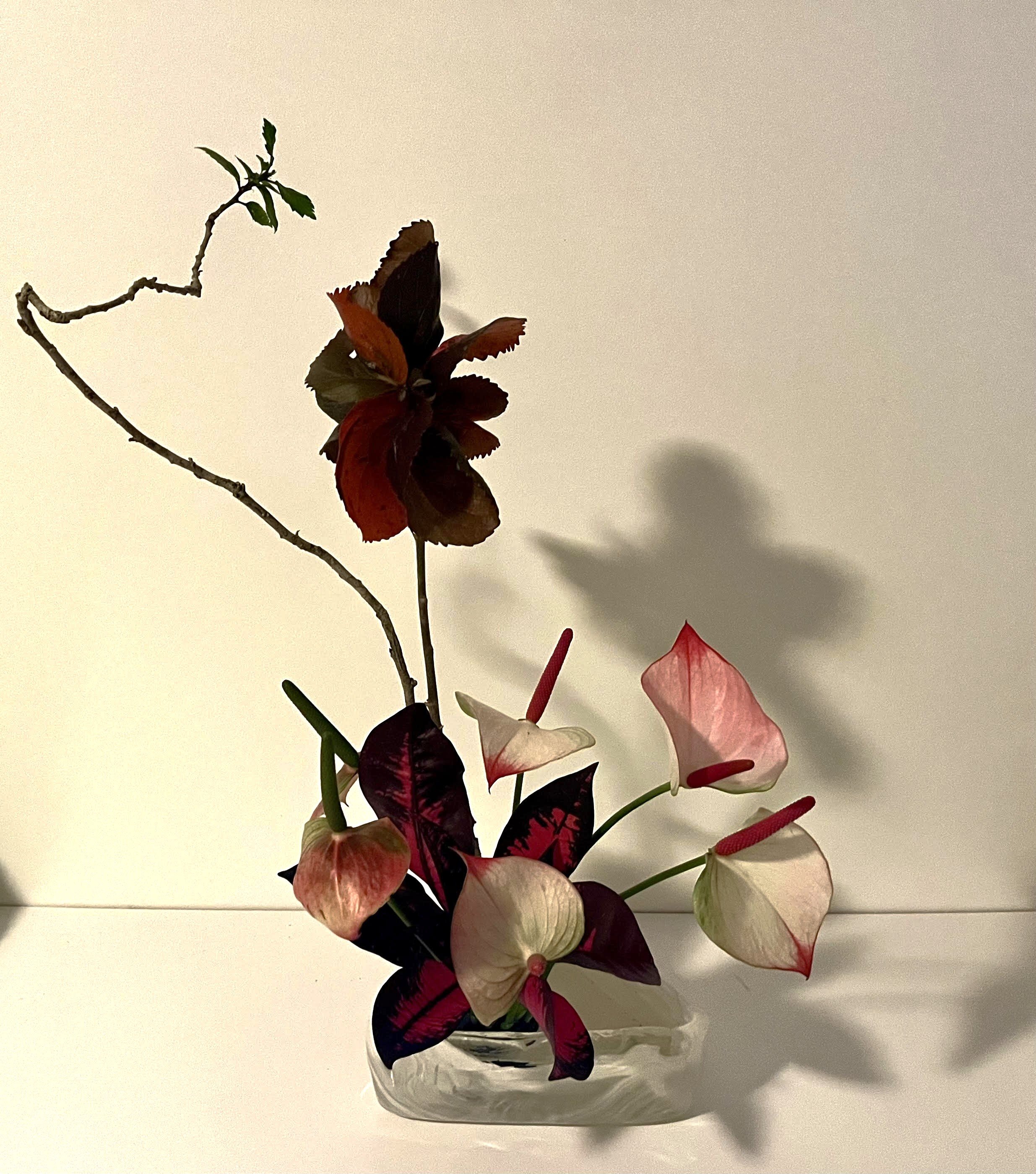
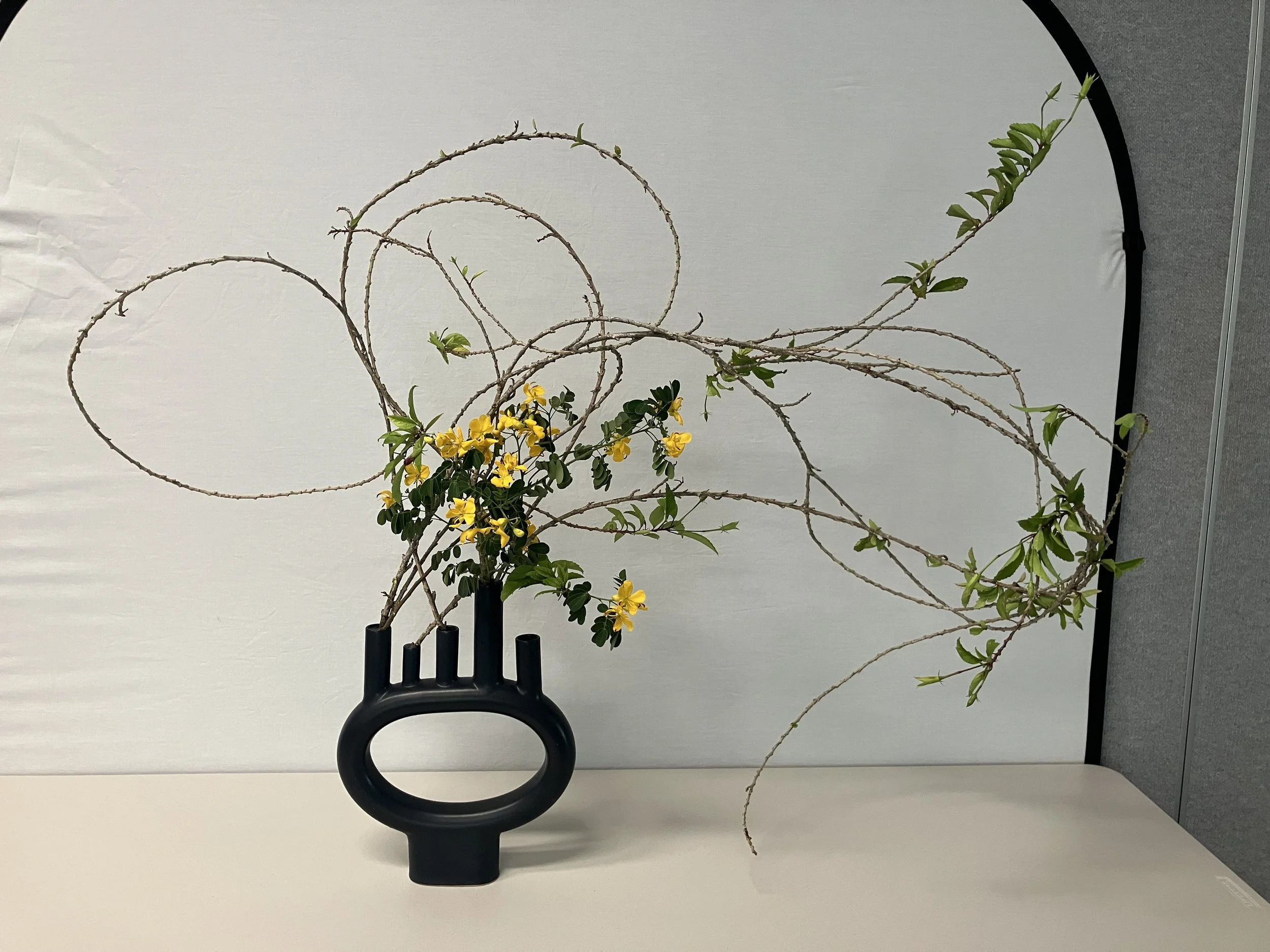
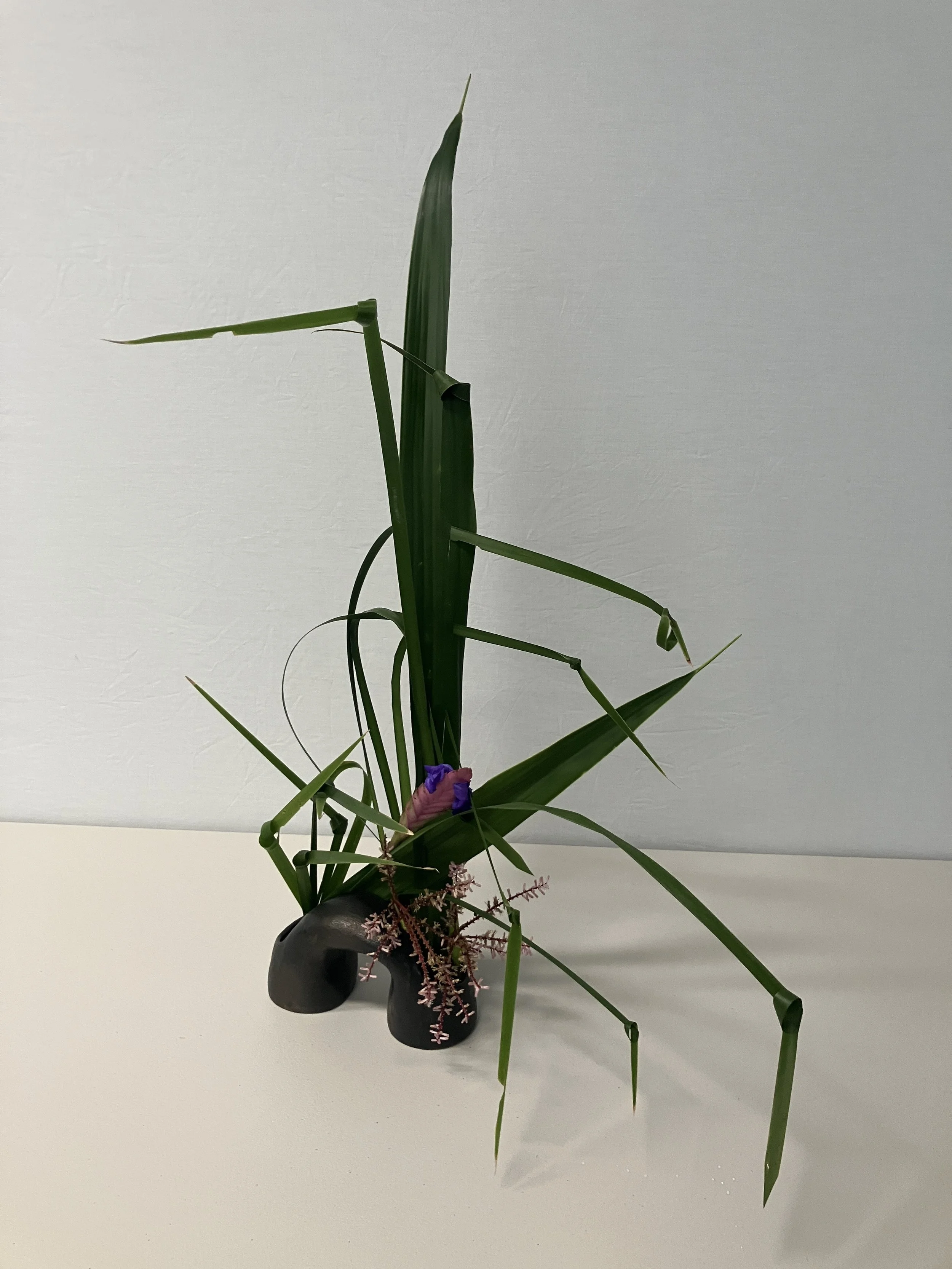
Kuukan, the space between

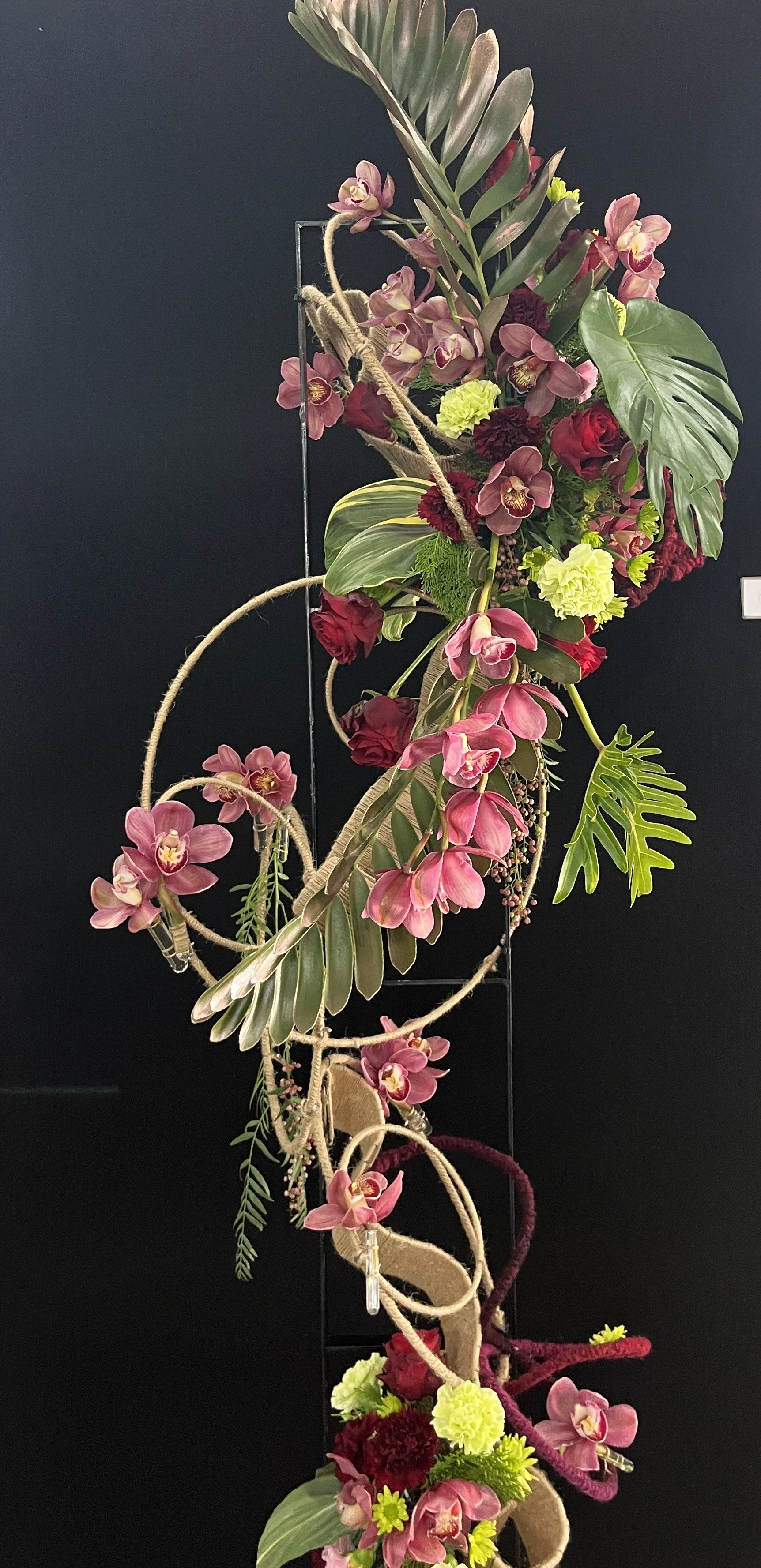
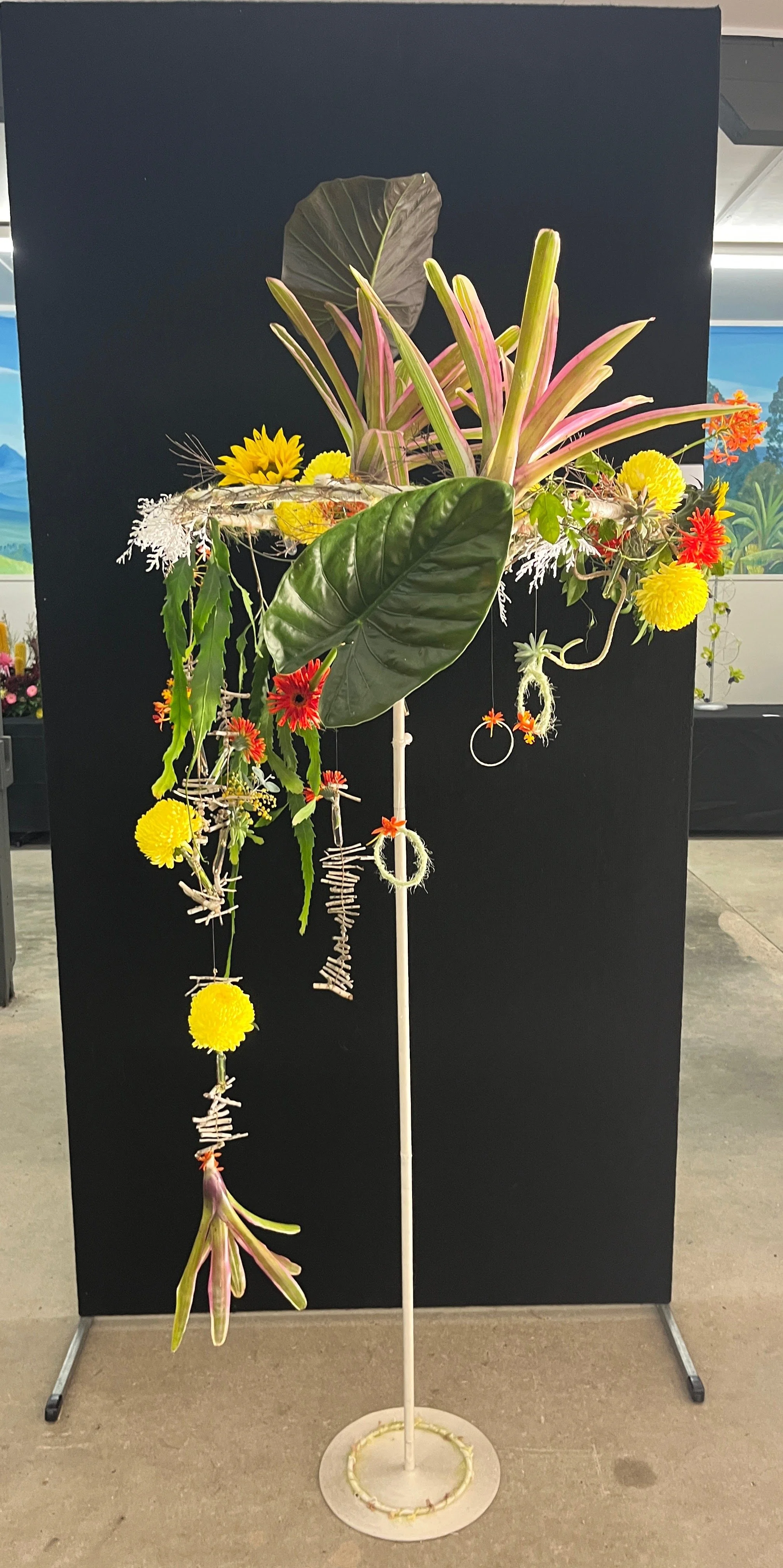
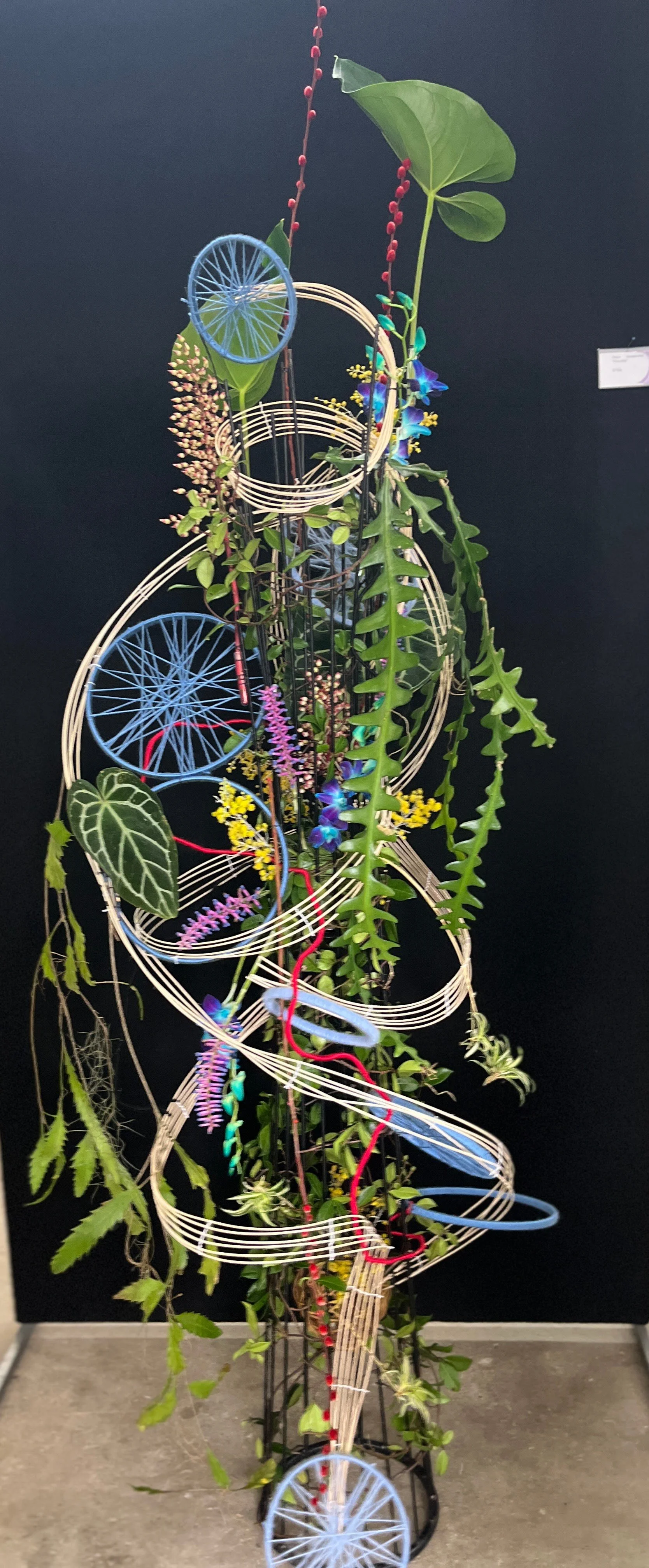
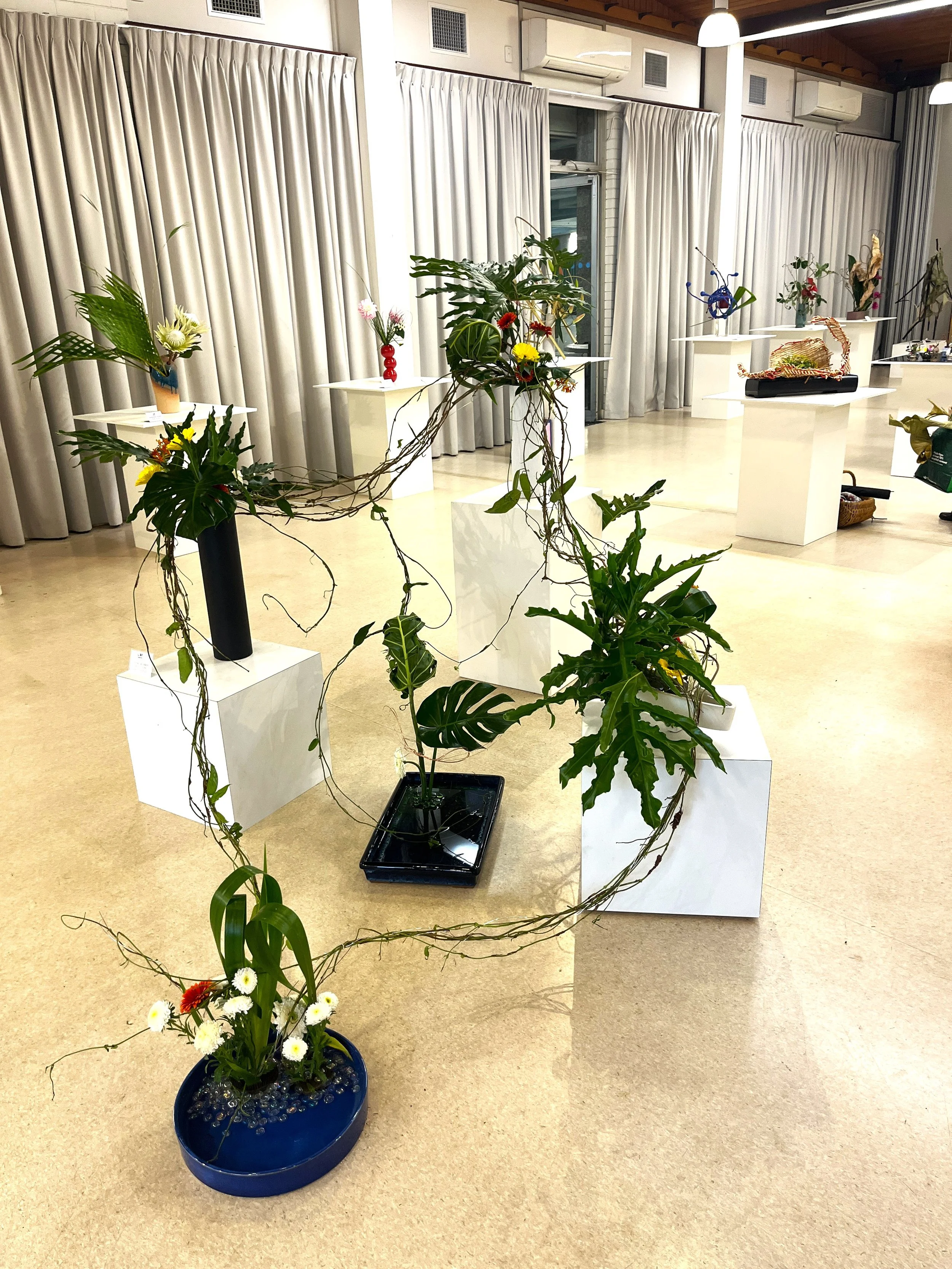
Our Ikebana session this week focused on the theme Kuukan – the space between and around the arrangement.

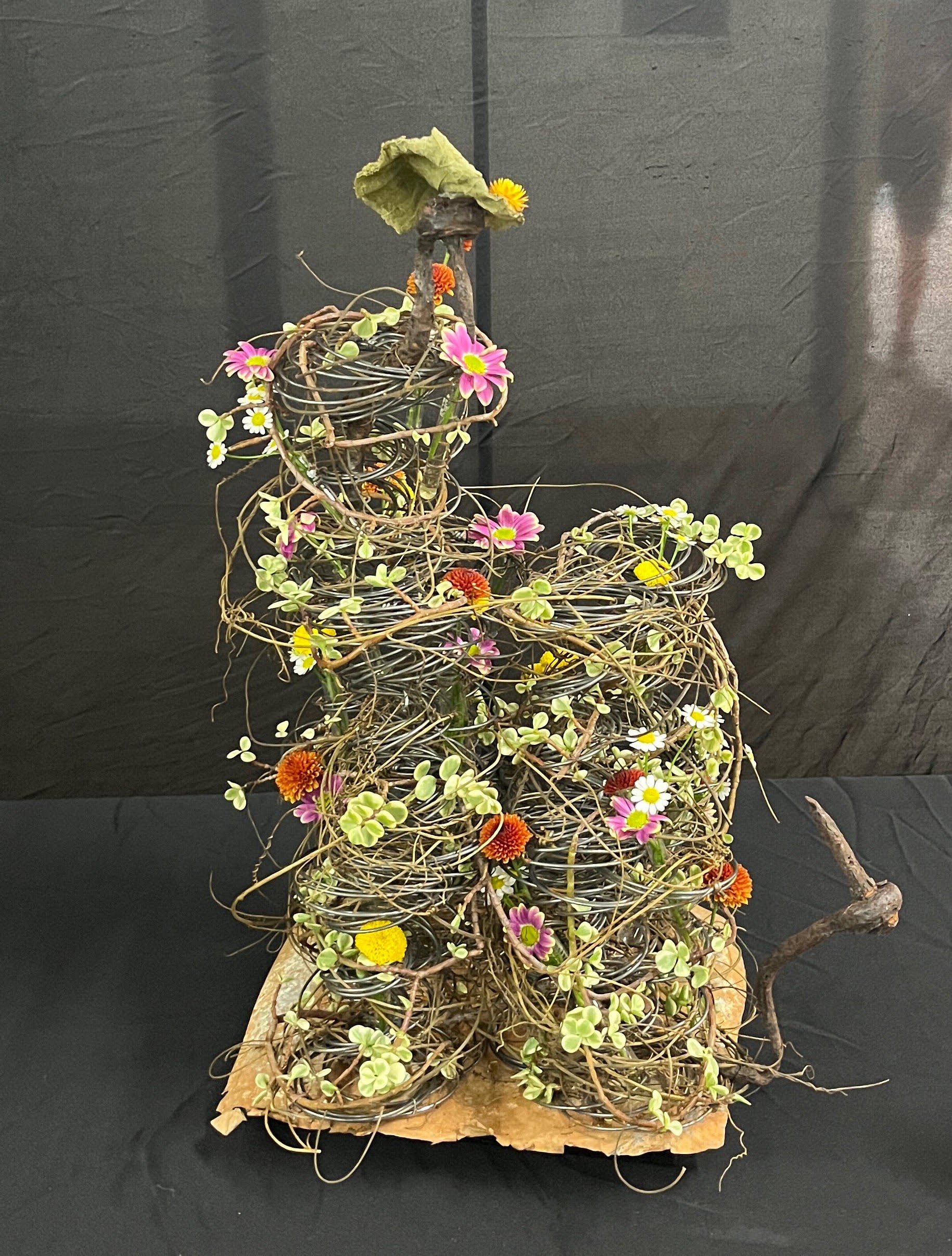
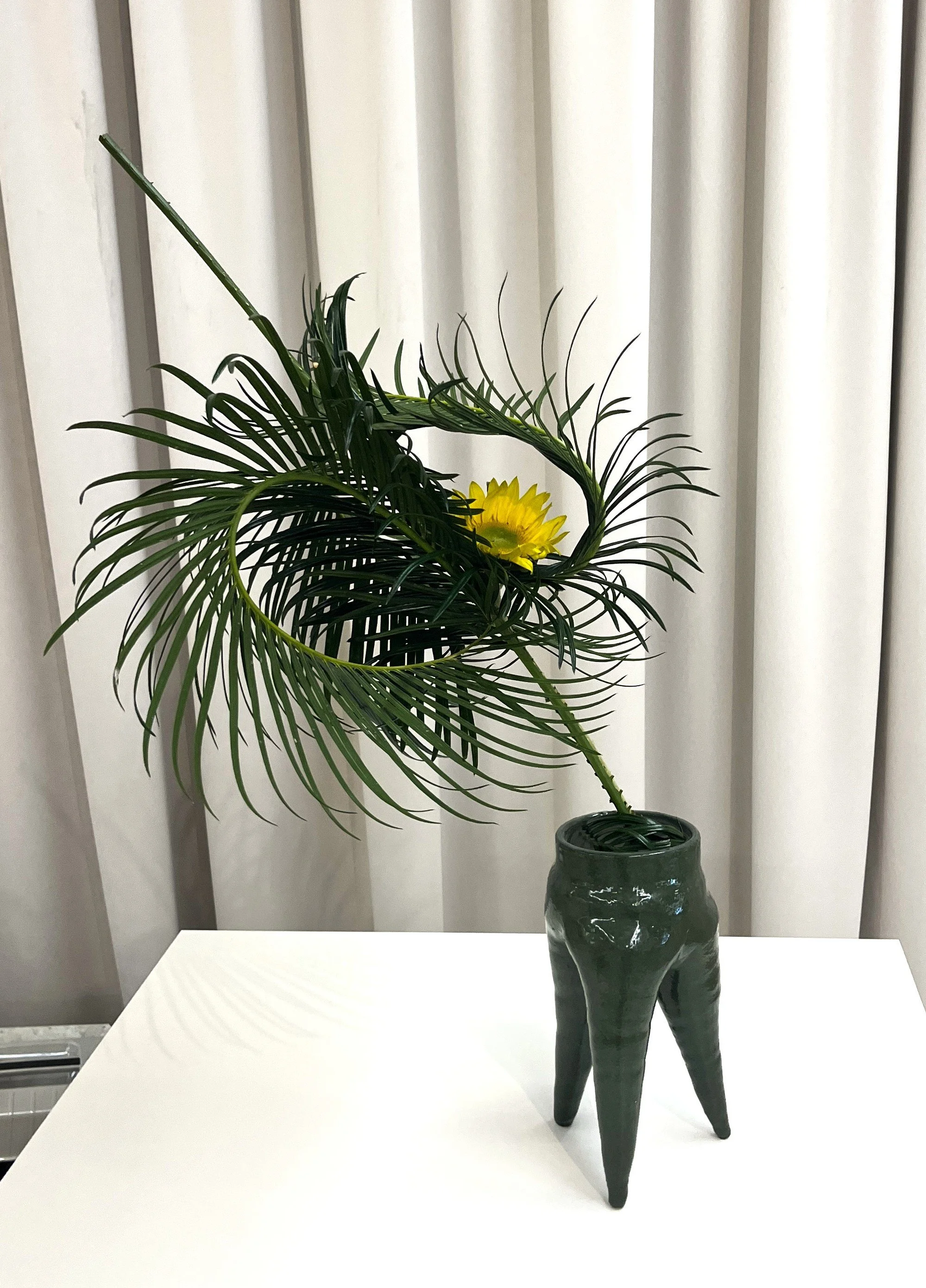
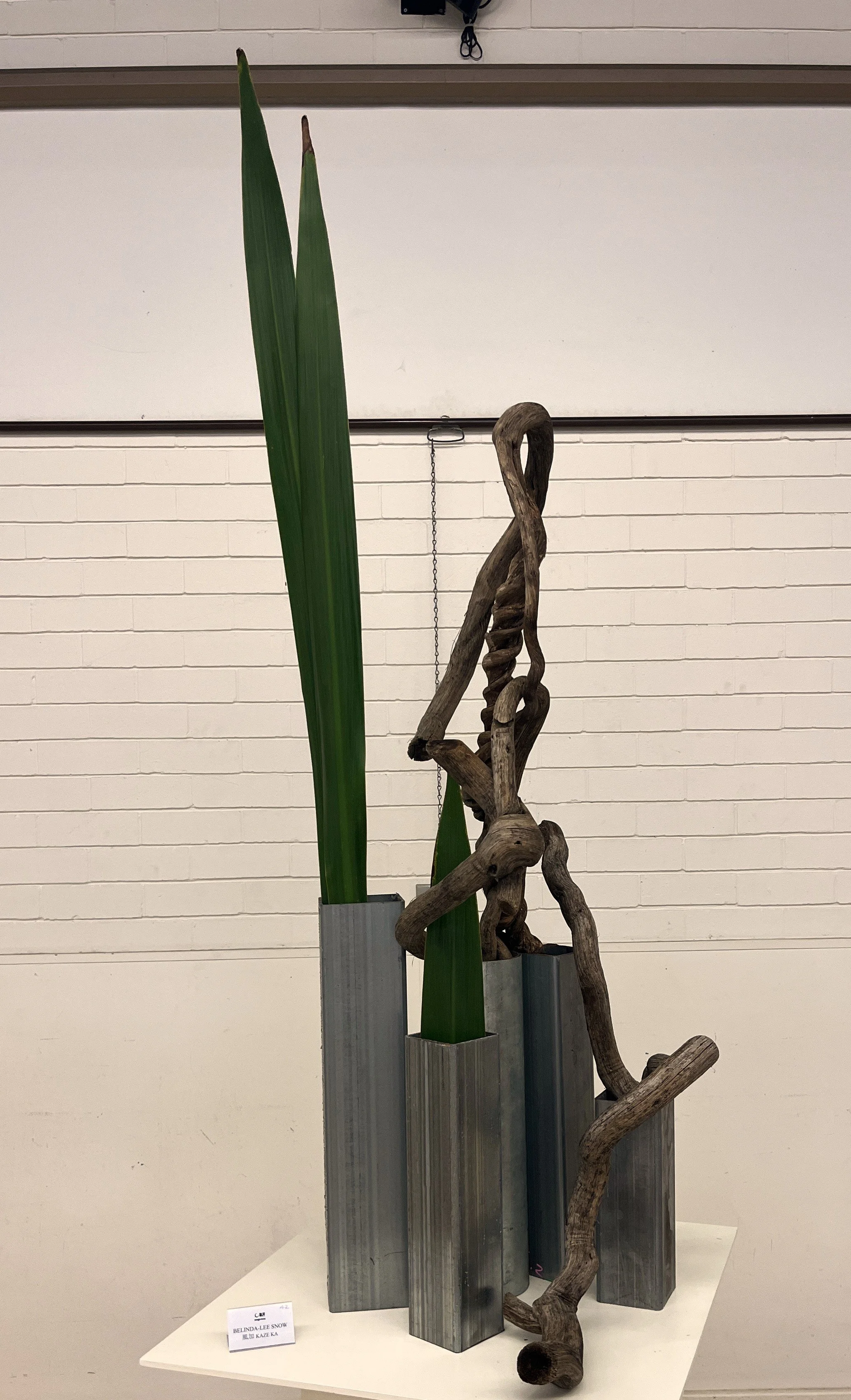
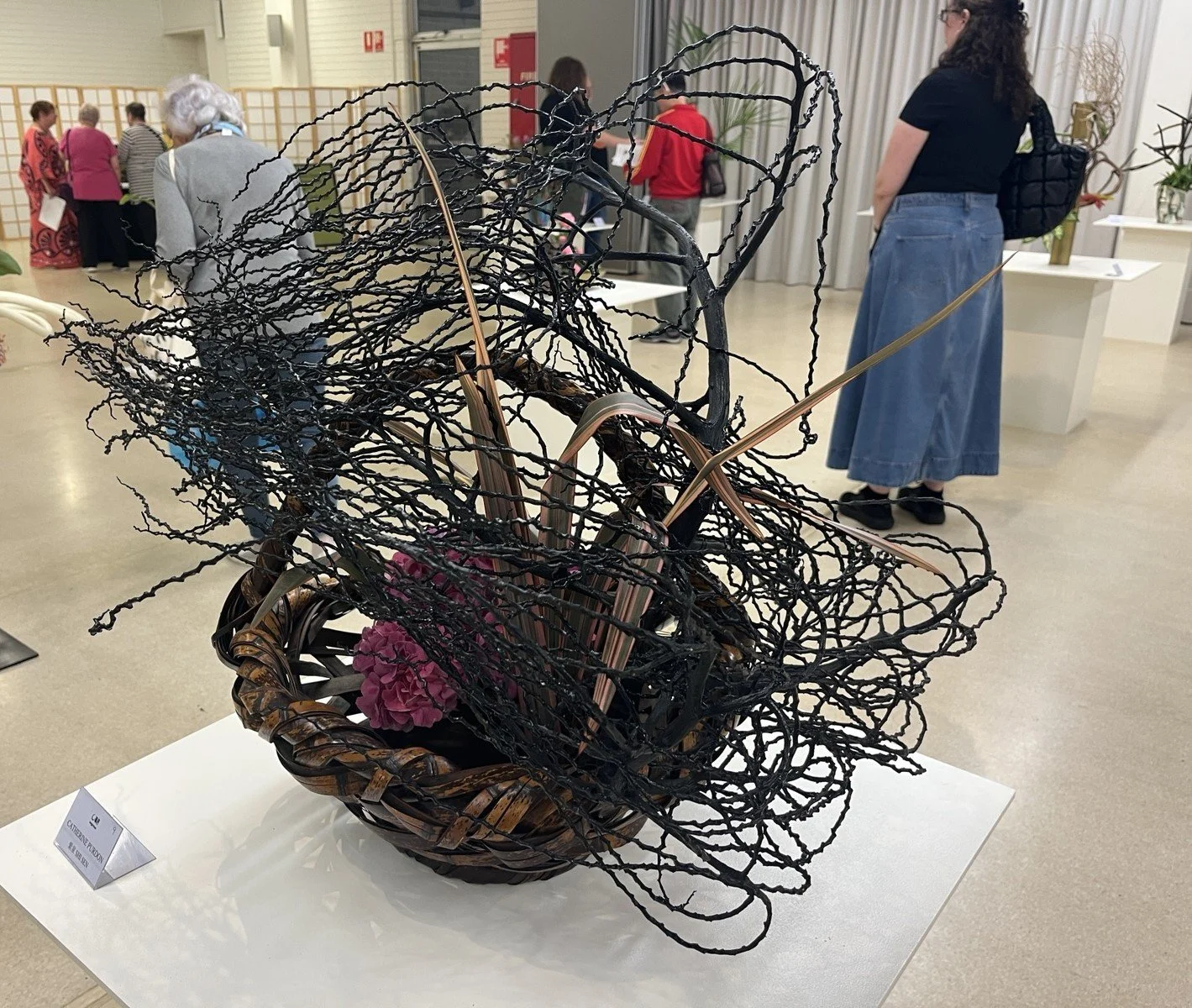
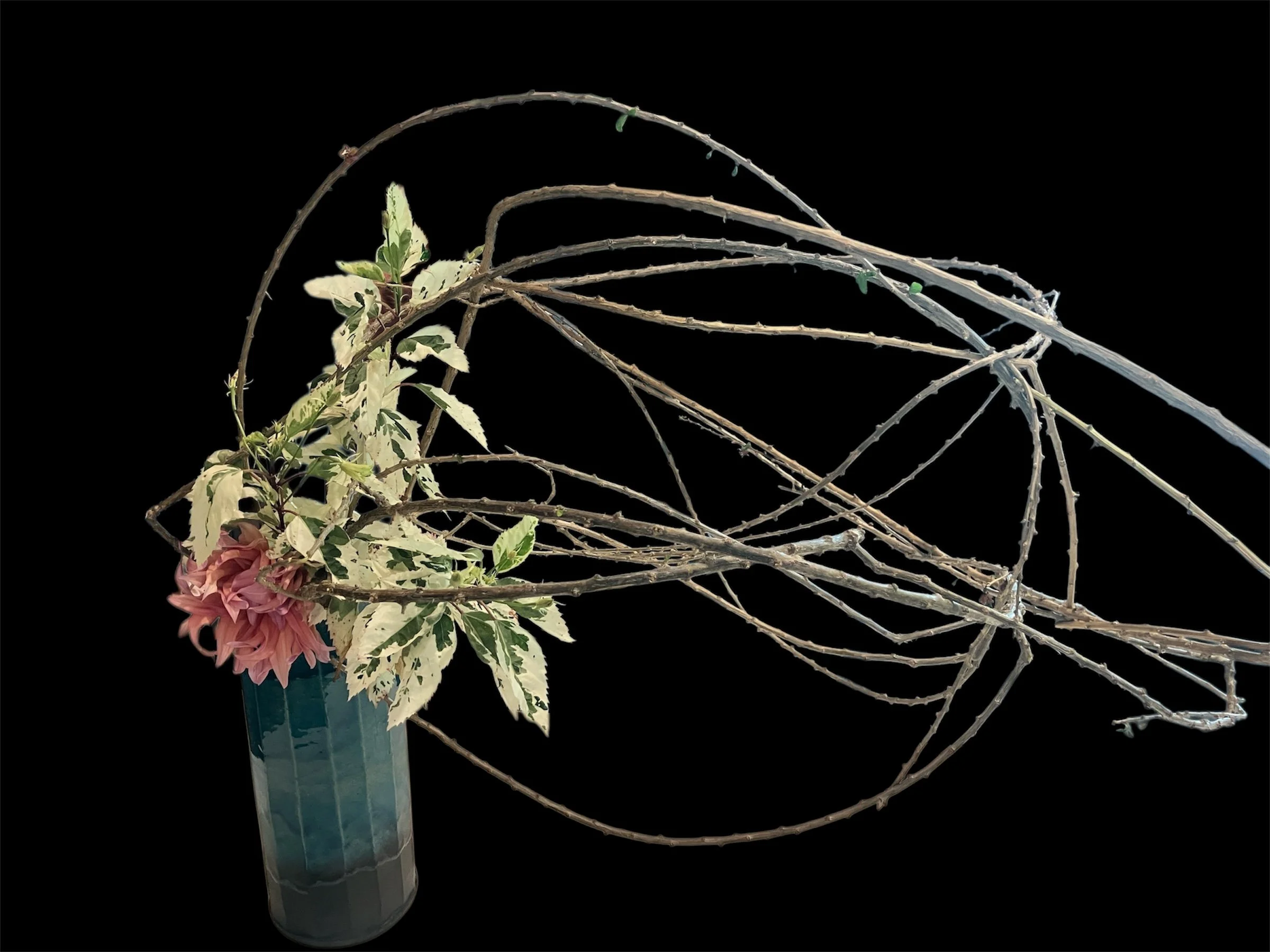
Some participants worked with dry branches and additional non-floral materials, while others even created their arrangements without using a kenzan, which is always a special challenge.

The most interesting aspect was how the spaces between the branches and the lines developed into beautiful designs.

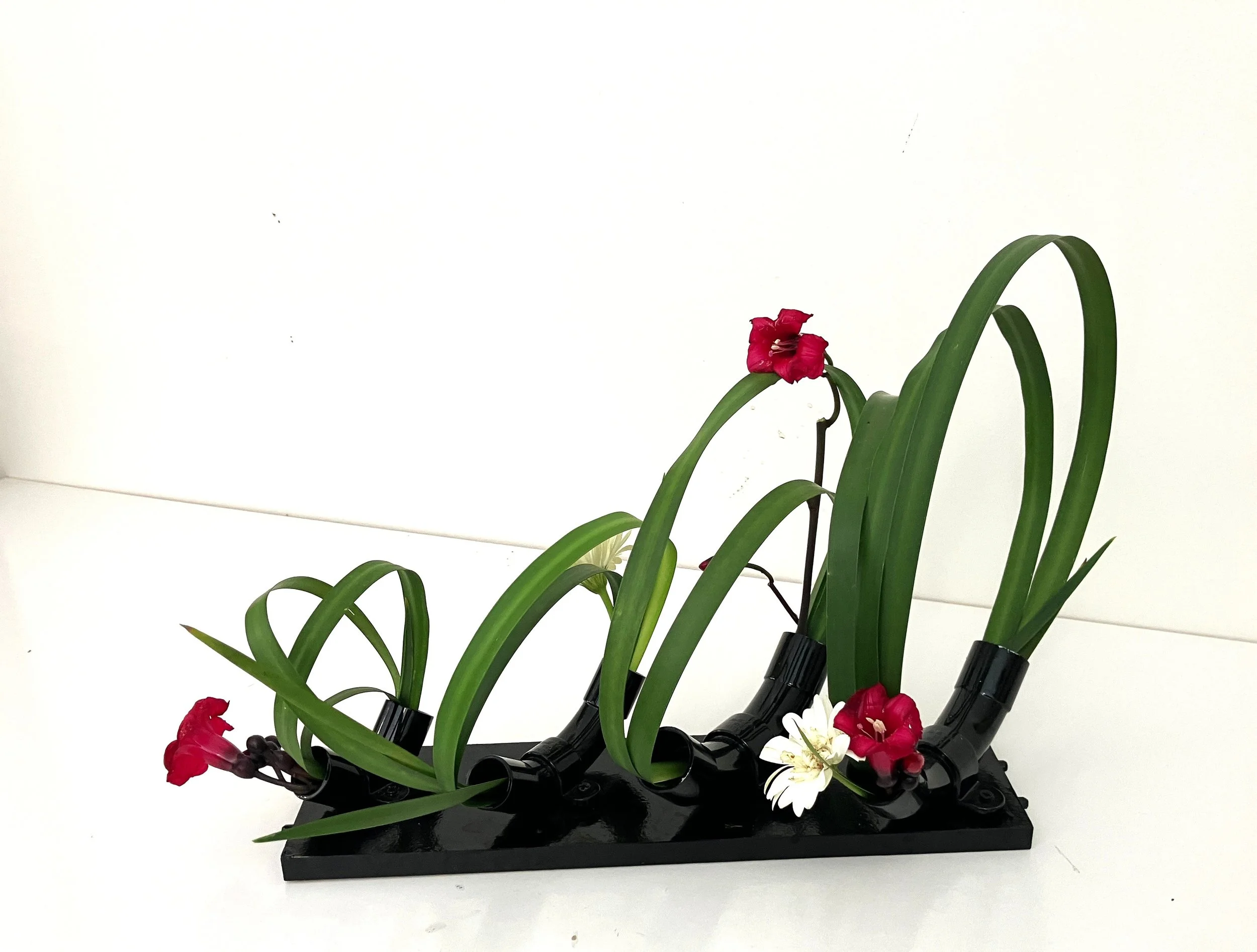
Other participants explored combinations of straight and curved lines, and once again we had a wonderful and inspiring session together this week.

Mass and Lines

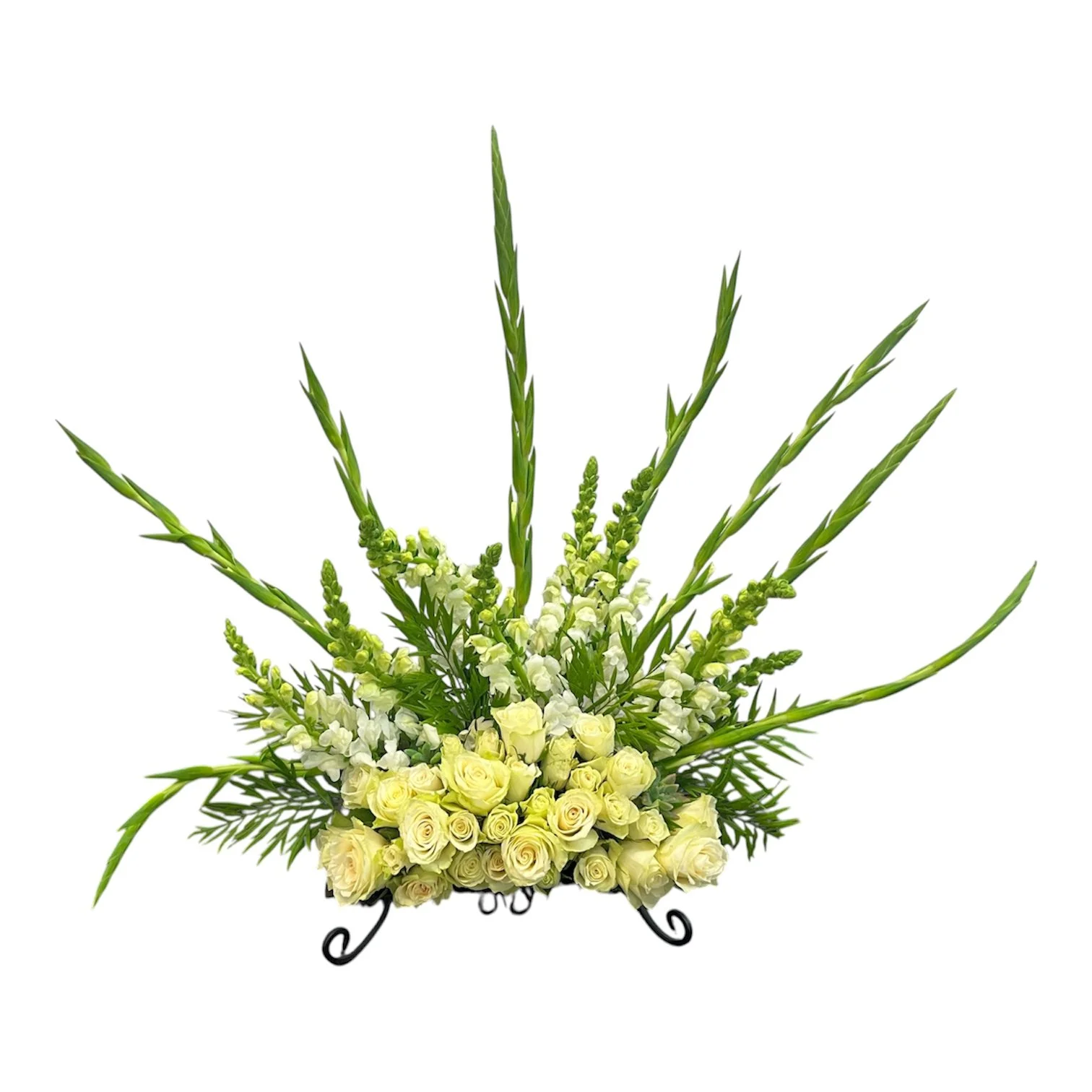
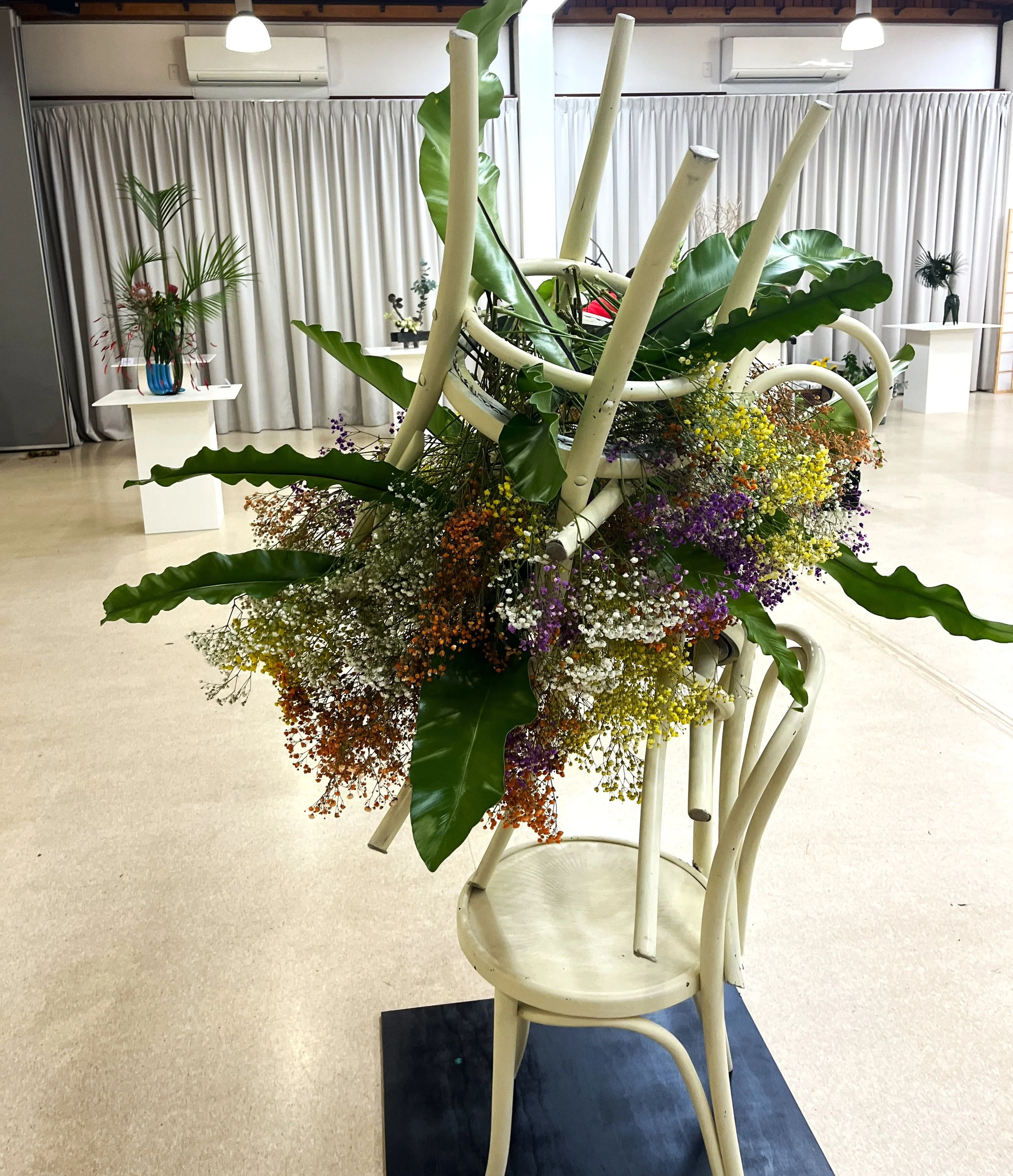
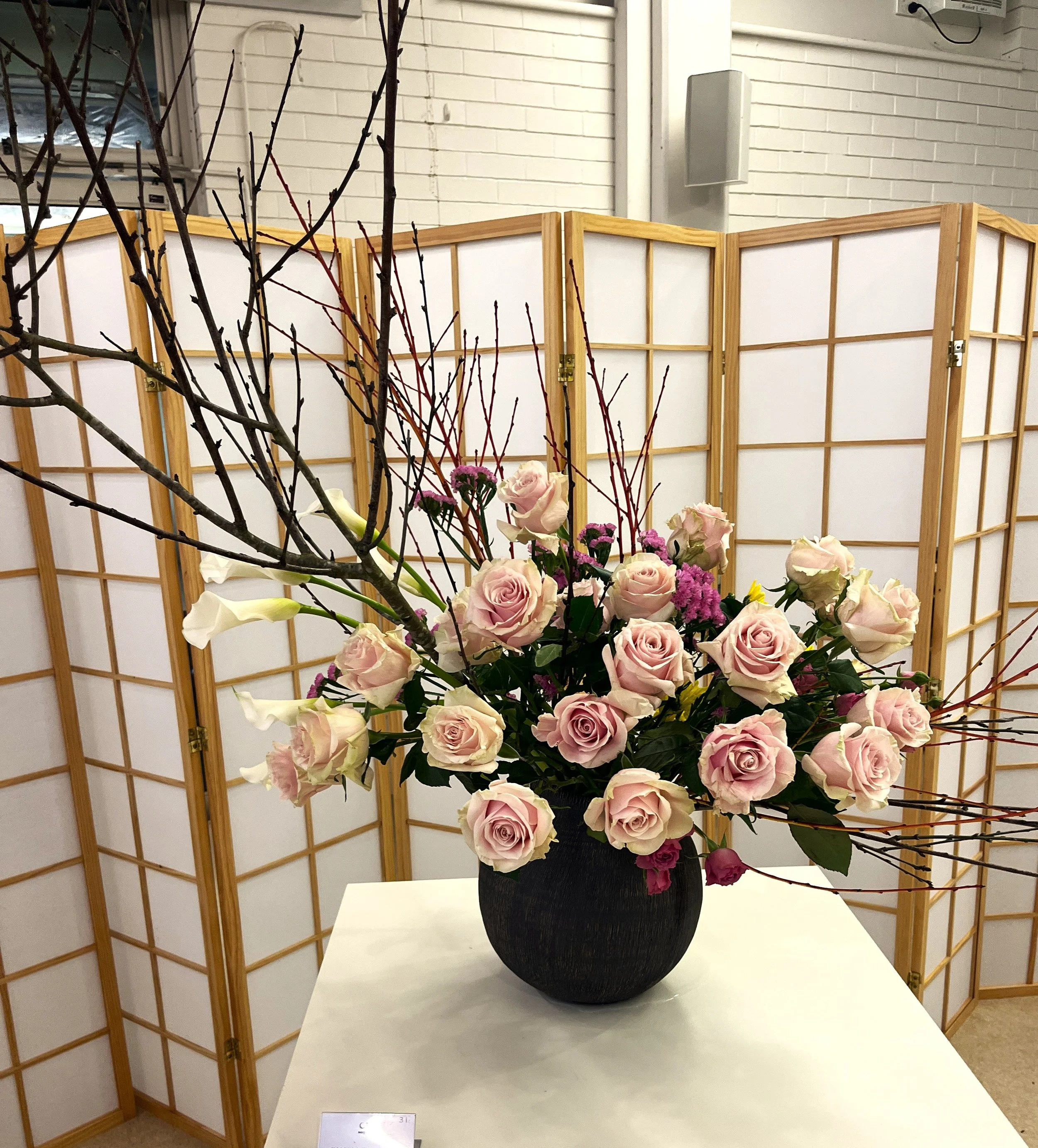
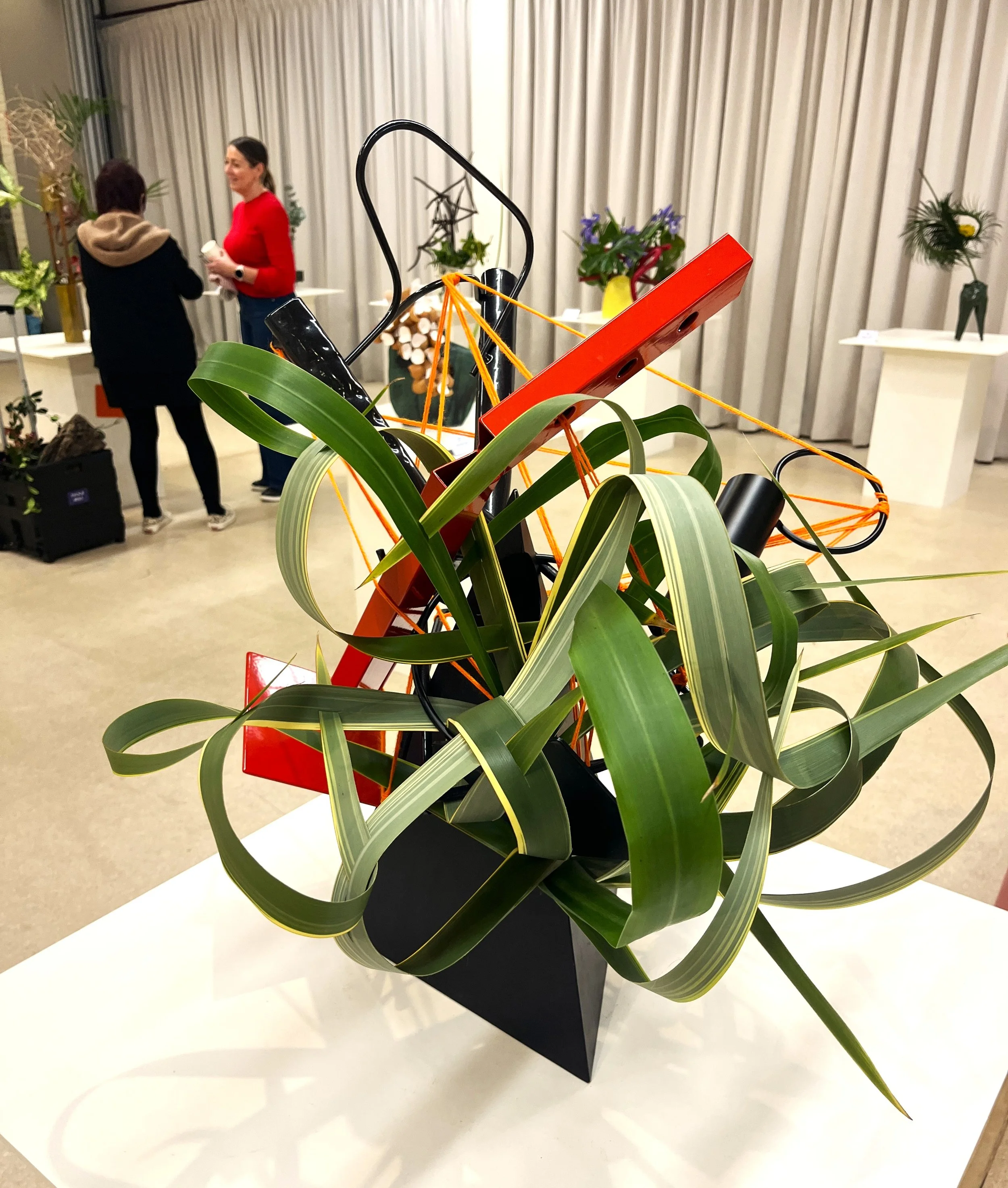
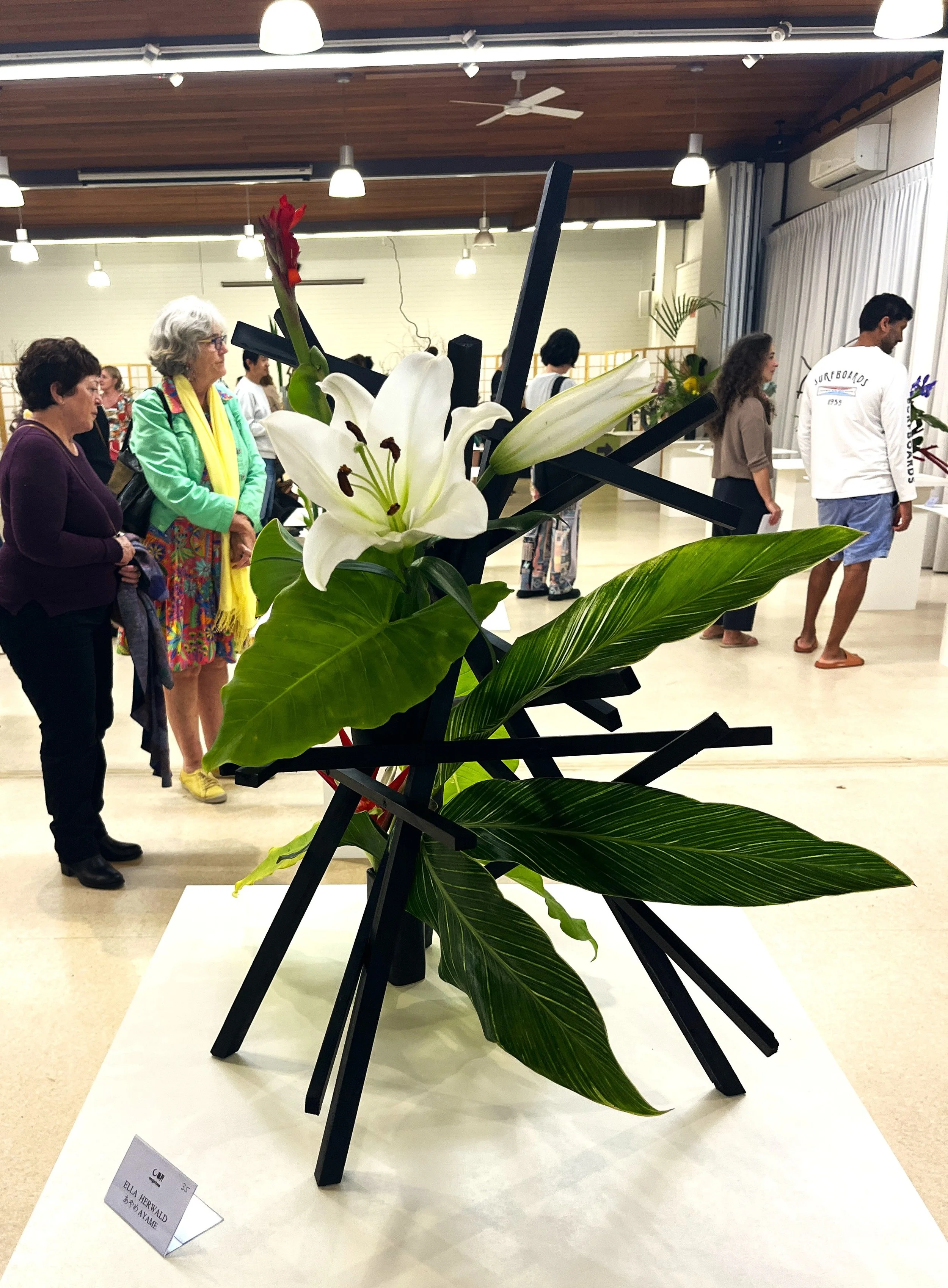
In this session, we explored mass and line. Some participants worked exclusively with mass, using flowers, leaves, or even dry branches and added just a few blossoms as subtle accents. Others chose to work only with flowers.

Some students combined mass and line in their arrangements. They first had to decide on the character of their lines: Would they prefer strong, straight lines, or gentle, curved ones? This conscious decision shaped the entire composition.

The results were truly fascinating, and the materials we used added even more interest and variety. See for yourself and enjoy the beautiful outcomes.

Winter walk and Papyrus

My German students were given the task of going for a winter walk and collecting dry branches that were interesting enough to create a beautiful ikebana arrangement. The results were absolutely stunning.

My Australian students, on the other hand, were all asked to work with papyrus. Each of them, even the very new students, created beautiful arrangement that best expressed the feelings of the day. Once again, very different and unique arrangements emerged.

Arrangement for Chinese New Year

For our first online course of the new year, we explored the wonderful theme of Chinese New Year.

We created a wide variety of arrangements using many different materials, and all students were free to choose whatever seasonal materials were available in their own region.

See for yourself the beautiful results — joyful compositions filled with vibrant colours of red, gold, and green.

Recharging batteries for 2026

We went to Tasmania to recharge our batteries for 2026, and we were surrounded by beautiful landscape — one that could easily inspire ikebana. Using these landscape images, we’ll try to create a “typical” ikebana that reflects their beauty.

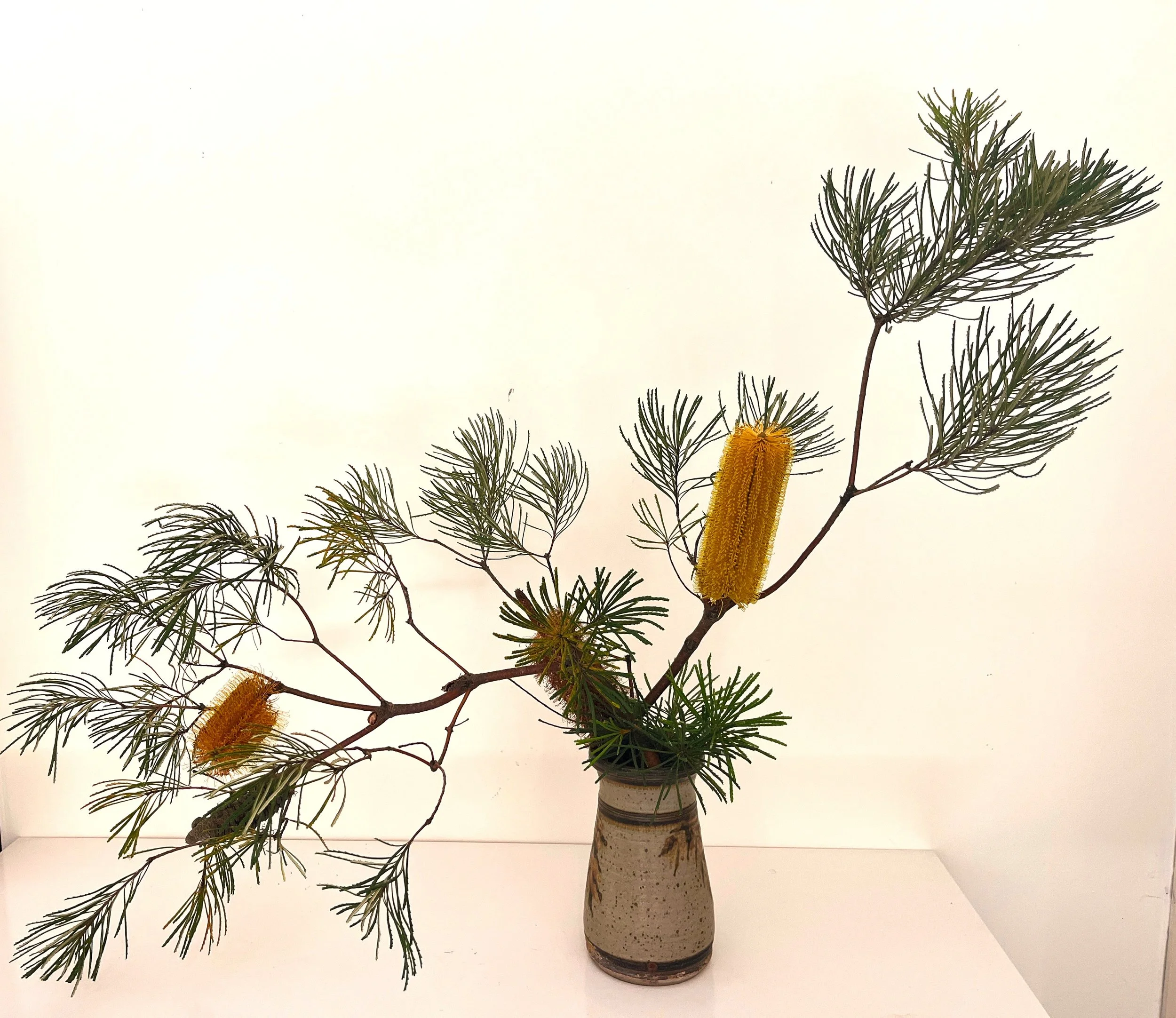
As I do on every holiday, I made ikebana with whatever I could find along the road or in the garden, using the vases or containers available in the house we were staying in. Sometimes the results are beautiful, sometimes a bit funny — but it’s always great fun and full of discovery.

In two weeks, we’ll begin our ikebana classes again, and I’m very much looking forward to seeing you then.

Preparation for the new classes

In preparation for the new classes starting in February, we worked with pumpkin leaves. Pumpkin leaves has a beautiful shape, visible veins and dark and light green, but the are not very long-lasting after cutting, only if the are very deep in water. But their stems are stripy and very interesting. We created a few playful ikebana arrangements that highlight the beautiful structure of the pumpkin stems.

Christmas-Special-Workshop / Last Workshop in 2025

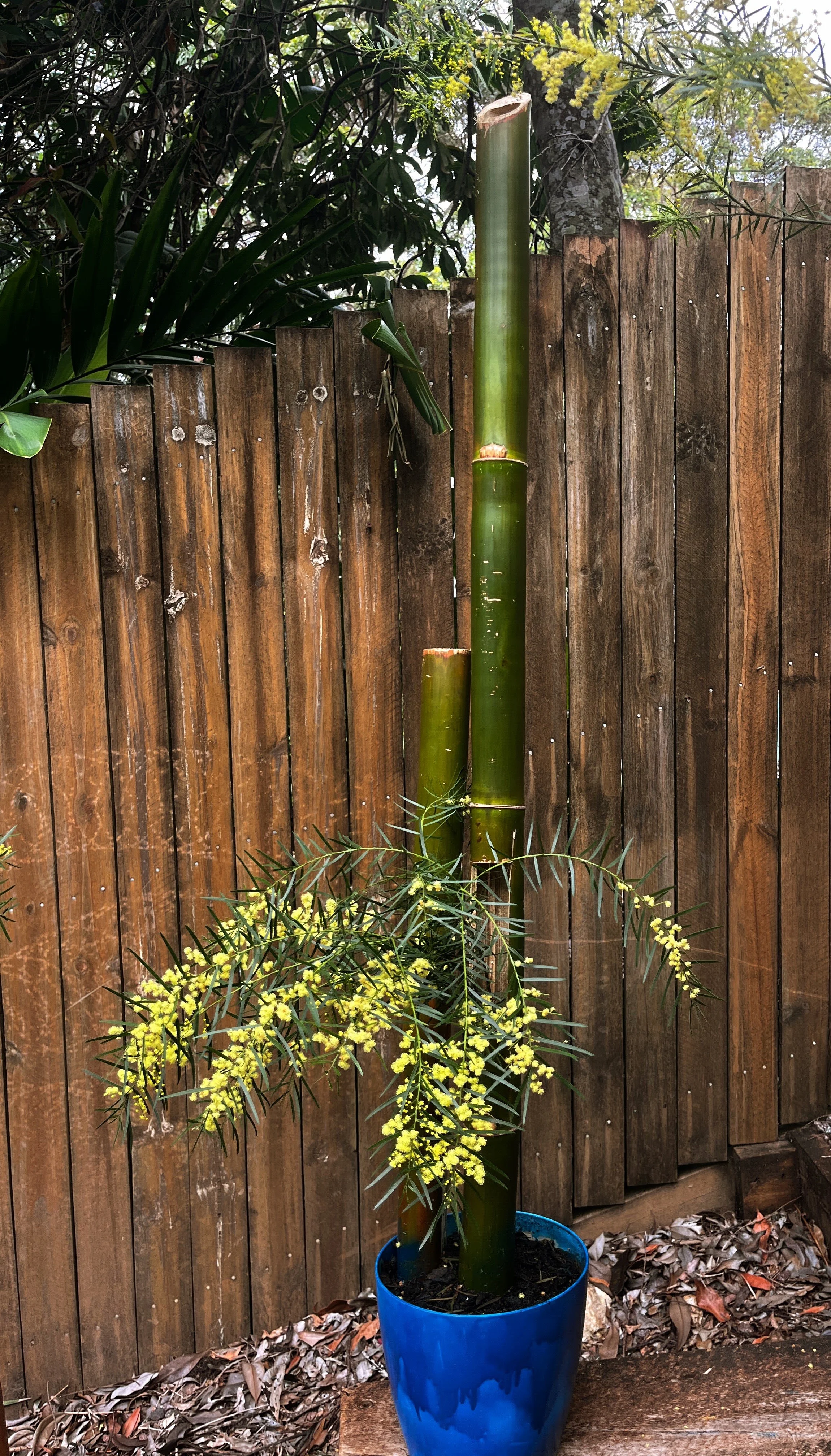
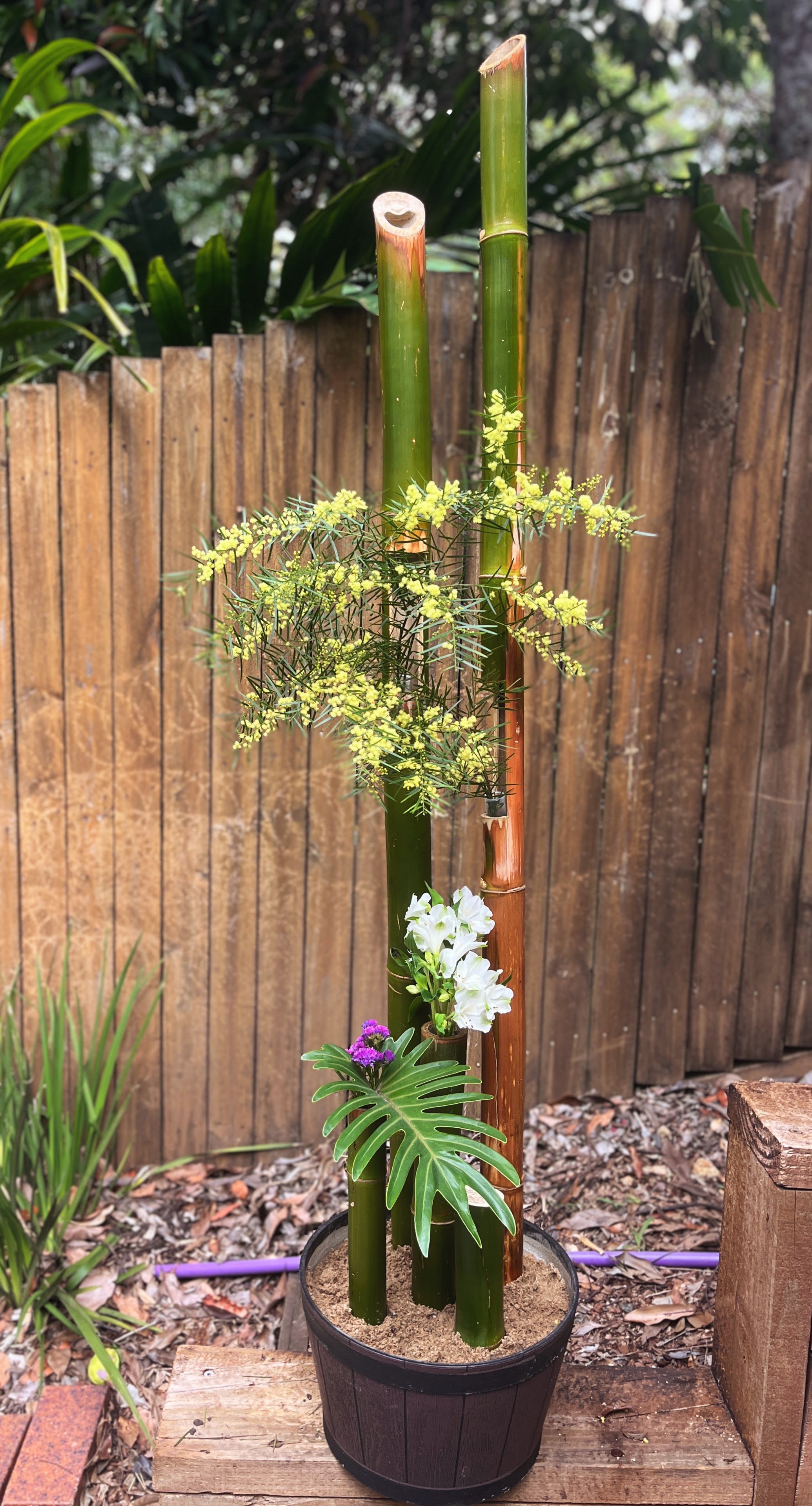
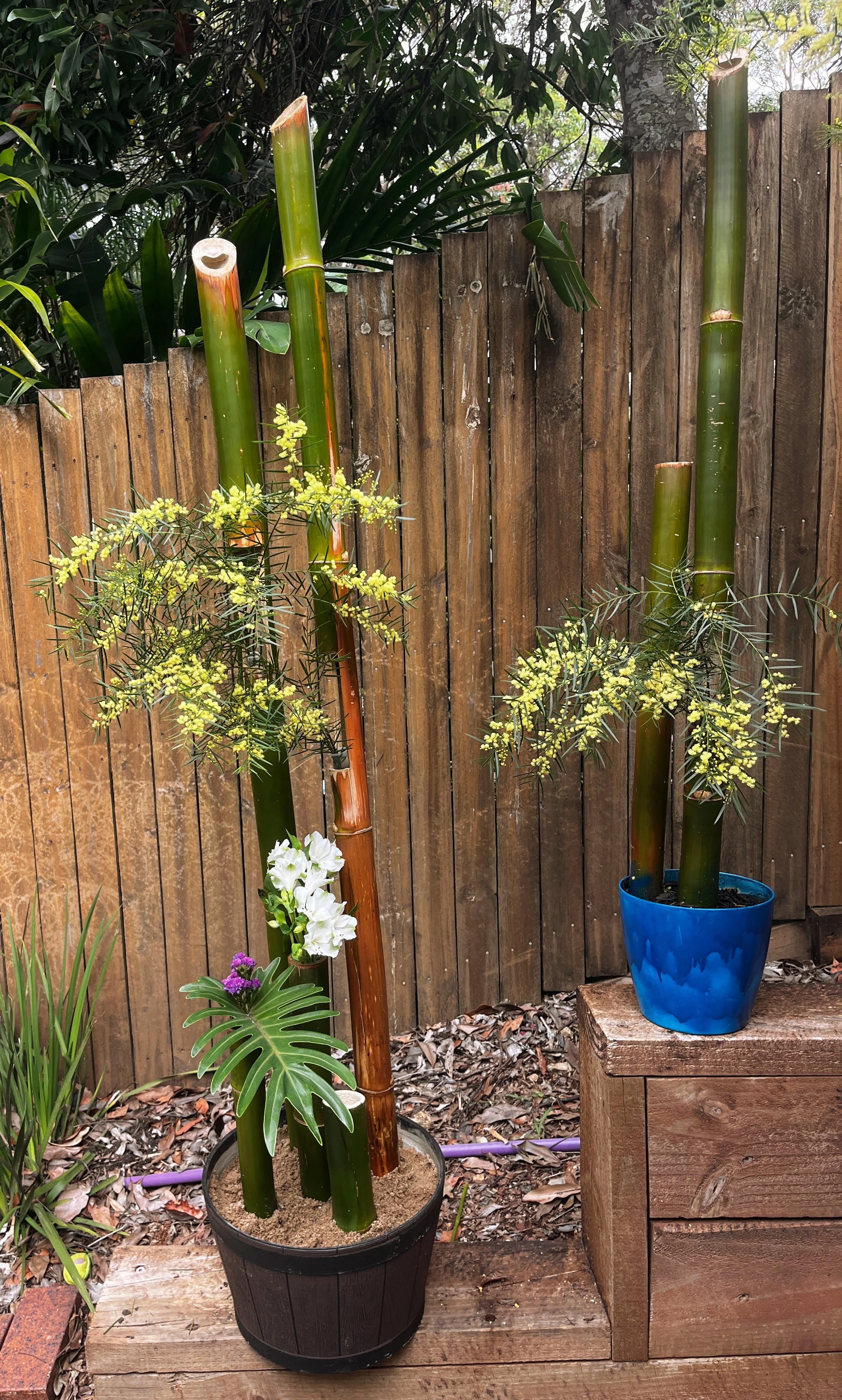
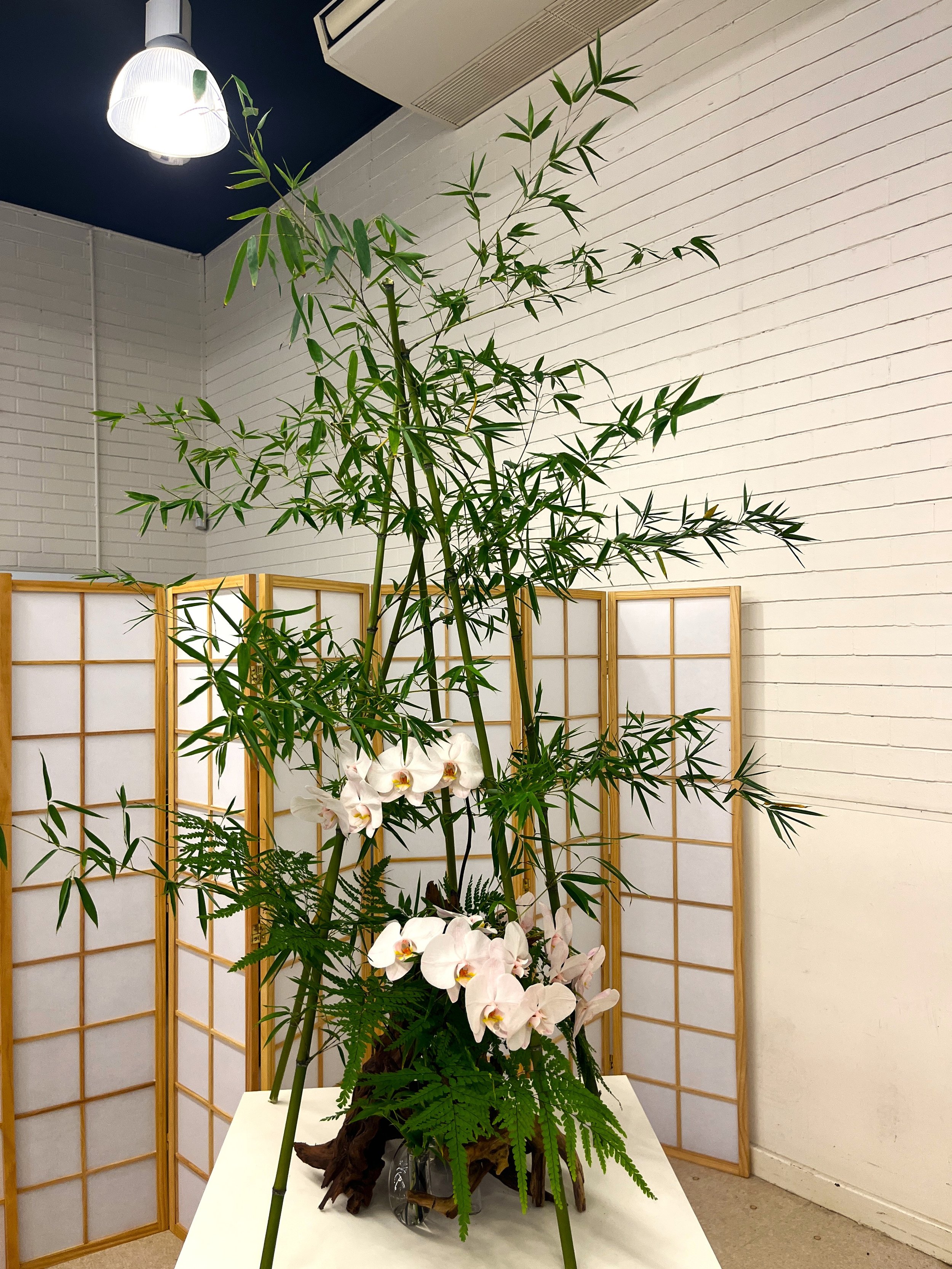
We concluded our Ikebana year with a bamboo workshop. We combined Japanese traditions with Western Christmas traditions. In Japan, beautiful New Year arrangements are traditionally created using bamboo, pine, and plum blossoms. Bamboo symbolizes strength, pine represents endurance and plum blossoms stand for hope and all together for the promise of a good New Year. As plum blossoms were not available to us, we worked instead with lilies and other spring flowers. By blending these elements with our own Christmas traditions, we created truly beautiful arrangements.

We wish all our Ikebana-friends a merry Christmas and a happy and creative New Year 2026. We are on holiday until end of January 2026.

Christmas bauble mode

We are fully in Christmas bauble mode and, this week, created a wreath using Christmas baubles in various colours and sizes. The openings were filled with pine, flexigrass, wire or thyffa-leaves, and complemented with red and white flowers. An unusual and festive and modern table decoration that brought us a great deal of joy.

Celebration of the first Sunday in Advent

“To celebrate the first Sunday of Advent, we started creating our festive table decorations. This week’s project featured Christmas baubles in the traditional colours of red, green, white, gold, and silver, arranged inside wine glasses — both upright and beautifully flipped upside down. The results are charming little table highlights that truly bring the Christmas spirit to life.”

Transition in time

We focused on the theme of transition in time — specifically the shift from autumn to winter in Germany — and we also worked on a horizontal Nageire-composition. My students did an excellent job with both. Creating the transition from autumn to winter here in Australia was a bit challenging, since the seasons are different, but I still managed to find suitable materials that allowed us to express this theme beautifully.

Colors in Contrast and vertical Composition

We focust on colors in contrast and vertical compositions last week. We worked with beautitul and different materials, and the results were truly impressive. Our update was delayed because of the heavy sturm with the result of an 30 hour power outage and no connection to the internet. Hope you enjoy the images.

Last autumn-course for 2025

This was our last course week in autumn here in Australia, and once again we worked on various arrangements. A few arrangements were created using only one type of branches. One student brought camelia- branches in yellow and white, and another brought plain green branches, in which we worked out the artistic lines. Someone brought a vine with the wonderful name “Honey Sweet,” and we also created Nagaire arrangements in a hanging style. One of our beginner students created a wonderful arrangement using smokebush and peonies. As always, we enjoyed our work very much and achieved good results.

Variety of Arrangements

This week we created a wide variety of Ikebana arrangements. With my German students, we worked on arrangements in the same color scheme, while my Australian students made arrangements using vines. One of my new students created her first Nageire arrangement and did an excellent job. There was also a beautiful variation nr. 4 made only with flowers, which turned out very well.

Spring- and Autumn-Ikebana from two Continents

This week, we continued working on Springtime-Ikebana without using a kenzan, which is always a challenge, but it worked out beautifully with our lovely spring branches and flowers. The German students, on the other hand, worked with bare branches or berry branches and many loose leaves for the Atumn-Arrangements We tied some or a lot of the leaves together with wire to create little or big nests, which we tucked into the arrangements. The results were beautiful ikebanas that will last until our next course begins in four weeks.

Creative week with different designs

“We were very creative this week, both in the online course and in person. Some people created arrangements using only branches, with beautiful results. Others combined a vase and a container in their designs. Some made spring arrangements, while the German participants worked on autumn arrangements with loose leaves. It was all very lovely and a lot of fun.

Autumn- and Spring-Arrangements

This week, I worked online with my German students on autumn-themed arrangements, and some of them even used baking paper in their creations. With my Australian students in person, we explored a wide range of designs — some using only leaves, while even the beginners created beautiful arrangements with Tibouchina branches. The diversity of ideas and expressions is always truly enchanting.

Meeting with our creative group

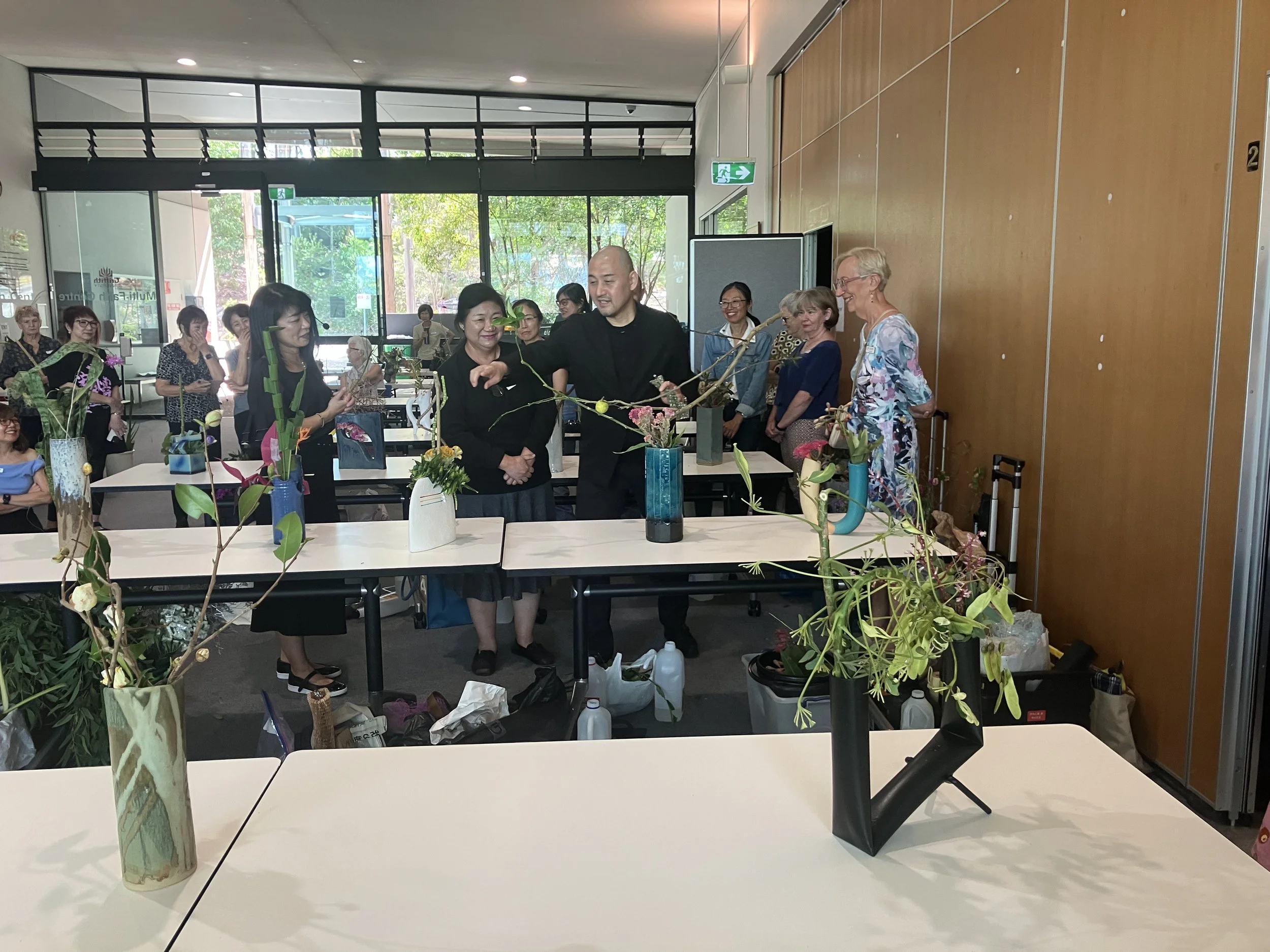
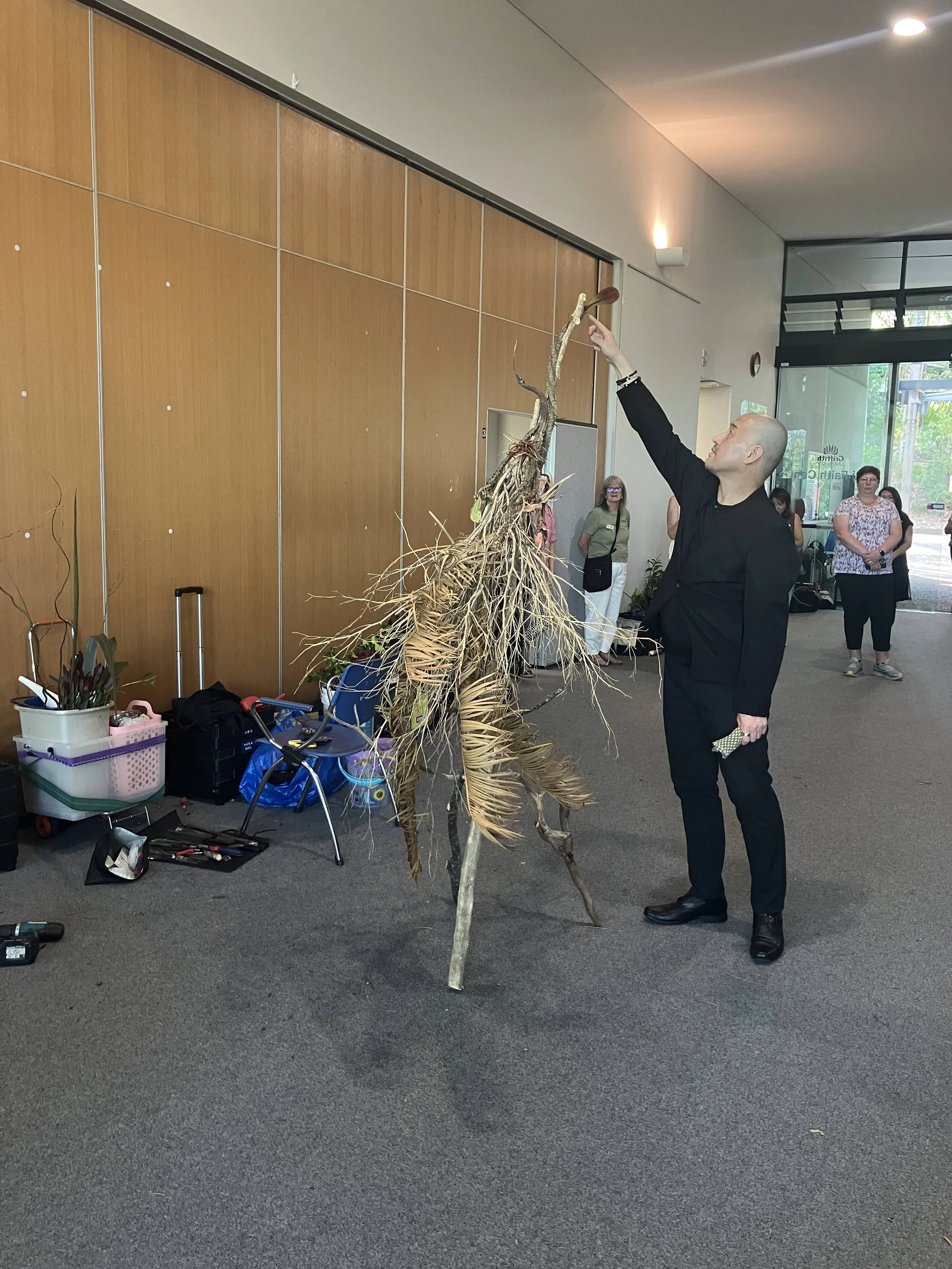
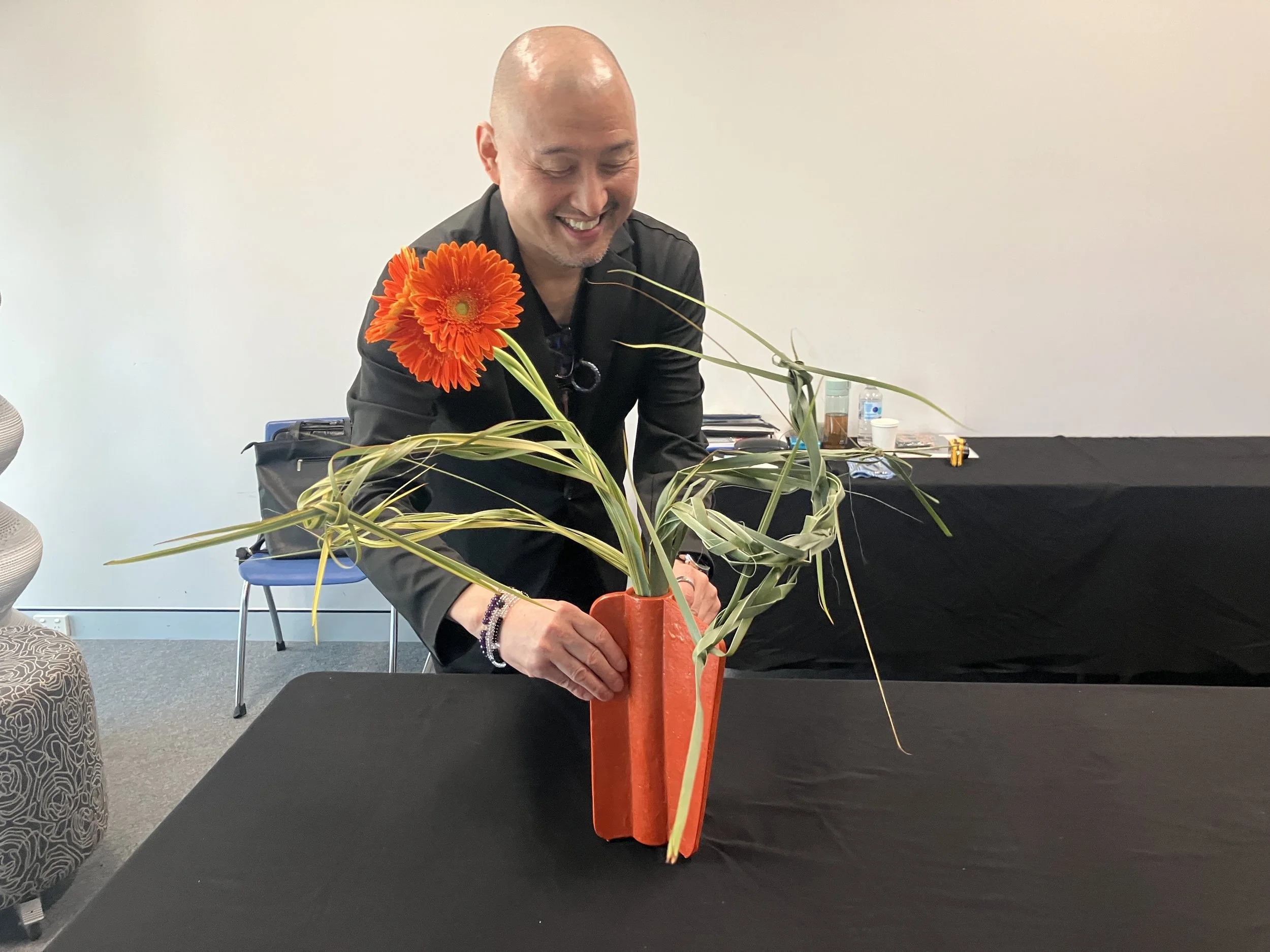
At today’s meeting of our creative group, we worked with KUUKAN and MA the emptiness in and arround an arrangement. We used tropical materials such as jacaranda, pussy willow, dyed palm leaves, and a pompon flower with the beautiful name Wilsonii. We also included homegrown pineapples and orchids. It was a very creative morning.

Composition of straight Lines

We used different types of material to create Lesson 5, book 3 “straight lines. For one of my students, it was the very first time to create a abstract free-style arrangement and the result turned out almost perfect.

First Zoom-Class after a long Summer-break

After a long break during Summer vacation in Germany, we started our Zoom-Classes again this week. We focused on Sofu Teshigaharas Prinzip Nr. 46 contrasts between open spaces, density, lines, masses and created “Ma” in our arrangements. In addition we worked on Variation Nr. 8, Moribana in two containers.